
Fungus
Dryad's Saddle
Cerioporus squamosusAlso known as Pheasant's Back Mushroom, Pheasant Back, Dryad's Saddle Bracket
Dryad's Saddle fruits prominently in spring and early summer, forming large, fan-shaped brackets on living or dead hardwood trees across North America and Eurasia. Upper cap surfaces sport dramatic concentric rings of dark, feathery scales that resemble the plumage of a pheasant. Beneath the cap, a pale pore surface releases spores while the fungal body breaks down lignin and cellulose inside the host wood.
Bracket FungusWood-DecaySpring Emerging
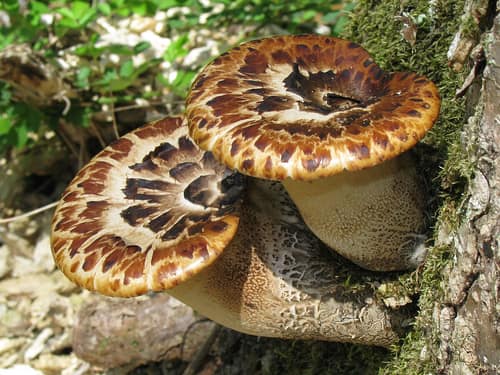
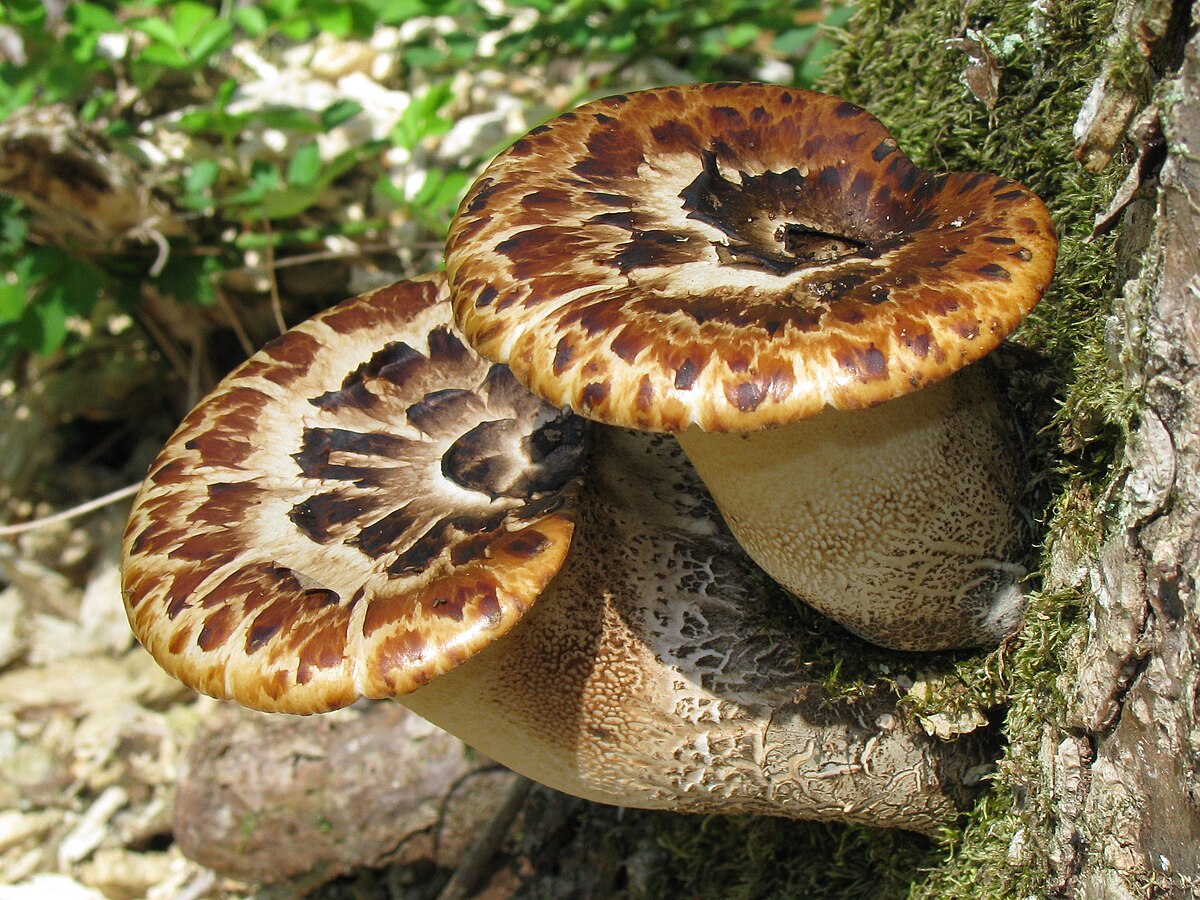
—observations
—countries
—peak records
Not EvaluatedConservation statusIUCN Red List categoriesLCNTVUENCREWEXNot Evaluated — not placed on the risk ladderRed List categories, explained →
Diet & preyLignin and cellulose decomposer (white rot)
Predators
- Beetles
- Fungus Gnats
- Slugs
ThreatsForest clearing and removal of decaying wood
HabitatsDeciduous forests, river valleys, and urban parks
Life spanFruiting bodies persist for weeks; mycelium lives for years
Classification
- OrderPolyporales
- FamilyPolyporaceae
- GenusCerioporus
- SpeciesCerioporus squamosus
Range data is not available yet.
Interaction riskLow
- Low
- Moderate
- High
- Very high
- Why interaction risk is low
- Many wild mushrooms have toxic look-alikes; never eat wild fungi based on app identification alone.
Responsible observation
- Examine the underside: Look for large, hexagonal pores rather than true gills underneath the shelf.
- Look near hardwoods: Search trunks and stumps of elm, maple, beech, and poplar trees in springtime.
- Note the aroma: Fresh specimens emit a distinctive scent reminiscent of fresh watermelon rind or cucumber.
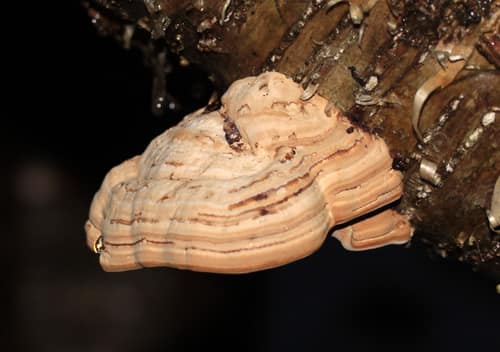
Co-Occurring Polypore (c) Jamie Griffiths, some rights reserved (CC BY), uploaded by Jamie Griffiths · cc-by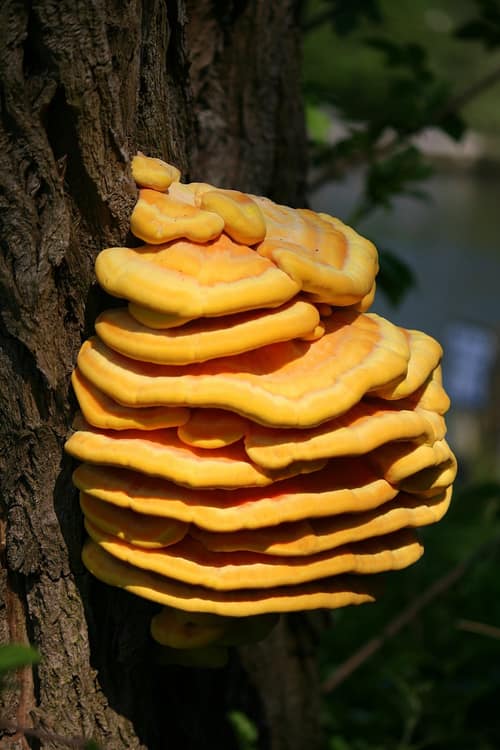
Wood-Decaying Neighbor Rror / CC BY-SA 3.0 · cc-by-sa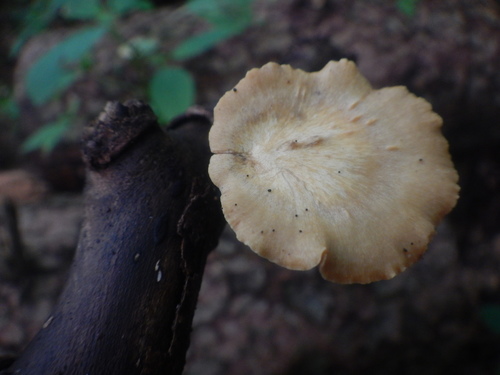
Close Relative (c) Peter Nathaniel Boyer, some rights reserved (CC BY), uploaded by Peter Nathaniel Boyer · cc-by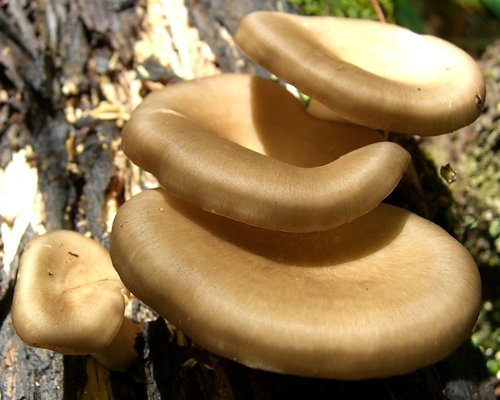
Close Relative (c) Jason Hollinger, some rights reserved (CC BY) · cc-by
Keep collecting in Fauna
Found in Collections
Ecosystem chain Pro
Secret Garden
Dryad's Saddle is found in this collection. Identify it in Fauna to fill this slot and continue your progress.
Unlock to track progress
Help improve the field guideSomething wrong?
Checking your Fauna account…Report a name, category, or profile issue for review.