
Fungus · GBIF taxon 2540800
Hen of the Woods
Grifola frondosaAlso known as Maitake, Sheep's Head, Ram's Head, Dancing Mushroom
Hen of the Woods forms large, multi-capped frond clusters at the bases of mature hardwood trees, particularly oaks. These massive polypore structures produce hundreds of overlapping, greyish-brown fan-shaped caps radiating from a thick, central branching core. As a weak parasite and saprobe, the organism causes a slow white rot in the roots and heartwood of host trees, recurring annually near the same root system.
PolyporeHardwood ParasiteAutumn Mushroom
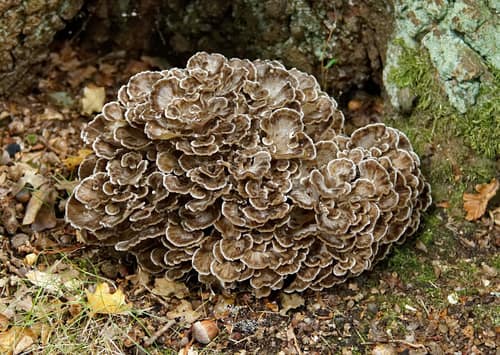
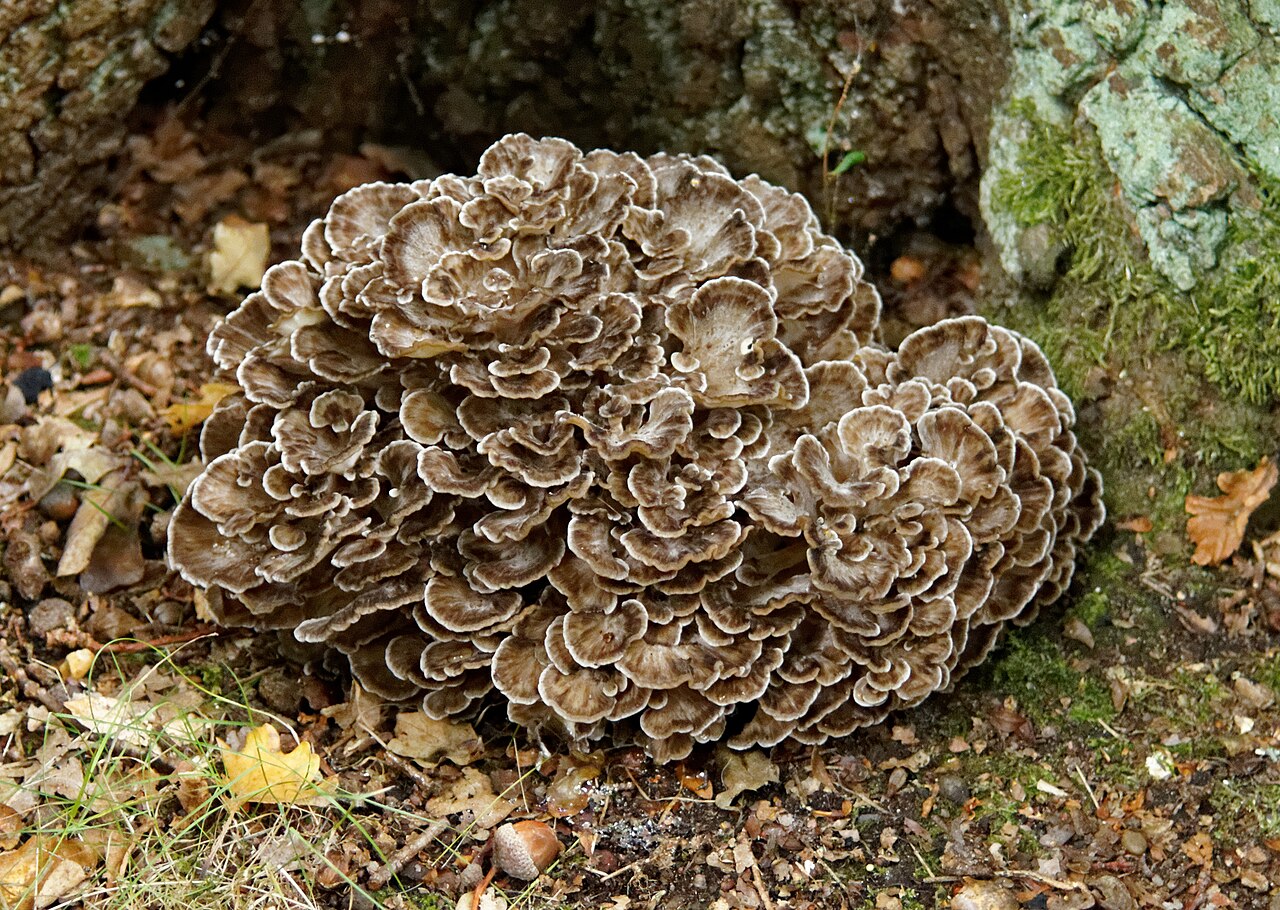
—observations
—countries
—peak records
Not EvaluatedConservation statusIUCN Red List categoriesLCNTVUENCREWEXNot Evaluated — not placed on the risk ladderRed List categories, explained →
Diet & prey
- Saprotrophic and parasitic on hardwood trees
Predators
- Fungus Beetles
- Slugs
- Squirrels
ThreatsDeforestation and loss of old-growth host trees
HabitatsTemperate hardwood forests, especially near old oaks and maples
Life spanPerennial mycelium with short-lived annual fruiting bodies
Size / weightNot available
Classification
- OrderPolyporales
- FamilyGrifolaceae
- GenusGrifola
- SpeciesGrifola frondosa
Range data is not available yet.
Interaction riskLow
- Low
- Moderate
- High
- Very high
- Why interaction risk is low
- Many edible mushrooms have toxic look-alikes; never eat wild fungi based on app identification alone.
Responsible observation
- Observation: Look around the bases of living or dead mature oaks in late summer and autumn.
- Identification: Examine the underside to confirm small white pores rather than gills.
- Habitat Care: Avoid damaging the host tree's roots or surrounding moss during observations.
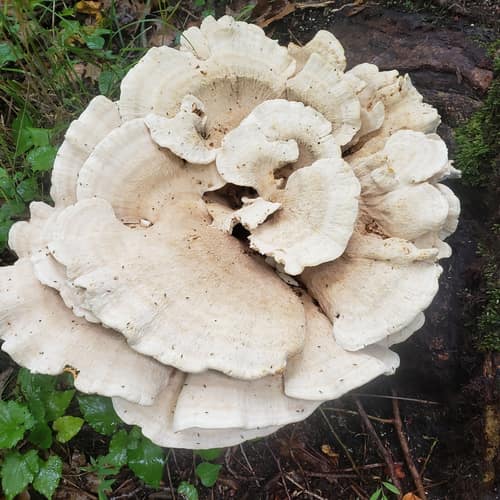
Look-Alike (c) Mark Richman, some rights reserved (CC BY), uploaded by Mark Richman · cc-by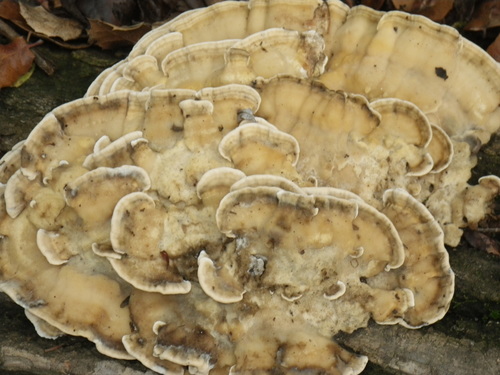
Look-Alike (c) Dominic, some rights reserved (CC BY), uploaded by Dominic · cc-by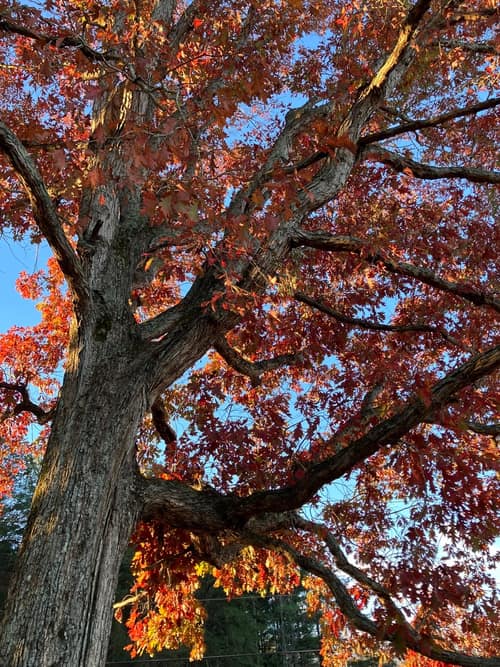
Primary Host (c) Alicia Ballard, some rights reserved (CC BY) · cc-by
Keep collecting in Fauna
Found in Collections
Ecosystem chain Pro
Secret Garden
Hen of the Woods is found in this collection. Identify it in Fauna to fill this slot and continue your progress.
Unlock to track progress
Help improve the field guideSomething wrong?
Checking your Fauna account…Report a name, category, or profile issue for review.