
Fungus · GBIF taxon 2539706
Blue Pinkgill
Entoloma hochstetteriAlso known as Sky Blue Mushroom, Blue Mushroom, Werewere-kōkako
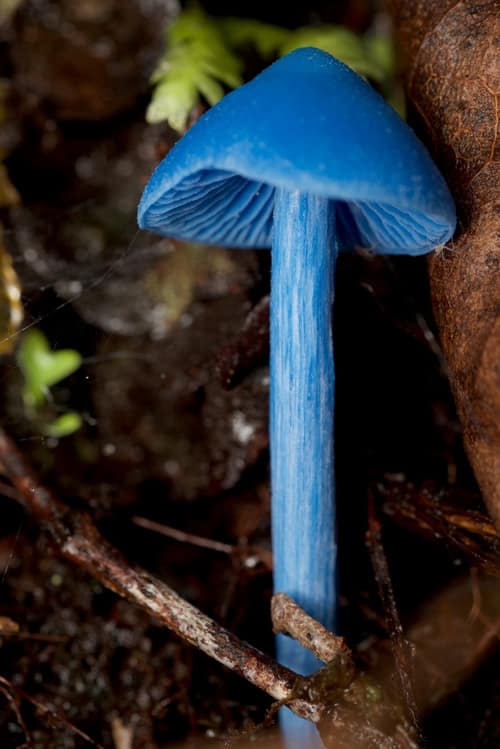
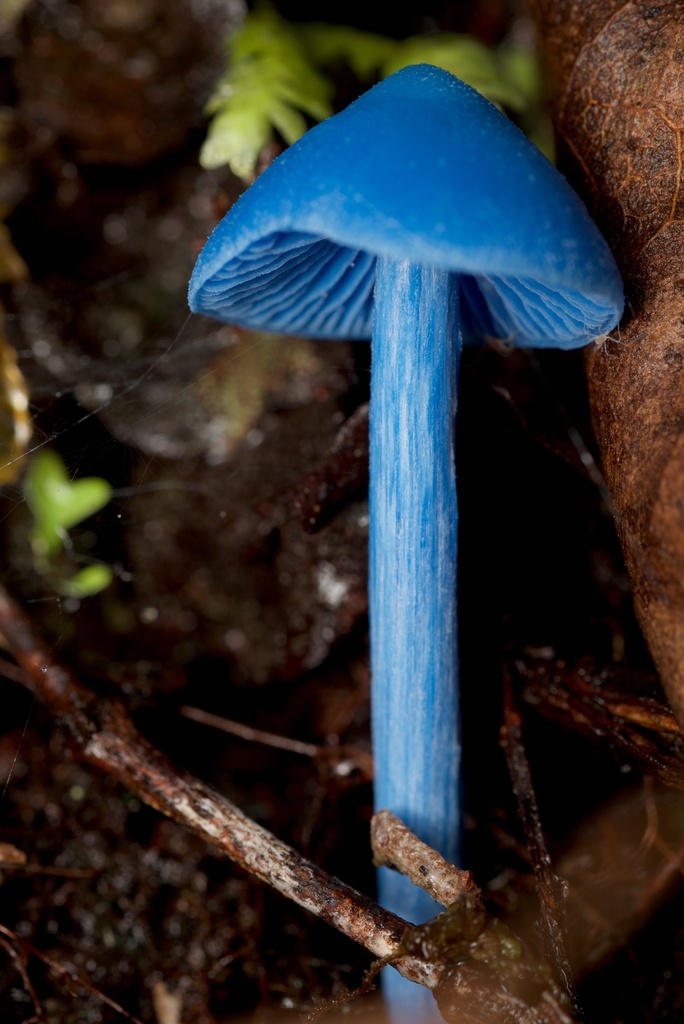
The blue pinkgill produces small vivid blue mushrooms with conical caps, blue gills, and slender blue stems. Fruiting bodies emerge singly or in small groups among moss and leaf litter in damp New Zealand forest.
cobalt blueforest floorpink-spored fungus
—observations
—countries
—peak records
Not EvaluatedConservation statusIUCN Red List categoriesLCNTVUENCREWEXNot Evaluated — not placed on the risk ladderRed List categories, explained →
Diet & prey
- Obtains nutrients from organic matter in damp forest soil, though its precise ecological relationships remain poorly documented
Predators
- slugs
- fungus gnat larvae
- small forest invertebrates
ThreatsForest clearance, drying understories, trampling, soil compaction, and collection of fruiting bodies
HabitatsMoist native forest, mossy banks, shaded leaf litter, and humid soil around tree roots
Life spanEach mushroom lasts days to weeks while the underlying mycelium can persist for years
Size / weightNot available
Classification
- FamilyEntolomataceae
- SpeciesEntoloma hochstetteri
Range data is not available yet.
Interaction riskLow
- Low
- Moderate
- High
- Very high
- Why interaction risk is low
- Blue fungi have difficult look-alikes and can be misidentified; never eat a wild mushroom based on color alone.
- What to notice
- Look for an entirely cobalt-blue conical cap, blue gills, and a fine blue stem growing from forest litter.
- Support conservation
- Leave the mushroom rooted in place and keep feet, equipment, and collecting tools away from the surrounding moss.
Responsible observation
- Find: Search damp moss and leaf litter after rain without leaving established paths.
- Protect: Photograph in place and avoid touching the cap or compressing soil around the stem.
Help improve the field guideSomething wrong?
Checking your Fauna account…Report a name, category, or profile issue for review.