
Fungus · GBIF taxon 2534578
Mica Cap
Coprinellus micaceusAlso known as Glistening Inky Cap, Shiny Cap
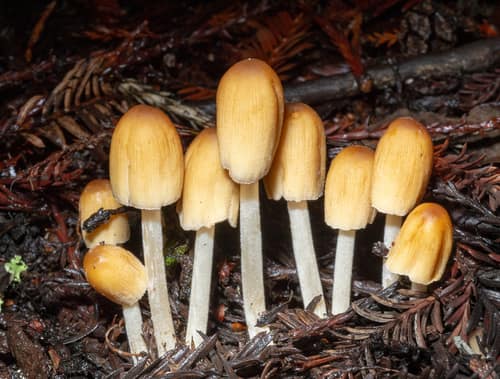
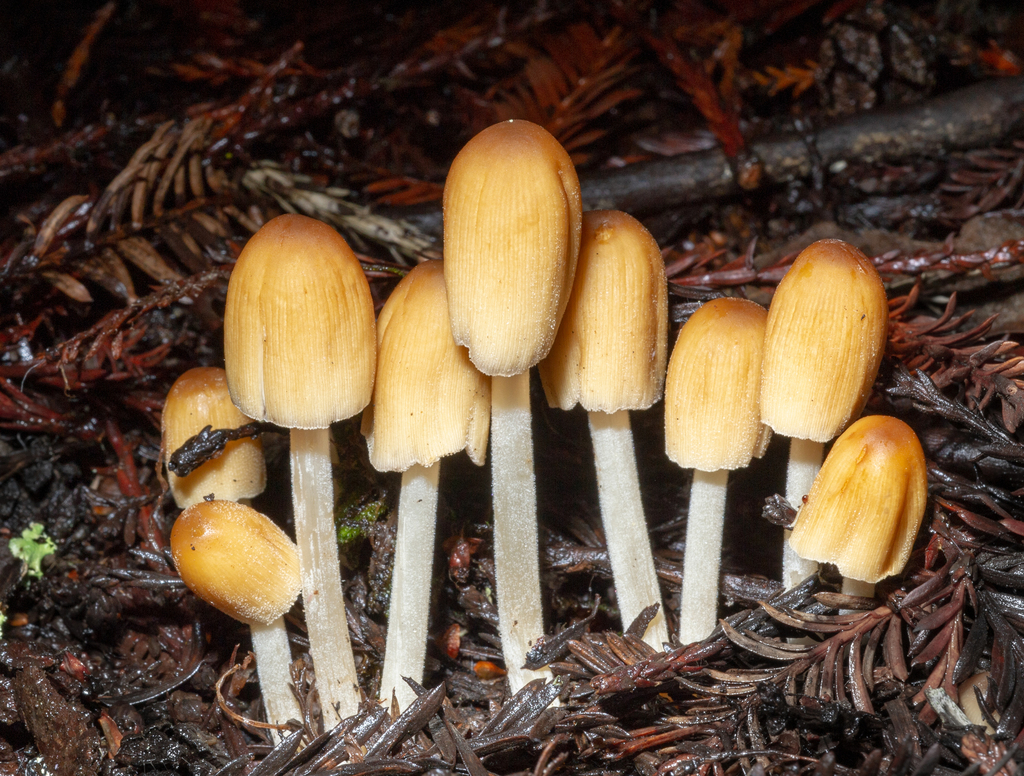
Mica caps emerge in dense, overlapping clusters on decaying hardwood stumps and buried tree roots after soaking spring and autumn rains. Freshly sprouted caps shimmer with tiny, glistening salt-like granules that give the species its common name. Within a day or two of mature spore release, the brownish caps self-digest into a gooey black liquid through autodigestion.
SaprobicClusteredInky Cap
 1 / 7
1 / 7—observations
—countries
—peak records
Not EvaluatedConservation statusIUCN Red List categoriesLCNTVUENCREWEXNot Evaluated — not placed on the risk ladderRed List categories, explained →
Diet & prey
- Saprotrophic (decomposes dead hardwood)
Predators
- Fungus gnats
- Slugs
- Springtails
ThreatsFungicide use, removal of deadwood
HabitatsDeciduous forests, suburban lawns, parks, near buried tree roots
Life span1–3 days per fruitbody
Size / weightNot available
Classification
- OrderAgaricales
- FamilyPsathyrellaceae
- GenusCoprinellus
- SpeciesCoprinellus micaceus
Range data is not available yet.
Interaction riskLow
- Low
- Moderate
- High
- Very high
- Why interaction risk is low
- Wild mushrooms have toxic look-alikes; never consume wild fungi based on app identification alone.
Responsible observation
- Observe Early: Inspect young mushrooms early in the morning before warmth causes them to dissolve into ink.
- Look at the Base: Check around nearby lawns or stumps to trace clusters to buried hardwood roots.
- Examine under Magnification: Use a hand lens to view the shimmering mica-like cell structures on fresh caps.
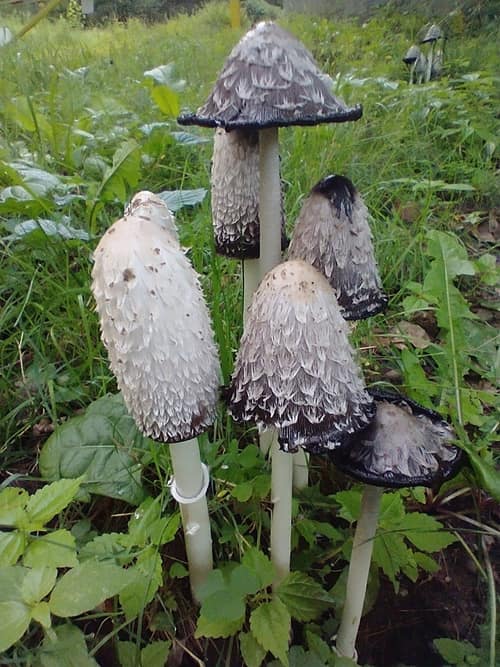
Related Inky Cap (c) Tom Norton, some rights reserved (CC BY), uploaded by Tom Norton · cc-by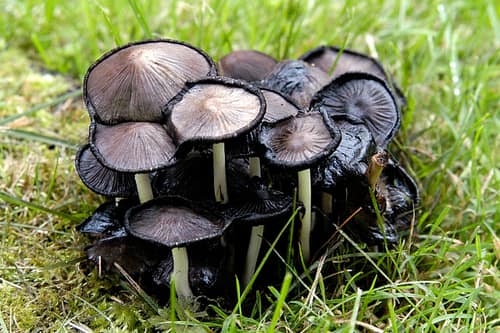
Close Relative James Lindsey / CC BY-SA 3.0 · cc-by-sa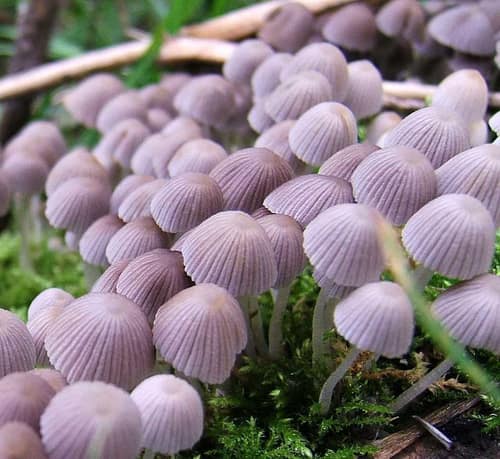
Close Relative (c) Squeezyboy, some rights reserved (CC BY) · cc-by
Keep collecting in Fauna
Found in Collections
Species set Pro
Fungi Forager
Mica Cap is found in this collection. Identify it in Fauna to fill this slot and continue your progress.
Unlock to track progress
Help improve the field guideSomething wrong?
Checking your Fauna account…Report a name, category, or profile issue for review.