
Fungus · GBIF taxon 2533347
Wine-cap Stropharia
Stropharia rugosoannulataAlso known as Garden Giant, King Stropharia, Burgundy Mushroom, Wine-red Stropharia
Wine-cap Stropharia thrives in woodchips and rich garden soils, where its expansive mycelial network actively breaks down woody mulch. Underground hyphae produce microscopic, spiky cells called acanthocytes that mechanically immobilize and digest soil-dwelling nematodes. Young fruiting bodies emerge with deep wine-red to burgundy caps that flatten and fade to a pale straw yellow with maturity, framed beneath by a thick, cogwheel-like ring.
DecomposerSpore-producingMulch Dweller
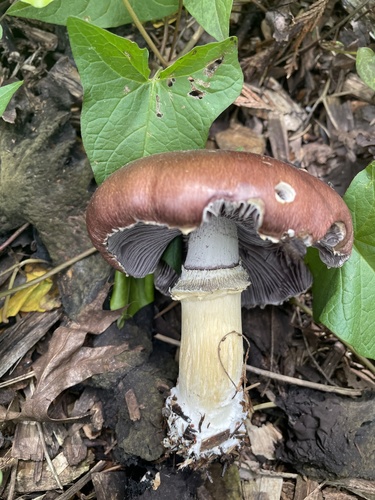
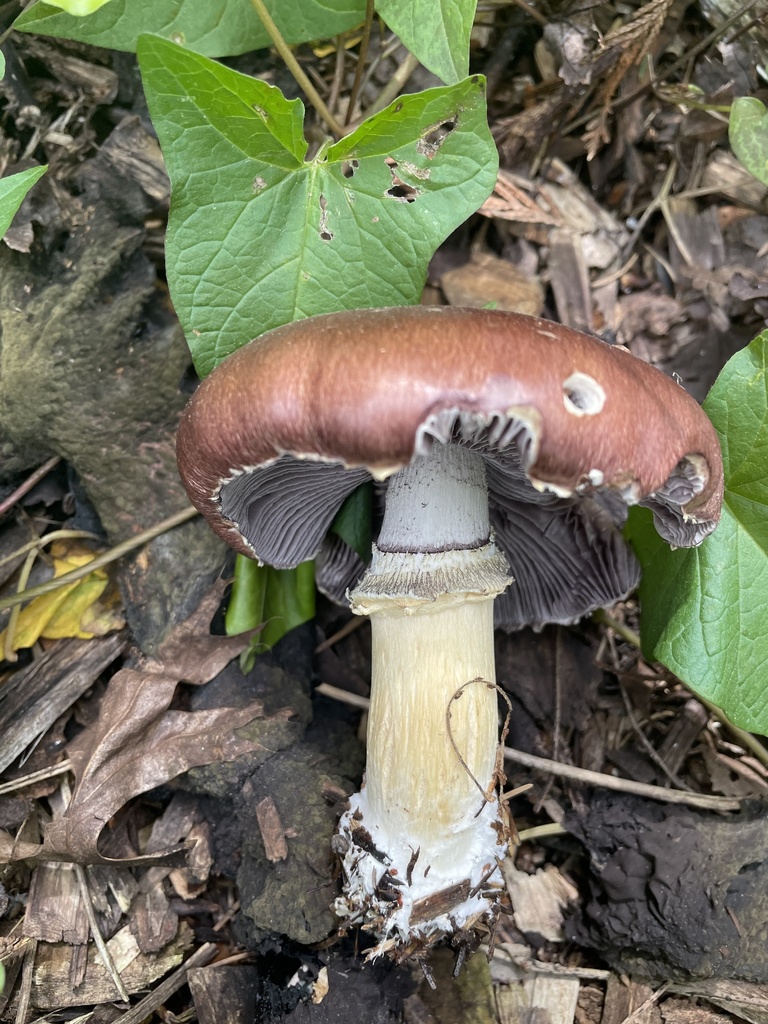 1 / 7
1 / 7—observations
—countries
—peak records
Not EvaluatedConservation statusIUCN Red List categoriesLCNTVUENCREWEXNot Evaluated — not placed on the risk ladderRed List categories, explained →
Diet & prey
- Decaying Wood
- Soil Nematodes
- Plant Mulch
Predators
- Garden Slugs
- Fungus Gnat Larvae
- Field Mice
ThreatsProlonged drought, complete removal of organic substrate, and heavy fungicide application
HabitatsWoodchip beds, mulched garden borders, compost heaps, and forest clearings
Life spanPerennial mycelium lasting years; individual fruiting bodies endure 7–14 days
Classification
- OrderAgaricales
- FamilyStrophariaceae
- GenusStropharia
- SpeciesStropharia rugosoannulata
Range data is not available yet.
Interaction riskLow
- Low
- Moderate
- High
- Very high
- Why interaction risk is low
- Many edible mushrooms have toxic look-alikes; never eat wild fungi based on app identification alone.
Responsible observation
- Ring Inspection: Look beneath the cap to check for the distinctive, cogwheel-patterned ridges on the annulus.
- Spore Print: Place a mature cap gill-side down on white paper to reveal its dark purplish-black spore deposit.
- Habitat Clues: Search damp hardwood mulch or composted garden pathways after soaking autumn rains.
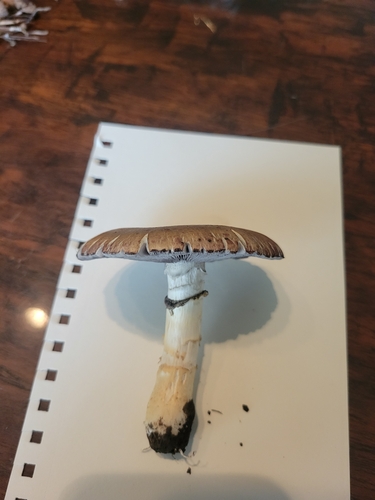
Close Relative no rights reserved · cc0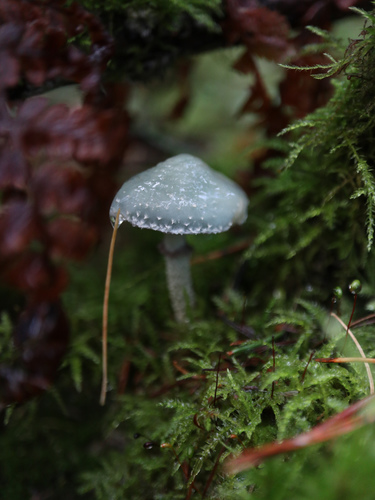
Close Relative no rights reserved, uploaded by Tero Linjama · cc0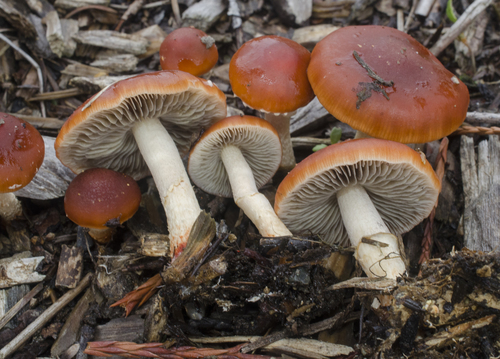
Same Family (c) Tim Sage, some rights reserved (CC BY-SA), uploaded by Tim Sage · cc-by-sa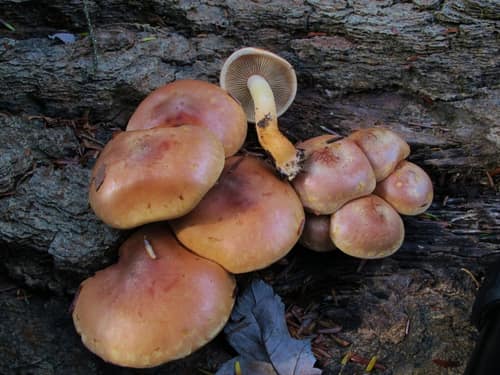
Same Family (c) mycowalt, some rights reserved (CC BY-SA), uploaded by mycowalt · cc-by-sa
Help improve the field guideSomething wrong?
Checking your Fauna account…Report a name, category, or profile issue for review.