
Fungus · GBIF taxon 2530983
Amethyst Deceiver
Laccaria amethystinaAlso known as Amethyst Laccaria
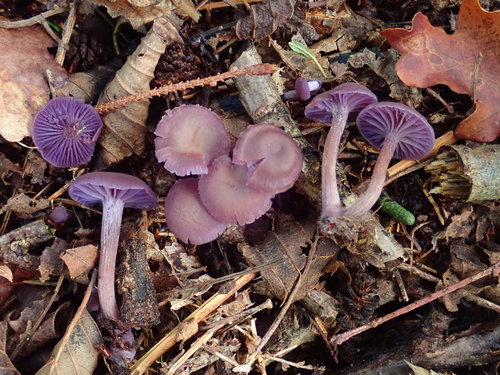
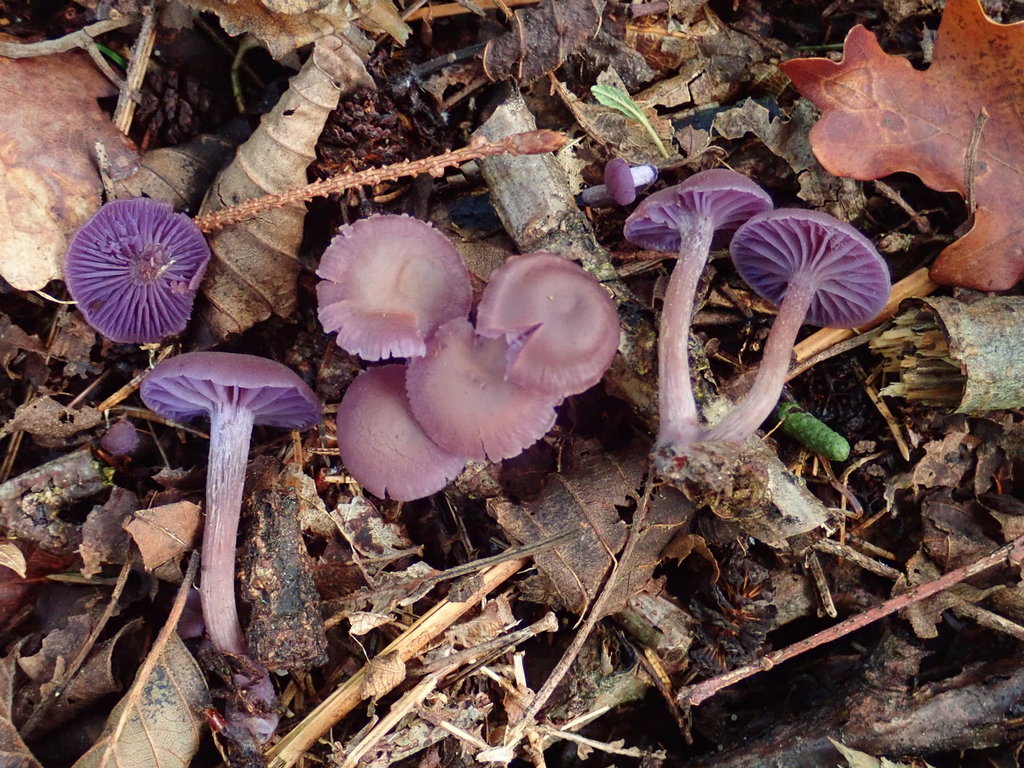
Amethyst deceivers stand out on the forest floor with their vibrant violet to magenta fruiting bodies, which fade to a dull buff or grayish-brown as they dry out. They form crucial mycorrhizal partnerships with trees such as beech and oak, drawing nutrients from soil while aiding tree health. Their widely spaced, deep purple gills and white spore print help separate them from other purple woodland fungi.
FungusMycorrhizalWoodland
 1 / 7
1 / 7—observations
—countries
—peak records
Least ConcernConservation statusIUCN Red List categoriesLCNTVUENCREWEXLeast ConcernRed List categories, explained →
Diet & prey
- Mycorrhizal partner (symbiotic with broadleaf and coniferous trees)
Predators
- Slugs
- Fungus gnat larvae
- Woodland rodents
ThreatsDeforestation and atmospheric pollution affecting soil chemistry
HabitatsDeciduous and coniferous woodlands, leaf litter, moist forest soils
Life spanFruiting body lasts 1–2 weeks; underground mycelium lives indefinitely
Size / weightNot available
Classification
- OrderAgaricales
- FamilyHydnangiaceae
- GenusLaccaria
- SpeciesLaccaria amethystina
Range data is not available yet.
Interaction riskLow
- Low
- Moderate
- High
- Very high
- Why interaction risk is low
- Many edible mushrooms have toxic look-alikes; never eat wild fungi based on app identification alone.
Responsible observation
- Check Gill Color: Look for thick, widely spaced, deep purple gills that retain color longer than the cap.
- Observe Weather Fading: Note how older or dry specimens turn pale pinkish-buff, making identification trickier.
- Spore Print: Place the cap on dark paper overnight to reveal its characteristic white spore print.
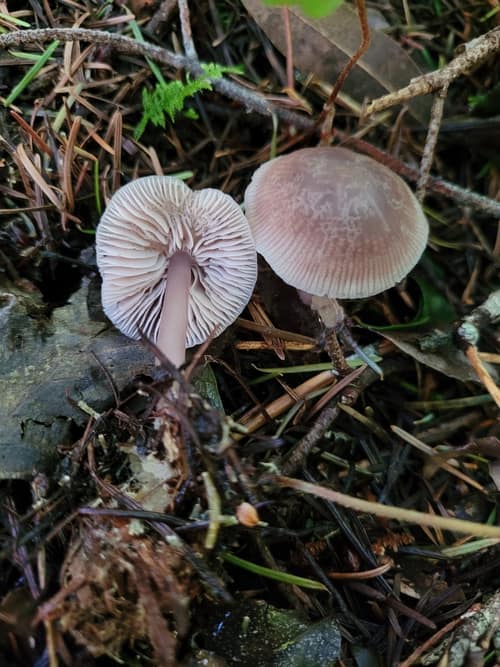
Look-Alike (c) Mandy Hackney, some rights reserved (CC BY), uploaded by Mandy Hackney · cc-by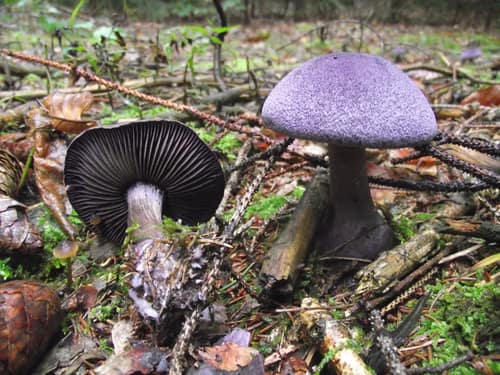
Look-Alike (c) Davide Puddu, some rights reserved (CC BY), uploaded by Davide Puddu · cc-by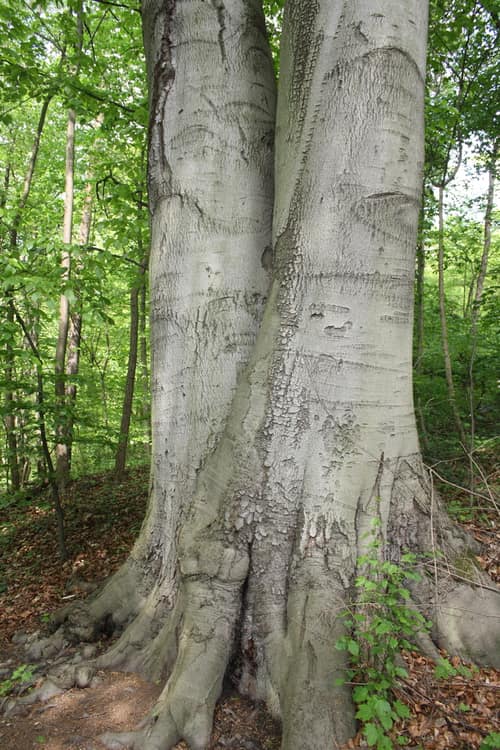
Mycorrhizal Partner (c) Daniel Linzbauer, some rights reserved (CC BY), uploaded by Daniel Linzbauer · cc-by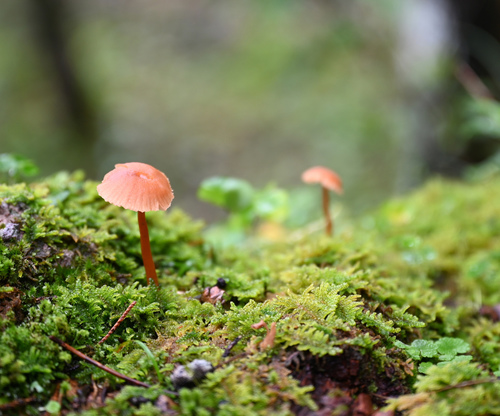
Close Relative (c) danygl, some rights reserved (CC BY) · cc-by
Help improve the field guideSomething wrong?
Checking your Fauna account…Report a name, category, or profile issue for review.