
Fungus
Bleeding Bonnet
Mycena sanguinolentaAlso known as Smaller Bleeding Mycena, Terrestrial Bleeding Mycena
Bleeding bonnets are delicate saprotrophic fungi easily recognized by the dark reddish-purple juice that oozes from injured stems or gill margins. Their slender, bell-shaped caps sprout from damp moss and conifer needle litter across temperate woodlands, actively breaking down decaying plant matter. In pitch-black conditions, dense mycelial colonies emit a faint bioluminescent glow fueled by natural enzymatic reactions.
SaprobicBioluminescentWoodland
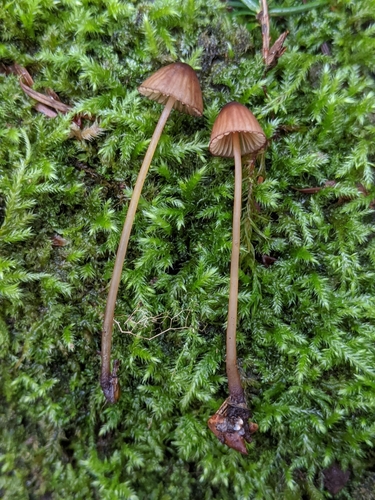
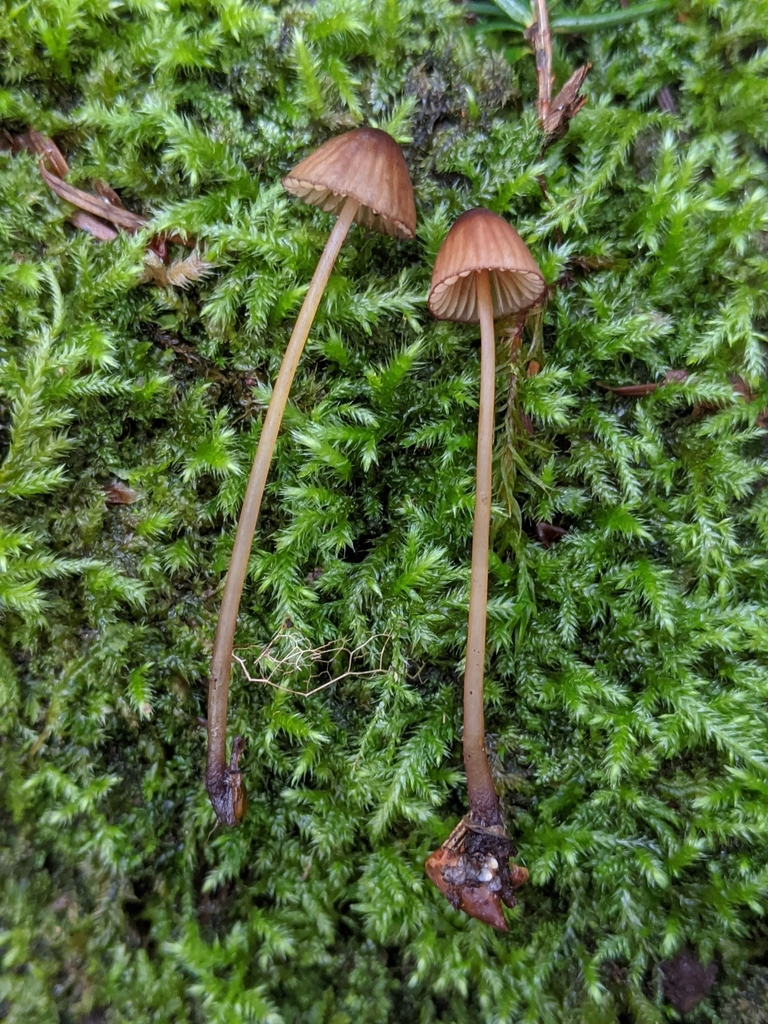
—observations
—countries
—peak records
Not EvaluatedConservation statusIUCN Red List categoriesLCNTVUENCREWEXNot Evaluated — not placed on the risk ladderRed List categories, explained →
Diet & preyDecomposer (saprotrophic on needle duff, leaf litter, and moss)
Predators
- Slugs
- Fungus gnat larvae
- Springtails
ThreatsHabitat destruction, intensive forest clearing, and severe ground fires
HabitatsConiferous, deciduous, and mixed temperate forests, mossy banks, and heathlands
Life spanFruiting bodies last 3–7 days; mycelium persists for years
Classification
- FamilyMycenaceae
- SpeciesMycena sanguinolenta
Range data is not available yet.
Interaction riskLow
- Low
- Moderate
- High
- Very high
- Why interaction risk is low
- Many edible mushrooms have toxic look-alikes; never eat wild fungi based on app identification alone.
Responsible observation
- Observation: Use a hand lens to study the tiny, lined bell caps without dislodging the fragile stem from the moss.
- Photography: Diffused morning light best captures the subtle reddish-purple tones along the cap striations.
- Habitat Etiquette: Walk carefully along forest paths to avoid trampling the shallow moss mats where fruiting bodies emerge.
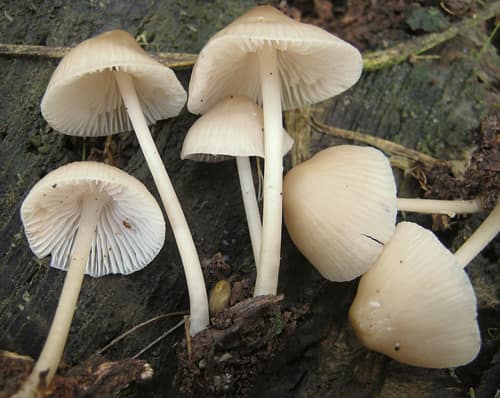
Same Genus (c) 2011-12-03_Mycena_galericulata_(Scop.)_Gray_188645.jpg, some rights reserved (CC BY-SA) · cc-by-sa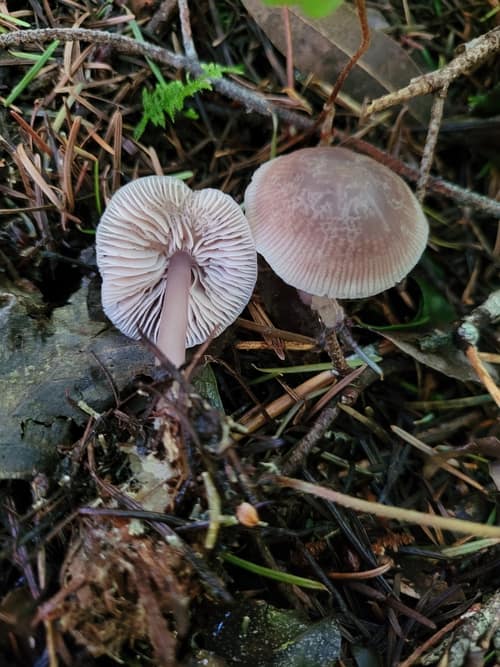
Same Genus (c) Mandy Hackney, some rights reserved (CC BY), uploaded by Mandy Hackney · cc-by Image unavailable
Same Genus 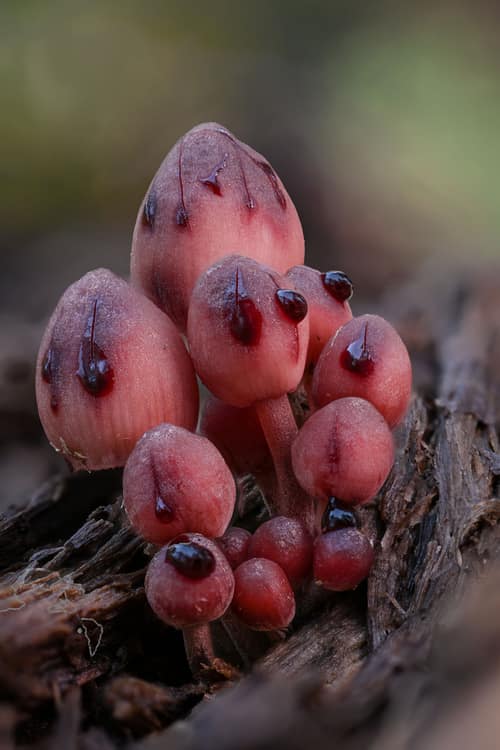
Close Relative (c) Alan Rockefeller, some rights reserved (CC BY), uploaded by Alan Rockefeller · cc-by
Help improve the field guideSomething wrong?
Checking your Fauna account…Report a name, category, or profile issue for review.