
Fungus
Brown Mottlegill
Panaeolus foeniseciiAlso known as Haymaker's Panaeolus, Lawnmower's Mushroom, Mower's Mushroom, Brown Hay Mushroom
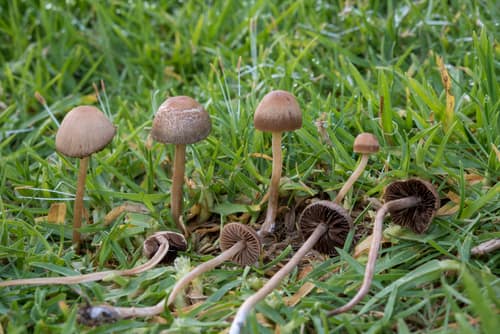
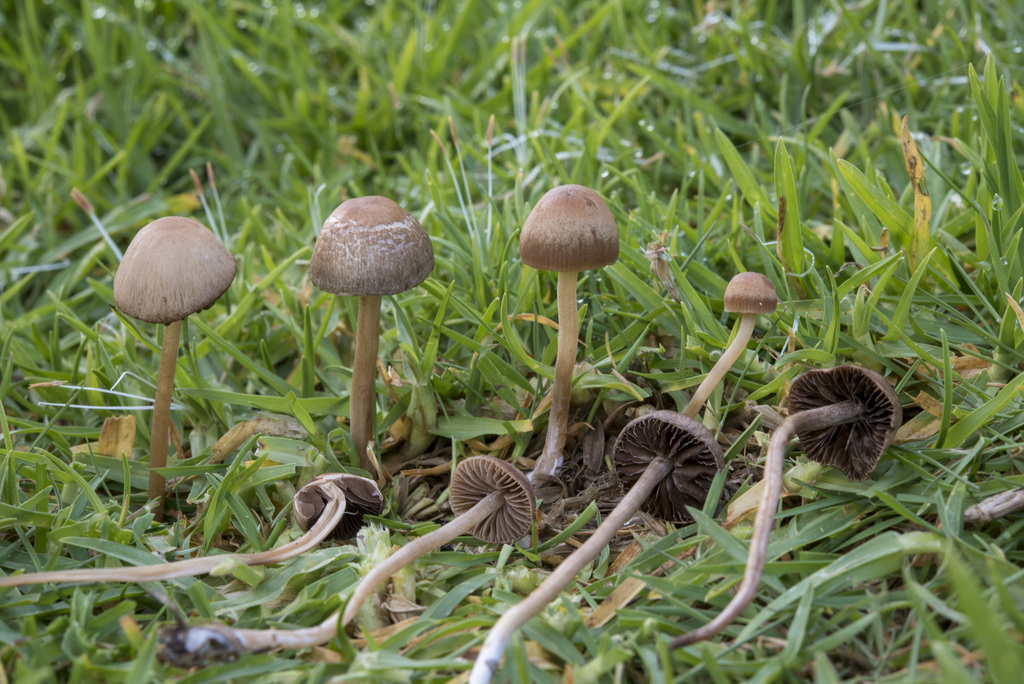
Lawnmower's mushrooms sprout abundantly across lawns, pastures, and parklands after warm summer rains. Their bell-shaped caps display a striking hygrophanous ring, drying from deep chocolate brown at the crown to pale tan along the rim. As saprotrophic fungi, they play a vital ecological role breaking down thatch and dead grass roots to replenish soil nutrients.
GrasslandSaprotrophicLawn Fungi
—observations
—countries
—peak records
Not EvaluatedConservation statusIUCN Red List categoriesLCNTVUENCREWEXNot Evaluated — not placed on the risk ladderRed List categories, explained →
Diet & preyDecomposing thatch, grass roots, and soil organic matter
Predators
- Slugs
- Fungus gnats
- Soil mites
ThreatsExcessive fungicide use and intensive synthetic turf treatments
HabitatsLawn turf, pastures, golf courses, and grassy meadows
Life spanFruiting bodies last 2 to 4 days
Classification
- OrderAgaricales
- FamilyBolbitiaceae
- GenusPanaeolina
- SpeciesPanaeolus foenisecii
Range data is not available yet.
Interaction riskHigh
- Low
- Moderate
- High
- Very high
- Why interaction risk is high
- Many wild mushrooms have toxic look-alikes; never eat wild fungi based on app identification alone.
- Why it is dangerous
- Contains variable trace amounts of serotonin and related compounds that can cause gastrointestinal upset if consumed raw.
- How to recognize a risky encounter
- Recognized by hygrophanous bell-shaped caps with two-tone brown shading and a dark brown spore deposit.
- What to do
- Touch safely for field examination, but wash hands afterward and keep away from pets or young children.
Responsible observation
- Spore Identification: Take a spore print on white paper to observe the dark brown, mottled deposit.
- Turf Health: Retain these harmless decomposers to naturally recycle nutrients back into lawn soil.
- Pet Precautions: Prevent curious dogs from eating small wild mushrooms during morning walks.
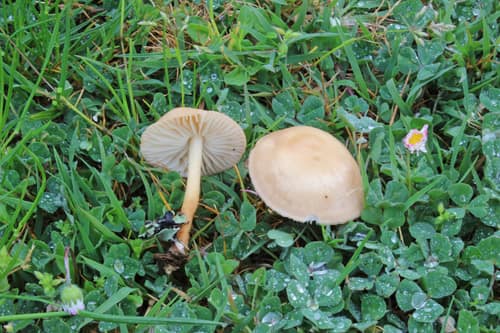
Lawn Competitor (c) Davide Puddu, some rights reserved (CC BY), uploaded by Davide Puddu · cc-by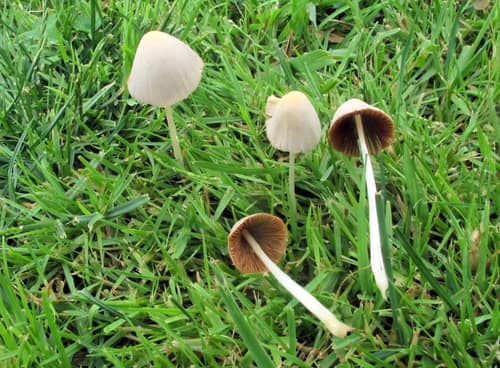
Frequent Companion (c) mycowalt, some rights reserved (CC BY-SA), uploaded by mycowalt · cc-by-sa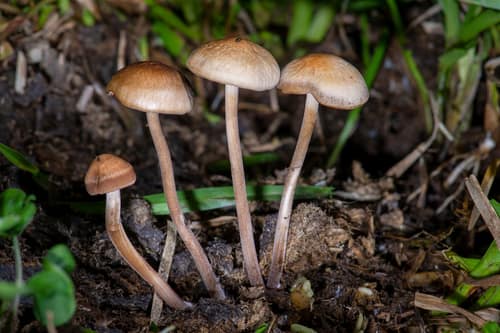
Close Relative (c) Alan Rockefeller, some rights reserved (CC BY), uploaded by Alan Rockefeller · cc-by
Help improve the field guideSomething wrong?
Checking your Fauna account…Report a name, category, or profile issue for review.