
Ash-tree Bolete
Boletinellus merulioidesAlso known as Ash Bolete, Merulioid Bolete
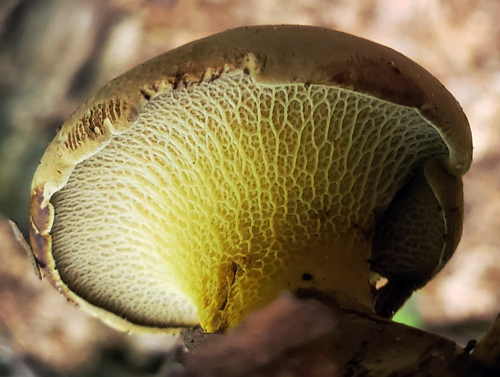
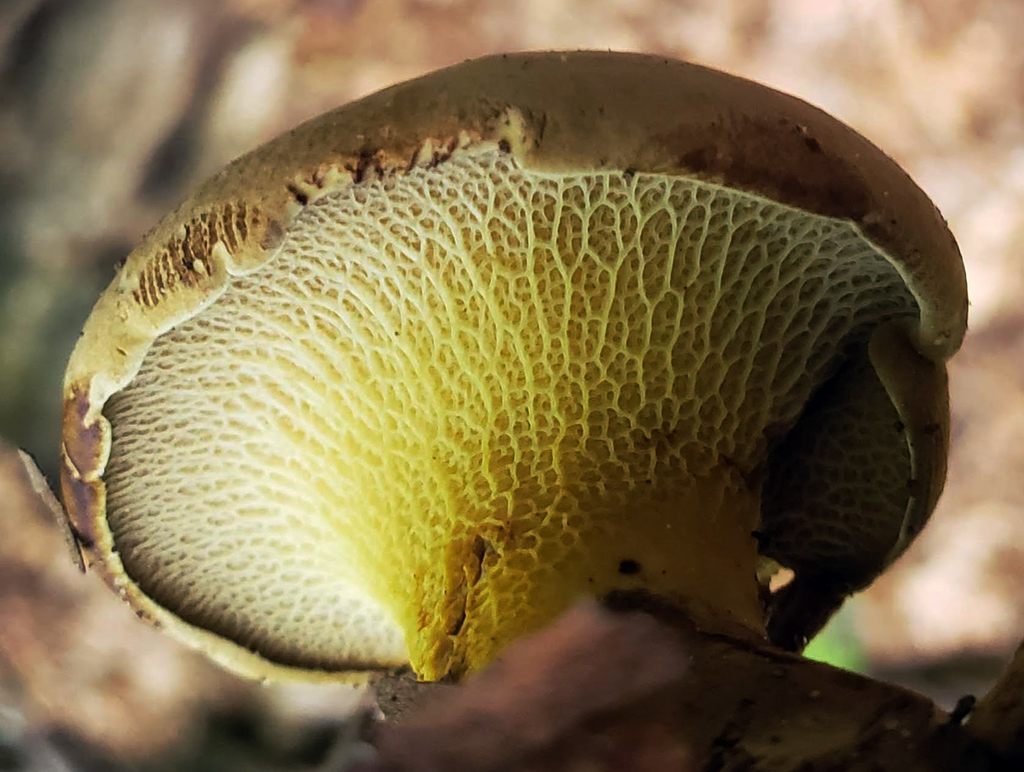
Ash-tree boletes form a unique tripartite relationship with ash trees and subterranean aphids, feeding on honeydew produced by aphid colonies clustered around the tree roots. Fruiting bodies feature broad, wavy, brownish caps with short, off-center stems and an undersurface of yellowish, shallow, honeycomb-like pores that stain dull brown when bruised. As invasive emerald ash borers decimate native ash populations across North America, these distinctive fungi are becoming increasingly rare in their traditional forest and parkland habitats.
- Slugs
- Fungus Gnat Larvae
- Beetles
- OrderBoletales
- FamilyBoletinellaceae
- GenusBoletinellus
- SpeciesBoletinellus merulioides
- Low
- Moderate
- High
- Very high
- Why interaction risk is low
- Many wild mushrooms have toxic look-alikes; never eat wild fungi based on app identification alone.
- What to notice
- Look for broad, asymmetrical brown caps with shallow, honeycomb-like pores growing on soil near ash roots.
- Support conservation
- Leave fruiting bodies undisturbed to allow spore dispersal and help sustain remaining localized populations.
- Tree Association: Search near the base or root zone of mature ash trees during late summer and autumn.
- Subterranean Sign: Look closely at soil beneath caps to spot dark fungal sclerotia wrapping aphid colonies.
- Spore Dispersal: Leave mature caps in place to allow spores to spread to nearby healthy host trees.
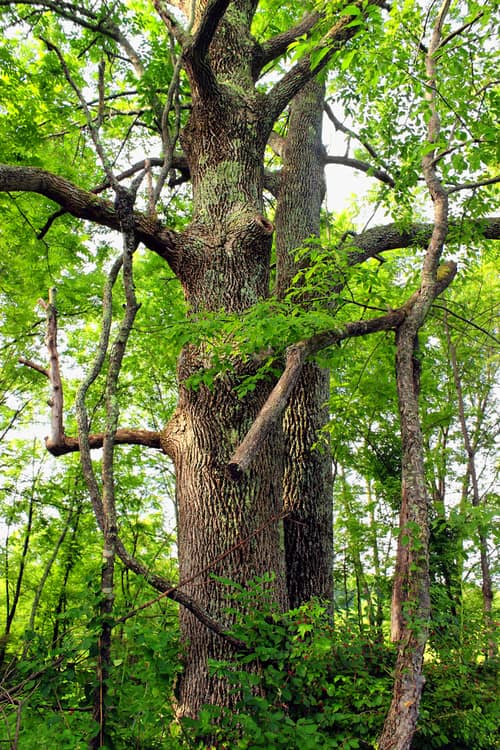
Host Tree (c) Nicholas A. Tonelli, some rights reserved (CC BY) · cc-by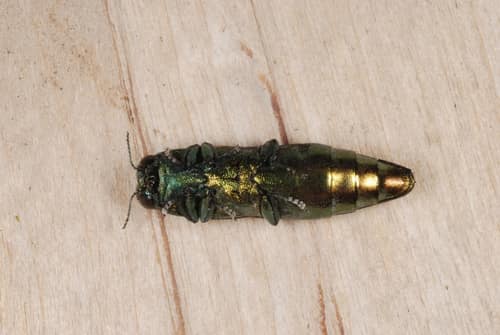
Indirect Threat (c) Douglas Goldman, some rights reserved (CC BY-SA), uploaded by Douglas Goldman · cc-by-sa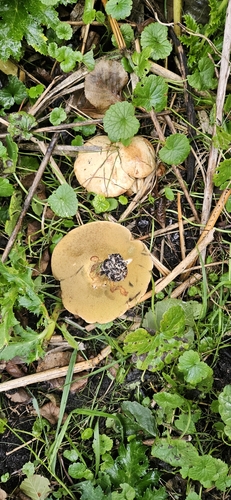
Close Relative (c) Heiko Weber, some rights reserved (CC BY) · cc-by
Found in Collections
Fungi Forager
Ash-tree Bolete is found in this collection. Identify it in Fauna to fill this slot and continue your progress.
Unlock to track progress
Report a name, category, or profile issue for review.