
Fungus · GBIF taxon 2524910
Bitter Bolete
Tylopilus felleusAlso known as Bitter Tylopilus
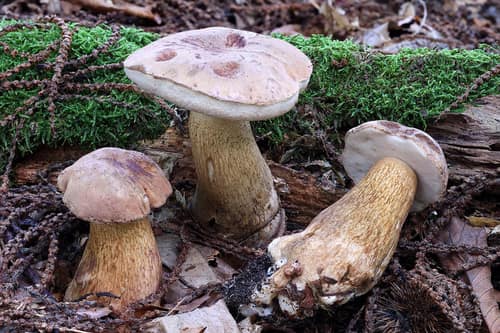
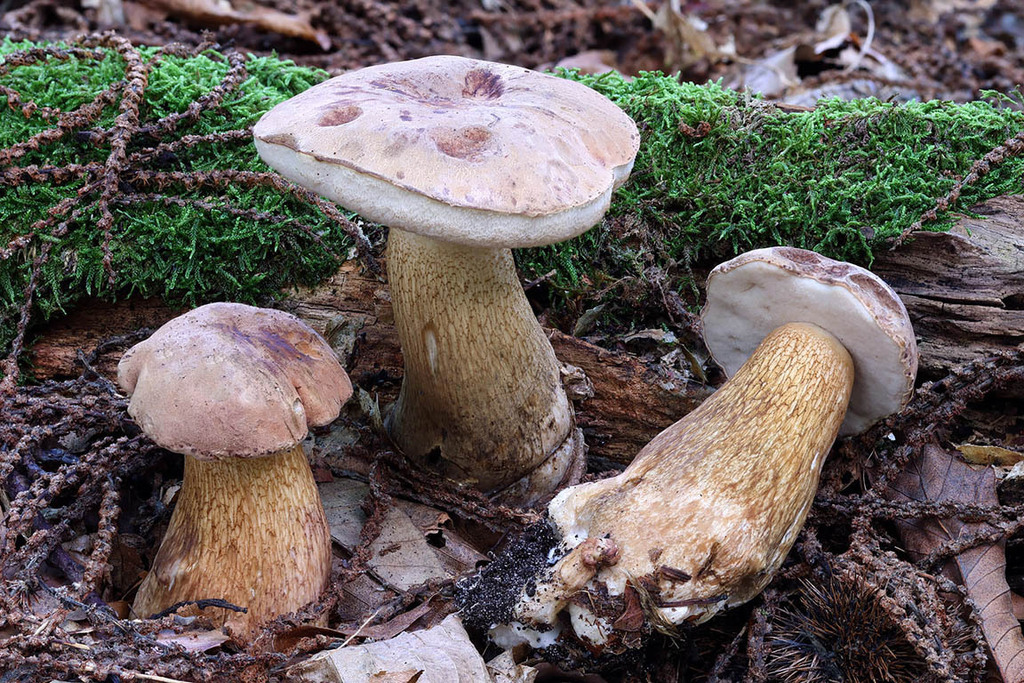
Bitter boletes emerge on forest floors and decaying wood near conifers and hardwoods, forming crucial mycorrhizal partnerships with surrounding trees. Young specimens closely resemble sought-after edible boletes, but their pore surface turns a characteristic dull pink with age rather than yellow-green. The cap features a smooth, brownish-buff skin accompanied by a dark, coarse network pattern on the upper stem.
FungusMycorrhizalForest Dweller
 1 / 7
1 / 7—observations
—countries
—peak records
Least ConcernConservation statusIUCN Red List categoriesLCNTVUENCREWEXLeast ConcernRed List categories, explained →
Diet & prey
- Mycorrhizal
Predators
- Fungus Gnats
- Slugs
- Squirrels
ThreatsDeforestation and soil compaction
HabitatsConiferous and mixed deciduous forests
Life spanFruiting body lasts 1–2 weeks
Size / weightNot available
Classification
- OrderBoletales
- FamilyBoletaceae
- GenusTylopilus
- SpeciesTylopilus felleus
Range data is not available yet.
Interaction riskLow
- Low
- Moderate
- High
- Very high
- Why interaction risk is low
- Many edible mushrooms have toxic look-alikes; never eat wild fungi based on app identification alone.
Responsible observation
- Check the pores: Look for white pores on young specimens that turn distinctly pink as spores mature.
- Inspect the stem: Search for prominent dark brown netting along the upper portion of the stalk.
- Leave in place: Allow mature specimens to remain undisturbed so they can release spores into the forest.
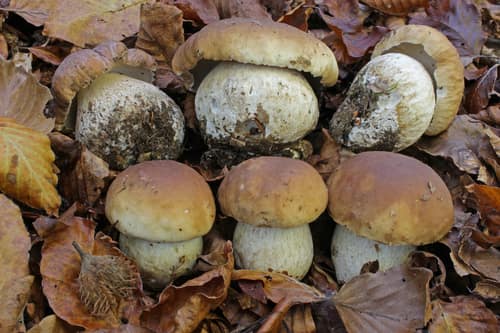
Look-alike (c) Davide Puddu, some rights reserved (CC BY), uploaded by Davide Puddu · cc-by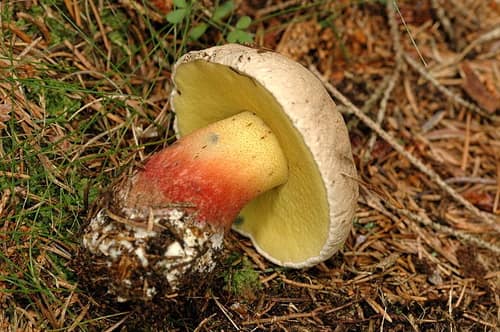
Look-alike James Lindsey / CC BY-SA 3.0 · cc-by-sa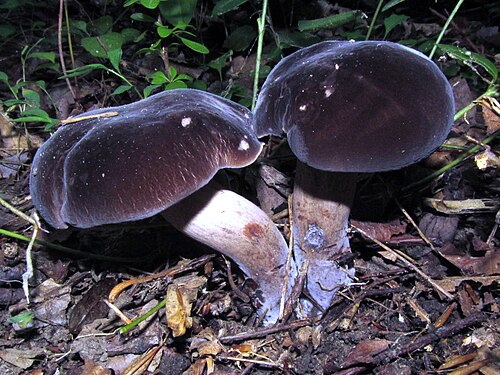
Close Relative This image was created by user Martin Livezey (MLivezey) at Mushroom Observer, a source for mycological images.You can contact this user here. / CC BY-SA 3.0 · cc-by-sa
Keep collecting in Fauna
Found in Collections
Species set Pro
Fungi Forager
Bitter Bolete is found in this collection. Identify it in Fauna to fill this slot and continue your progress.
Unlock to track progress
Help improve the field guideSomething wrong?
Checking your Fauna account…Report a name, category, or profile issue for review.