
Fungus · GBIF taxon 2524490
Orange Birch Bolete
Leccinum versipelleAlso known as Dark-stalked Bolete, Orange Cap Bolete
Orange birch boletes form vital mycorrhizal partnerships with birch trees, exchanging soil nutrients for host sugars beneath the forest floor. Their conspicuous bright orange caps are balanced by tall white stems covered in dark grey or black stiff scales called scabres. When bruised or cut, the pale inner flesh slowly darkens to reddish-grey and eventually turns inky black.
MycorrhizalForestAutumn
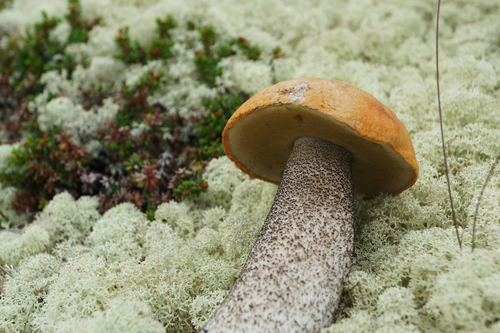
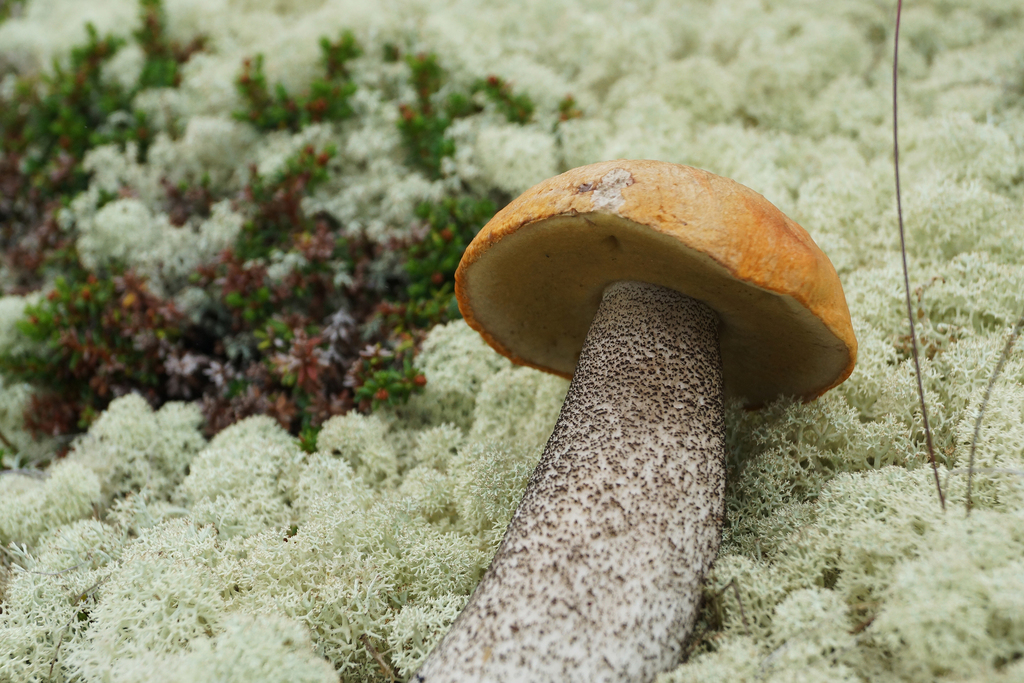
—observations
—countries
—peak records
Least ConcernConservation statusIUCN Red List categoriesLCNTVUENCREWEXLeast ConcernRed List categories, explained →
Diet & prey
- Mycorrhizal (symbiotic with birch)
Predators
- Slugs
- Fungus Gnats
- Squirrels
ThreatsClear-cutting of host trees, habitat fragmentation
HabitatsBirch woodlands, boreal forests, heathlands
Life spanFruiting bodies last 1–2 weeks
Size / weightNot available
Classification
- OrderBoletales
- FamilyBoletaceae
- GenusLeccinum
- SpeciesLeccinum versipelle
Range data is not available yet.
Interaction riskHigh
- Low
- Moderate
- High
- Very high
- Why interaction risk is high
- Raw specimens cause stomach upset, and wild fungi have toxic look-alikes; never eat wild fungi based on app identification alone.
- Why it is dangerous
- Raw or improperly prepared specimens contain toxins that cause severe gastrointestinal distress, nausea, and vomiting.
- How to recognize a risky encounter
- Features an orange convex cap with hanging edge flaps and distinct dark scales dusting the white stem.
- What to do
- Observe and photograph without disturbing the root network; never consume wild fungi without expert confirmation.
Responsible observation
- Tree association: Search around the root zones of birch trees during wet autumn weather.
- Observe stem details: Look closely at the dense blackish scales along the pale stem to distinguish from look-alikes.
- Note color changes: Watch for greyish or purplish-black staining when the stem base or cap flesh is sliced.
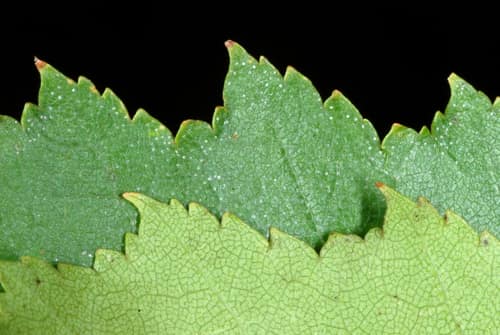
Host Plant (c) Douglas Goldman, some rights reserved (CC BY-SA), uploaded by Douglas Goldman · cc-by-sa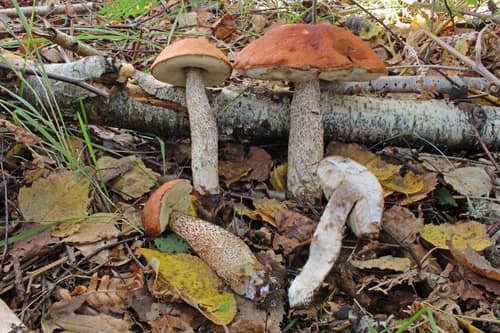
Close Relative (c) Davide Puddu, some rights reserved (CC BY), uploaded by Davide Puddu · cc-by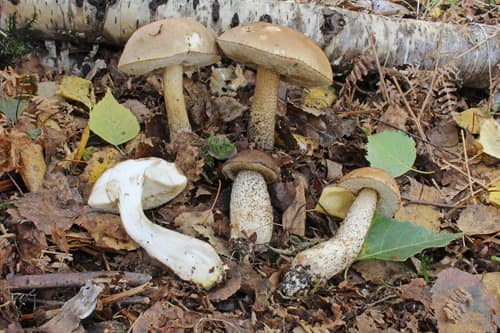
Close Relative (c) Davide Puddu, some rights reserved (CC BY), uploaded by Davide Puddu · cc-by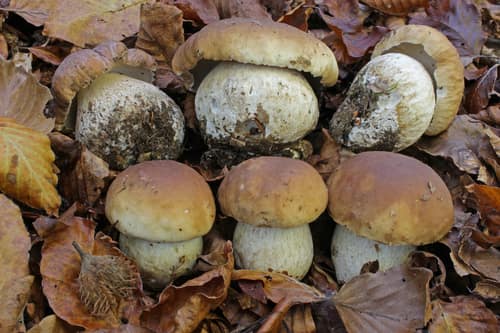
Family Member (c) Davide Puddu, some rights reserved (CC BY), uploaded by Davide Puddu · cc-by
Keep collecting in Fauna
Found in Collections
Species set Pro
Fungi Forager
Orange Birch Bolete is found in this collection. Identify it in Fauna to fill this slot and continue your progress.
Unlock to track progress
Help improve the field guideSomething wrong?
Checking your Fauna account…Report a name, category, or profile issue for review.