
Fungus
Trumpet Jelly Cup
Guepiniopsis buccinaAlso known as Golden Jelly Cone, Yellow Cup Jelly
Trumpet jelly cups emerge from decaying, bark-free branches as vibrant golden-yellow goblets, each bearing spores on the smooth inner surface of its flared disc. Their gelatinous, rubbery tissue swells dramatically after soaking rains and shrivels into an inconspicuous amber crust during dry spells. As specialized wood-decay saprobes, they quietly break down dead hardwood and conifer twigs across temperate forest floors.
Jelly FungusDecomposerWood-Decaying
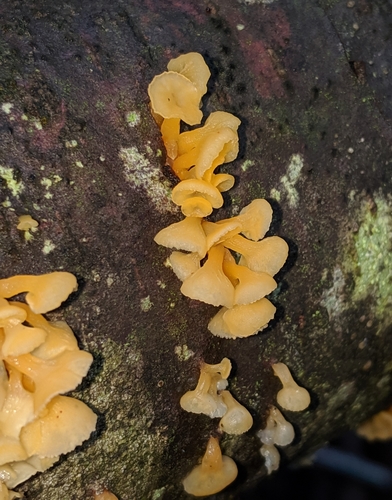
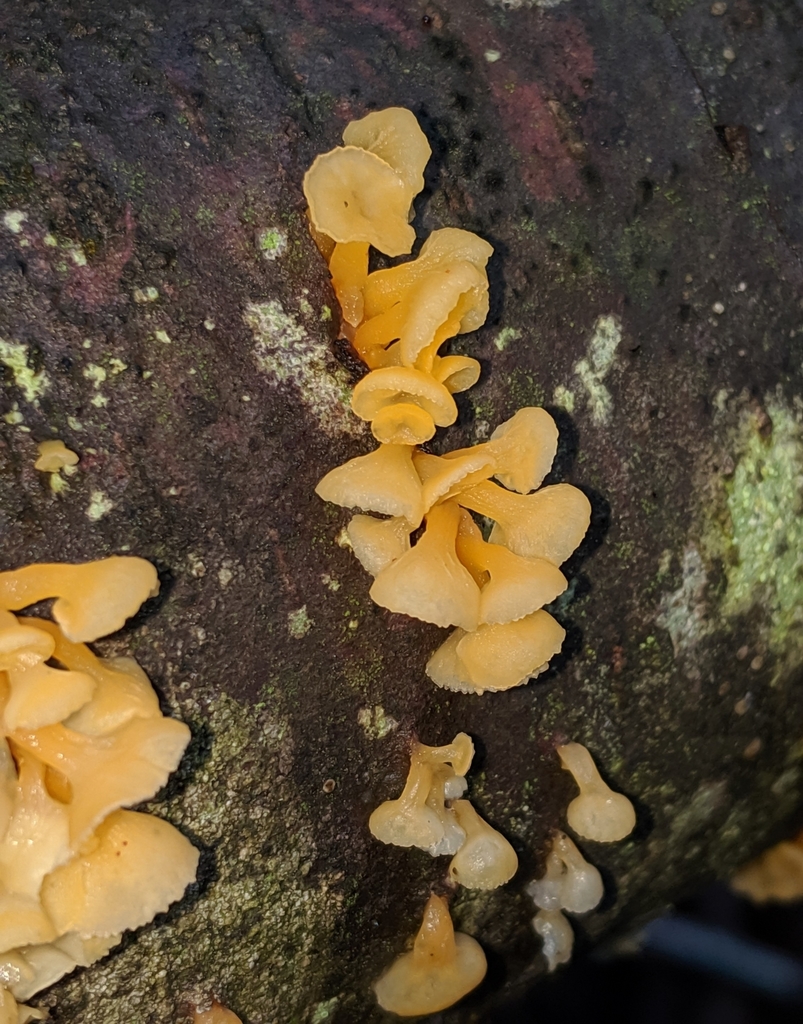
—observations
—countries
—peak records
Not EvaluatedConservation statusIUCN Red List categoriesLCNTVUENCREWEXNot Evaluated — not placed on the risk ladderRed List categories, explained →
Diet & preyDead wood lignin, Cellulose, Hemicellulose
Predators
- Slugs
- Fungus gnat larvae
- Snails
ThreatsForest clearance, removal of coarse woody debris, and severe prolonged droughts
HabitatsTemperate forests, mixed woodlands, and damp ravines on fallen branches
Life spanFruitbodies persist for several weeks; mycelium lives for years
Classification
- OrderDacrymycetales
- FamilyDacrymycetaceae
- GenusGuepiniopsis
- SpeciesGuepiniopsis buccina
Range data is not available yet.
Interaction riskLow
- Low
- Moderate
- High
- Very high
- Why interaction risk is low
- Many wild mushrooms have toxic look-alikes; never eat wild fungi based on app identification alone.
Responsible observation
- Moisture Timing: Search fallen, barkless branches and twigs shortly after rain when fruitbodies are hydrated and vibrant.
- Macro Viewing: Bring a hand lens or macro lens to inspect the tiny trumpet rim and stalk structure.
- Habitat Care: Avoid dislodging or crushing decaying logs, which maintain essential humidity for fungal mycelia.
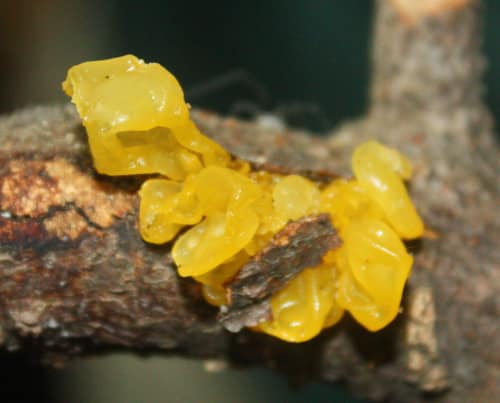
Jelly Fungus Neighbor no rights reserved · cc0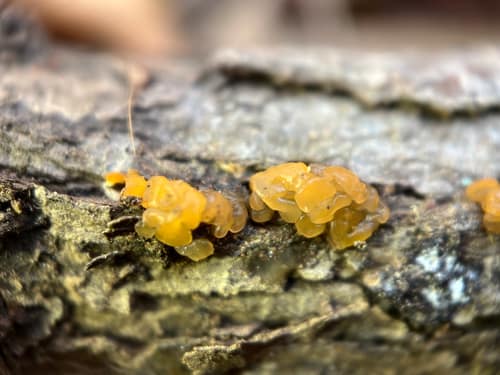
Same Family (c) Serenella Linares, some rights reserved (CC BY) · cc-by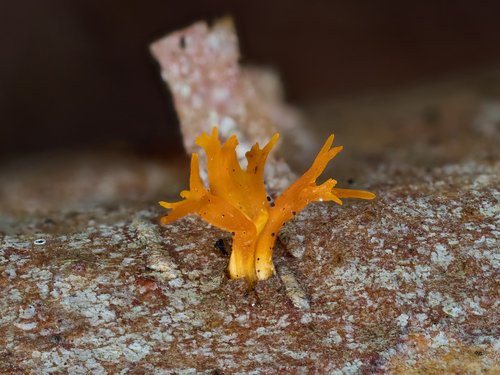
Same Family (c) Justin Paulin, some rights reserved (CC BY), uploaded by Justin Paulin · cc-by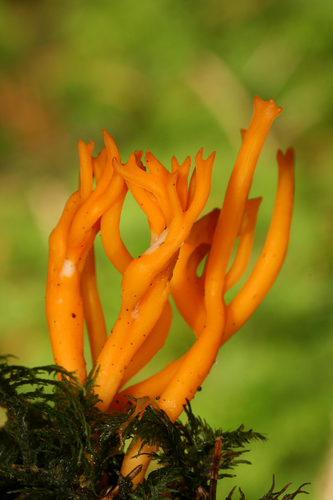
Same Family (c) Didier, some rights reserved (CC BY-SA) · cc-by-sa
Help improve the field guideSomething wrong?
Checking your Fauna account…Report a name, category, or profile issue for review.