
Bird
Greater Scaup
Aythya marilaAlso known as Bluebill, Broadbill, Scaup
Greater scaup gather in massive winter rafts on coastal bays and estuaries, diving several meters beneath the surface to pluck mollusks from muddy bottoms. Breeding pairs disperse across Arctic tundra wetlands each spring, where females conceal well-insulated down nests in dense sedges near open water. Their swift flight and striking white wing stripes make them a classic silhouette over open saltwater along cold northern coastlines.
Diving DuckMigratoryAquatic
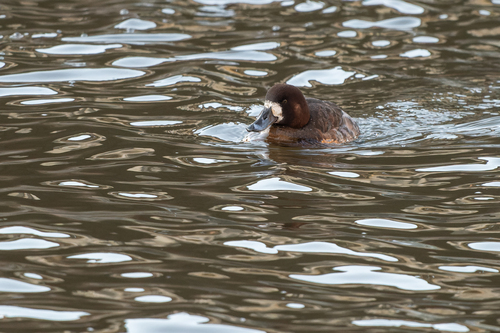
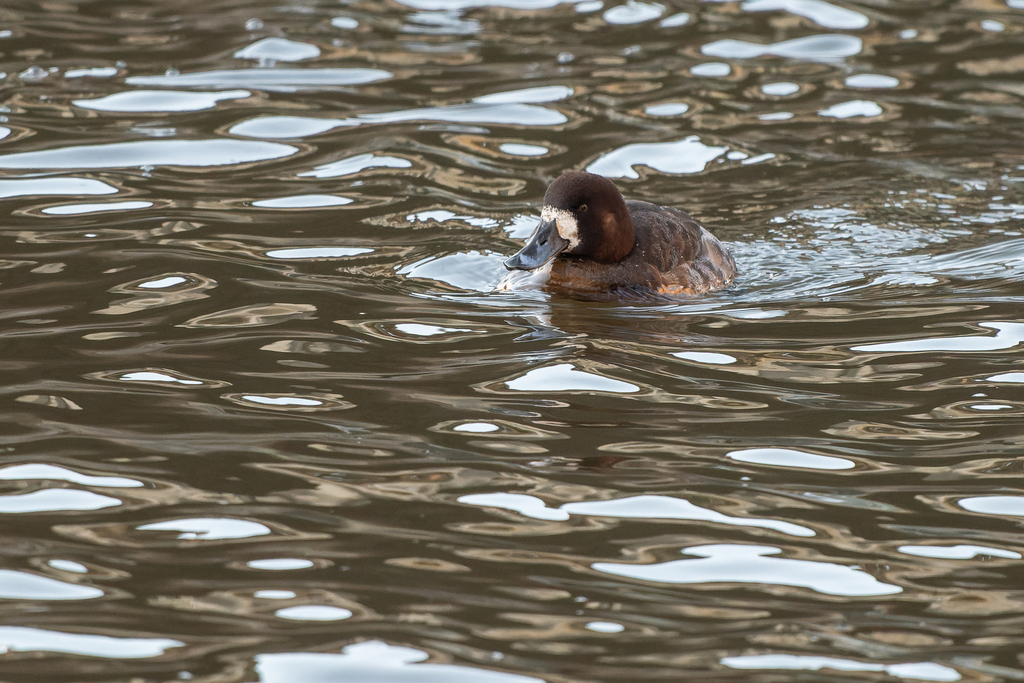
—observations
—countries
—peak records
Least ConcernConservation statusIUCN Red List categoriesLCNTVUENCREWEXLeast ConcernRed List categories, explained →
Diet & preyBlue Mussel, Clam, Amphipod
Predators
- Peregrine Falcon
- Bald Eagle
- Red Fox
ThreatsDegradation of wetland breeding grounds, oil spills, and heavy metal bioaccumulation
HabitatsArctic tundra lakes and bogs in summer; coastal bays, estuaries, and large open lakes in winter
Life span10–20 years
Classification
- FamilyAnatidae
- SpeciesAythya marila
Range data is not available yet.
Interaction riskLow
- Low
- Moderate
- High
- Very high
- Why interaction risk is low
- Safe to observe at a normal distance.
Responsible observation
- Optics: Use a spotting scope to scan open saltwater bays for large offshore rafts.
- Identification: Note the smoothly rounded head profile and wide bill to distinguish from lesser scaup.
- Distance: Remain on shoreline paths so resting winter flocks are not flushed into cold open water.
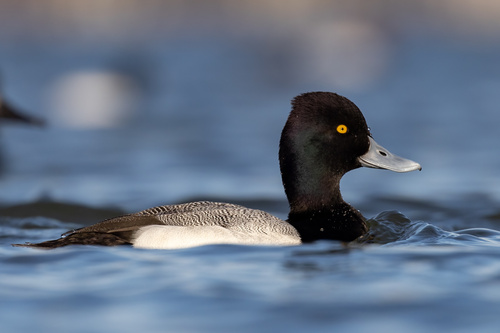
Close Relative (c) Matt Felperin, some rights reserved (CC BY), uploaded by Matt Felperin · cc-by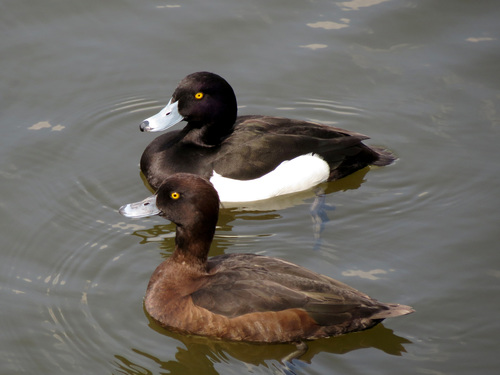
Close Relative (c) Katja Schulz, some rights reserved (CC BY) · cc-by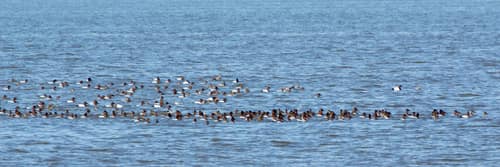
Close Relative (c) Elaine with Grey Cats, some rights reserved (CC BY-SA) · cc-by-sa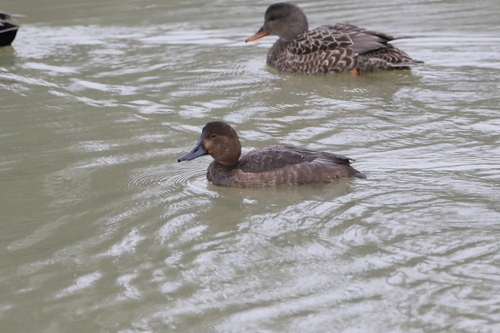
Close Relative (c) Eric Habisch, some rights reserved (CC BY) · cc-by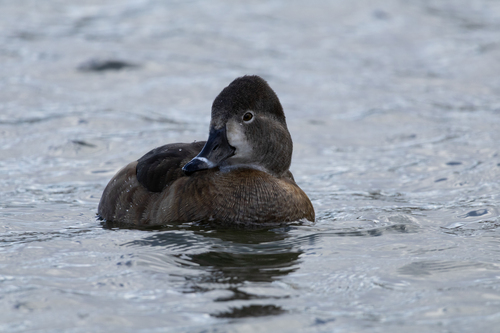
Close Relative (c) James Weaver, some rights reserved (CC BY) · cc-by
Help improve the field guideSomething wrong?
Checking your Fauna account…Report a name, category, or profile issue for review.