
Bird
Snow Goose
Anser caerulescensAlso known as Blue Goose, Lesser Snow Goose, Greater Snow Goose, Wavey
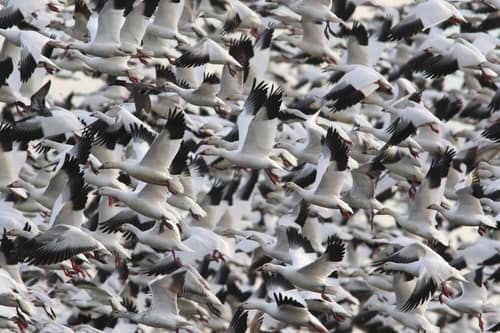
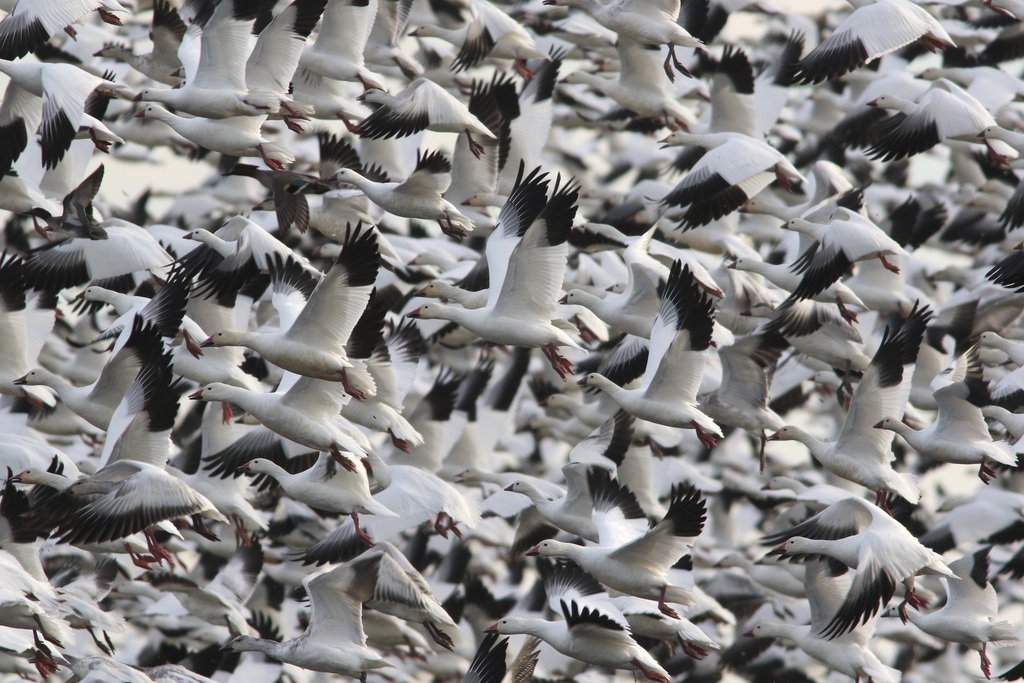
Flocking by the tens of thousands, snow geese create sweeping white blizzards across North American flyways during migration, filling the air with a constant, high-pitched chorus of nasal barks. Adults mate for life and nest in dense colonies across coastal Arctic tundra, where both classic white and slate-gray 'blue' morphs interbreed freely. Their voracious feeding style of digging up roots and rhizomes has profoundly reshaped fragile northern coastal ecosystems as continental numbers have surged.
MigratoryFlockingWaterfowl
—observations
—countries
—peak records
Least ConcernConservation statusIUCN Red List categoriesLCNTVUENCREWEXLeast ConcernRed List categories, explained →
Diet & preySedge Tubers, Marsh Grasses, Waste Grain
Predators
- Arctic Fox
- Bald Eagle
- Snowy Owl
ThreatsAvian influenza, habitat degradation on breeding grounds, heavy hunting pressure
HabitatsArctic coastal tundra, wetlands, tidal marshes, flooded agricultural fields
Life span15–20 years
Classification
- OrderAnseriformes
- FamilyAnatidae
- GenusAnser
- SpeciesAnser caerulescens
Range data is not available yet.
Interaction riskLow
- Low
- Moderate
- High
- Very high
- Why interaction risk is low
- Safe to observe at a normal distance.
Responsible observation
- Flock Etiquette: Remain inside viewing blinds or your vehicle along refuge drives to avoid flushing massive resting flocks.
- Scanning Flocks: Use spotting scopes to search white aggregations for dark-phase blue morphs and the stubby-billed Ross's goose.
- Timing Migrations: Plan visits to key migratory stopover wetlands during peak November and March flight windows.
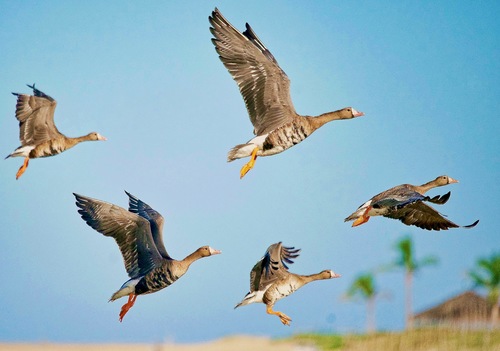
Frequent Companion (c) Bill Levine, some rights reserved (CC BY), uploaded by Bill Levine · cc-by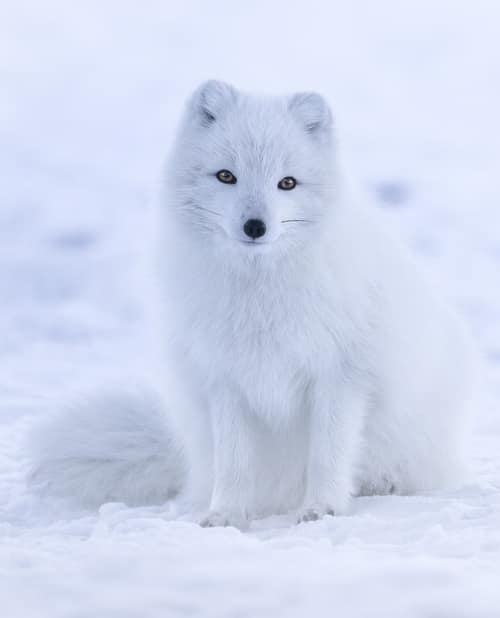
Predator Jonathen Pie https://unsplash.com/@r3dmax / CC0 · cc0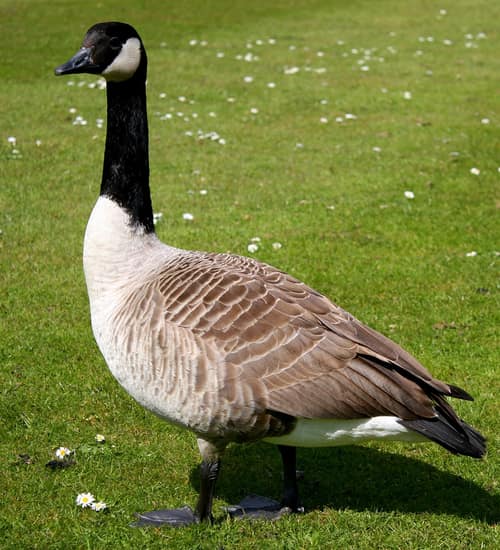
Competitor Rror / CC BY-SA 3.0 · cc-by-sa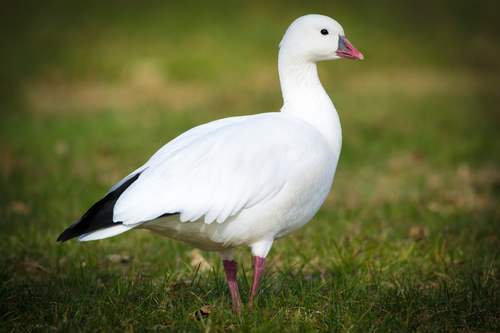
Close Relative (c) Andrew Cannizzaro, some rights reserved (CC BY), uploaded by Andrew Cannizzaro · cc-by
Help improve the field guideSomething wrong?
Checking your Fauna account…Report a name, category, or profile issue for review.