
Bird · GBIF taxon 2498034
Swan Goose
Anser cygnoidesThe Swan Goose is a large long-necked goose with a dark crown and hindneck contrasting against pale cheeks and throat. Wild flocks graze wetlands and steppe and migrate between inland breeding grounds and wintering waters.
Migratory GooseLong NeckWetland Grazer
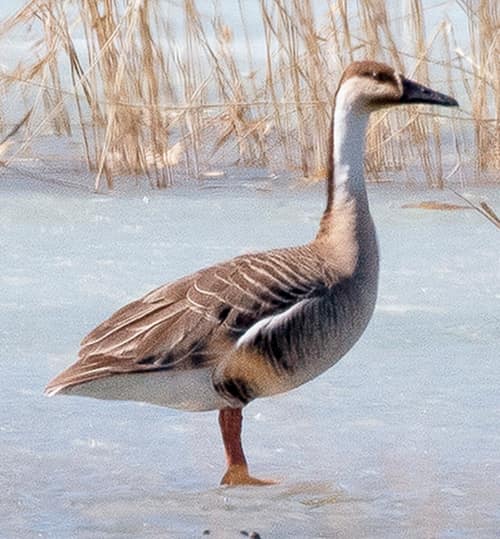
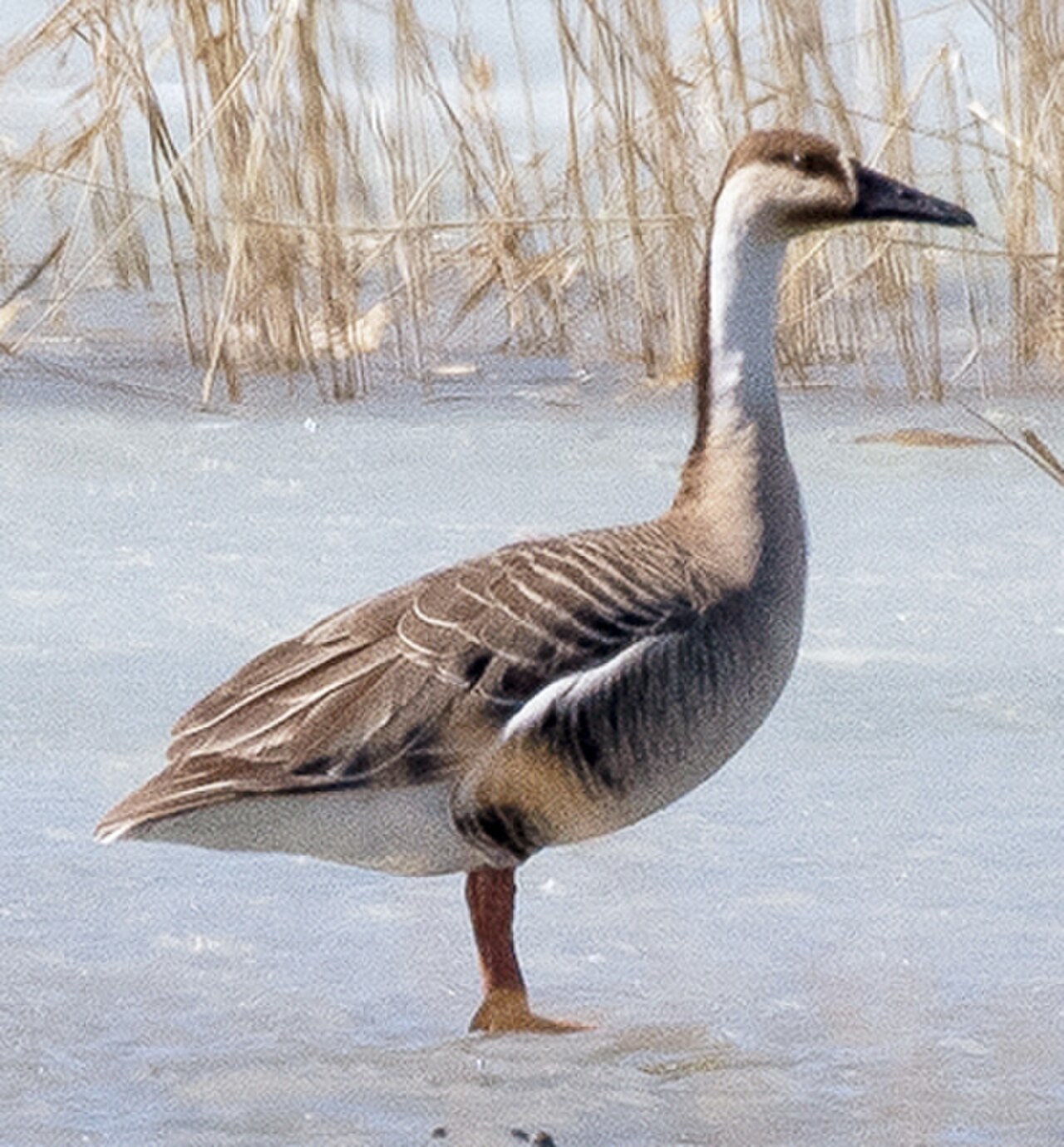
—observations
—countries
—peak records
EndangeredConservation statusIUCN Red List categoriesLCNTVUENCREWEXEndangeredRed List categories, explained →
Diet & prey
- Aquatic insects
Predators
- Foxes
- Eagles
- Large gulls
ThreatsWetland loss, hunting, disturbance, agricultural change, and small population size
HabitatsSteppe wetlands, river valleys, marshes, lakeshores, and coastal wintering grounds
Life spanOften 10 to 20 years
Size / weightNot available
Classification
- OrderAnseriformes
- FamilyAnatidae
- GenusAnser
- SpeciesAnser cygnoides
Range data is not available yet.
Interaction riskLow
- Low
- Moderate
- High
- Very high
- Why interaction risk is low
- A defending goose can bite and strike with its wings; never approach nests, young, or displaying adults.
- Why it is dangerous
- A large adult defending a nest or young can bite and deliver forceful strikes with its wings.
- How to recognize a risky encounter
- Confirm the long-necked goose with a dark hindneck and contrasting pale face and throat.
- What to do
- Never feed, touch, or corner geese; retreat slowly at the first defensive posture or hiss.
- What to notice
- Distinguish truly wild birds from domestic goose forms before recording conservation-sensitive observations.
- Support conservation
- Keep distant, avoid playback, and generalize precise breeding or roost coordinates in public reports.
Responsible observation
- Profile: Look for the unusually long neck and sharply divided head pattern.
- Distance: Use a scope and avoid displacing feeding flocks.
Help improve the field guideSomething wrong?
Checking your Fauna account…Report a name, category, or profile issue for review.