
Bird · GBIF taxon 2497135
Sri Lanka Frogmouth
Batrachostomus moniligerAlso known as Ceylon Frogmouth, Sri Lankan Frogmouth
Sri Lanka frogmouths blend seamlessly into the forest understory by mimicking dead leaves with their complex rufous and mottled grey plumage. Pairs often roost together on the exact same branch for months, sitting motionless with bills pointed upward to complete their wooden disguise. At dusk, they awaken to hunt nocturnal insects, capturing moths and beetles mid-air with a surprisingly wide, frog-like gape.
NocturnalCamouflagedForest Bird
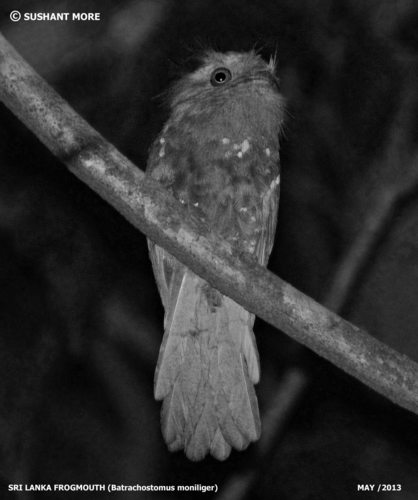
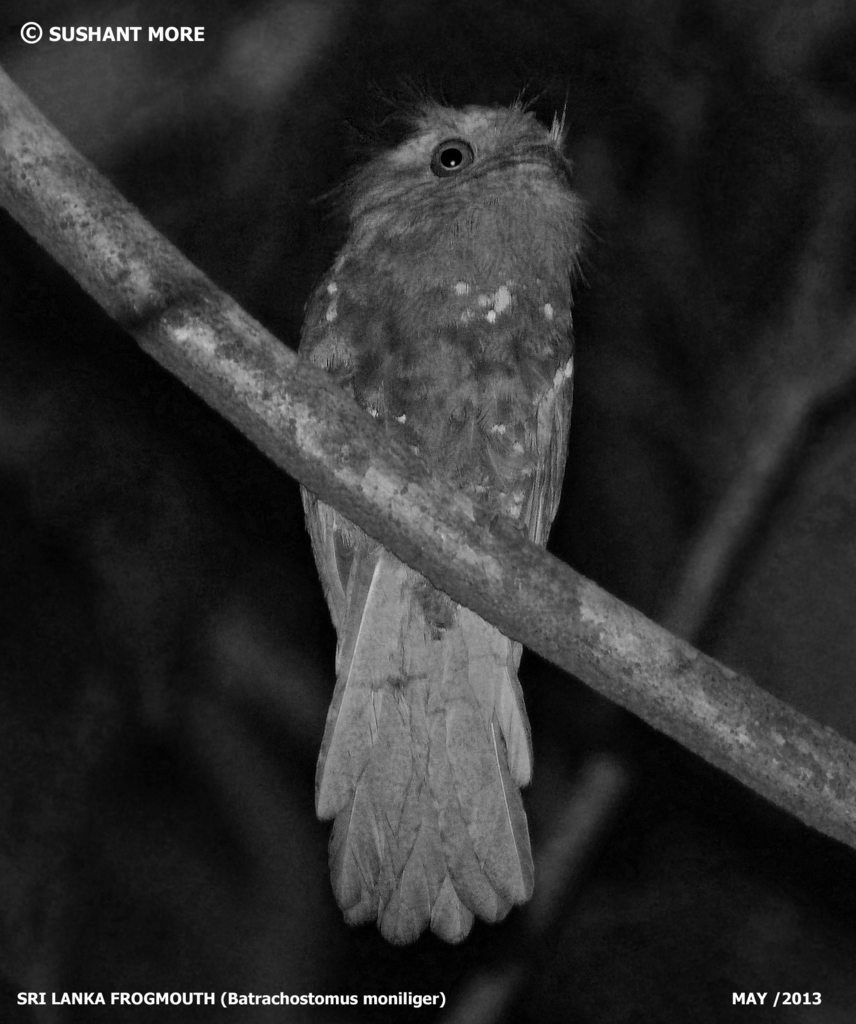
Licensed referenceno rights reserved, uploaded by S.MORE · cc0
—observations
—countries
—peak records
Least ConcernConservation statusIUCN Red List categoriesLCNTVUENCREWEXLeast ConcernRed List categories, explained →
Diet & prey
- Moths
- Beetles
- Grasshoppers
Predators
- Arboreal snakes
- Raptors
- Feral cats
ThreatsHabitat fragmentation, forest fires, agricultural expansion
HabitatsDense tropical evergreen forests, bamboo thickets, shaded tea plantations
Life span10–15 years
Size / weightNot available
Classification
- FamilyPodargidae
- SpeciesBatrachostomus moniliger
Range data is not available yet.
Interaction riskLow
- Low
- Moderate
- High
- Very high
- Why interaction risk is low
- Safe to observe at a normal distance.
- What to notice
- Recognized by its wide hooked bill, white-spotted collar, and dried-leaf pattern.
- Support conservation
- Observe quietly from established trails without using bright artificial flashlights.
Responsible observation
- Listen at Twilight: Focus on its distinctive cackling calls uttered around dawn and dusk.
- Search the Understory: Look for still, upright roosting postures in dense bamboo or low branches.
- Keep a Respectful Distance: Avoid shining bright light beams directly on roosting pairs.
 Image unavailable
Related Order Close Relative Close Relative 
Family Member (c) Sockrosma, some rights reserved (CC BY) · cc-by
Help improve the field guideSomething wrong?
Checking your Fauna account…Report a name, category, or profile issue for review.