
Bird · GBIF taxon 2496723
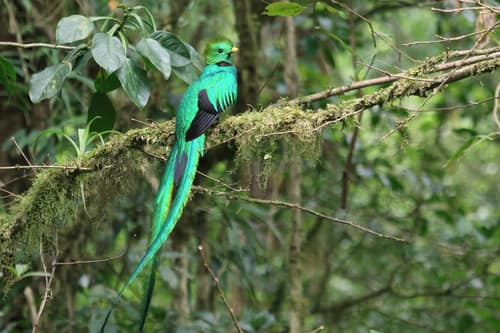
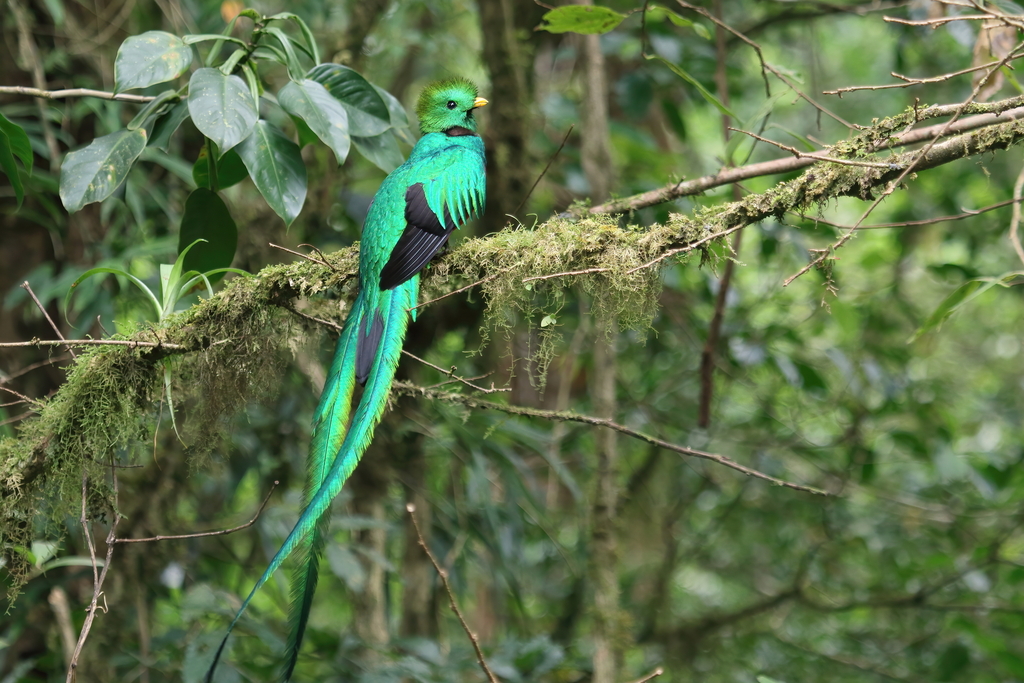
Resplendent Quetzal
Pharomachrus mocinnoAlso known as Guatemalan Quetzal, Central American Quetzal
Resplendent quetzals play a vital role in cloud forest ecosystems by dispersing the seeds of wild avocado trees. Males grow twin tail coverts up to three feet long during the breeding season, shimmering in emerald and turquoise as they perform aerial courtship displays. They hollow out nests in decaying tree snags, where both parents take turns incubating eggs and feeding chicks.
ColorfulCloud ForestFrugivorous
—observations
—countries
—peak records
Near ThreatenedConservation statusIUCN Red List categoriesLCNTVUENCREWEXNear ThreatenedRed List categories, explained →
Diet & prey
- Wild Avocados
- Tree Frogs
- Insects
Predators
- Ornate Hawk-Eagle
- Kinkajou
- Gray Squirrel
ThreatsHabitat loss, forest fragmentation, and climate change
HabitatsMontane cloud forests
Life span10–15 years
Size / weightNot available
Classification
- FamilyTrogonidae
- SpeciesPharomachrus mocinno
Range data is not available yet.
Interaction riskLow
- Low
- Moderate
- High
- Very high
- Why interaction risk is low
- Safe to observe at a normal distance.
- What to notice
- Recognizable by bright emerald plumage, a crimson chest, and long trailing tail plumes on breeding males.
- Support conservation
- Stay on designated forest trails, avoid loud noises, and never use recorded calls during the breeding season.
Responsible observation
- Patience at fruiting trees: Stake out fruiting wild avocado trees where quetzals frequently feed during early morning hours.
- Listen for calls: Listen for their loud whistle call, often described as a soft, drawn-out double note.
- Keep your distance: Use binoculars or a spotter scope to view nesting hollows without scaring parent birds.
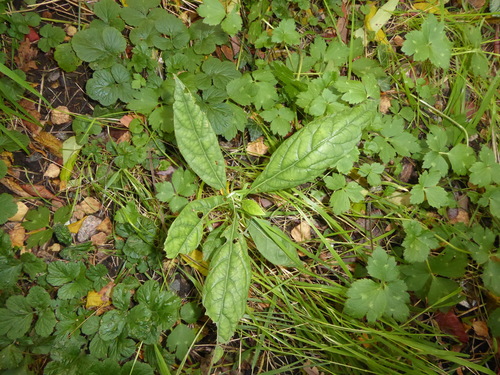
Food Source (c) jamie-aa, some rights reserved (CC BY) · cc-by
Close Relative (c) Frank Dietze, some rights reserved (CC BY) · cc-by Image unavailable
Close Relative 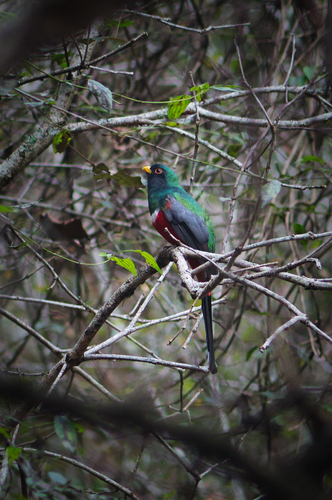
Family Relative (c) Abraham A. Gómez Landero, some rights reserved (CC BY) · cc-by
Help improve the field guideSomething wrong?
Checking your Fauna account…Report a name, category, or profile issue for review.