
Bird
Vieillot's Black Weaver
Ploceus nigerrimusAlso known as Vieillot's Weaver, Black Weaver
Breeding males display striking jet-black plumage highlighted by pale yellowish-white eyes, while females present a far more cryptic streaked olive-brown pattern. These social songbirds form noisy nesting colonies in tall trees or bamboo clumps, weaving untidy globular nests with long downward-facing entrance tubes. Flocks forage actively along forest clearings and agricultural margins, calling constantly with a distinctive buzzy chatter.
ColonialSongbirdSeed-Eater
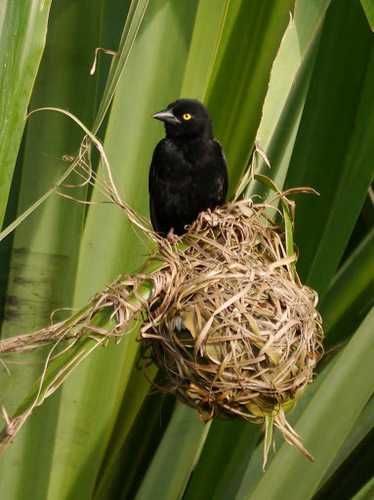
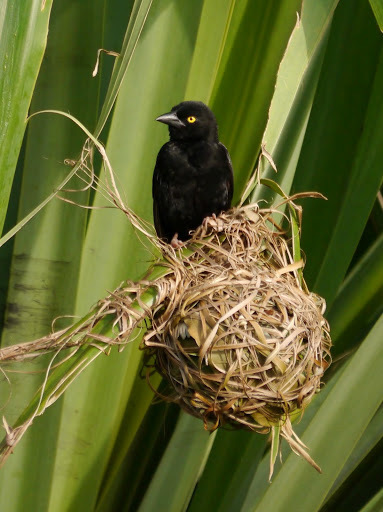
—observations
—countries
—peak records
Least ConcernConservation statusIUCN Red List categoriesLCNTVUENCREWEXLeast ConcernRed List categories, explained →
Diet & preyGrass seeds, Insects, Plant nectar
Predators
- African Harrier-Hawk
- Tree snakes
- Monkeys
ThreatsLocal habitat destruction and land clearing
HabitatsForest edges, secondary growth, clearings, and agricultural land
Life span5–10 years
Classification
- OrderPasseriformes
- FamilyPloceidae
- GenusPloceus
- SpeciesPloceus nigerrimus
Range data is not available yet.
Interaction riskLow
- Low
- Moderate
- High
- Very high
- Why interaction risk is low
- Safe to observe at a normal distance.
Responsible observation
- Colony Spotting: Look high in isolated trees along forest edges where bright yellow eyes glint from dark foliage.
- Binocular Focus: Use optics to distinguish males from other dark weavers by noting their distinct pale iris.
- Quiet Approach: Observe active nesting trees from a respectful distance to avoid scaring foraging parents.
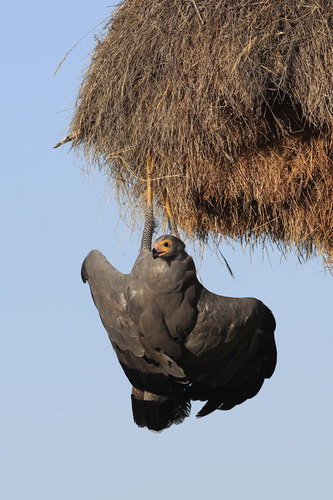
Predator (c) Yathin S Krishnappa, some rights reserved (CC BY-SA) · cc-by-sa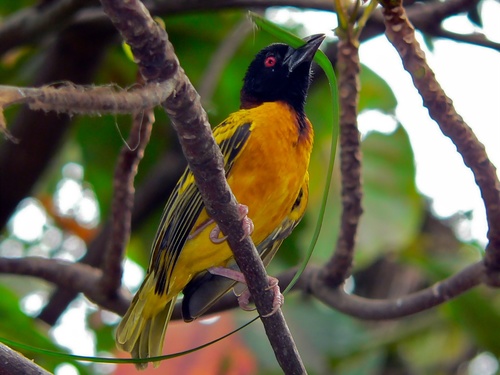
Close Relative (c) Bernard DUPONT, some rights reserved (CC BY-SA) · cc-by-sa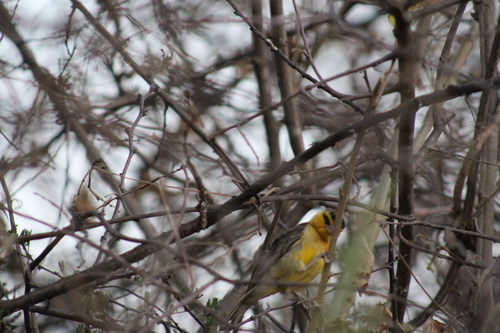
Close Relative no rights reserved · cc0
Help improve the field guideSomething wrong?
Checking your Fauna account…Report a name, category, or profile issue for review.