
Bird · GBIF taxon 2494058
Village Weaver
Ploceus cucullatusAlso known as Spotted-backed Weaver, Black-headed Weaver, Layard's Weaver
Village weavers are gregarious songbirds renowned for establishing bustling, noisy nesting colonies in trees overhanging villages, rivers, and cultivated fields. Males weave intricate, kidney-shaped globes from strips of grass and palm blades, hanging upside down while flapping their wings and singing intensely to attract passing females. Once paired, females inspect the architecture closely and line accepted nests with soft vegetation before laying eggs that exhibit extraordinary variations in color and spotting.
ColonialVocalArchitect
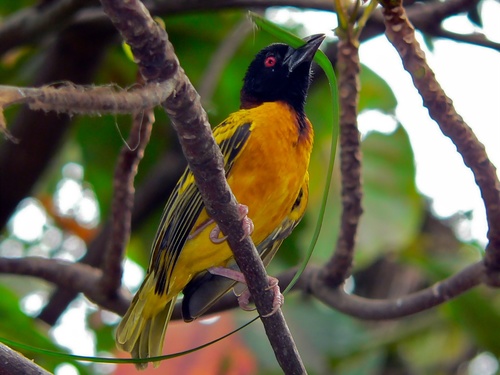
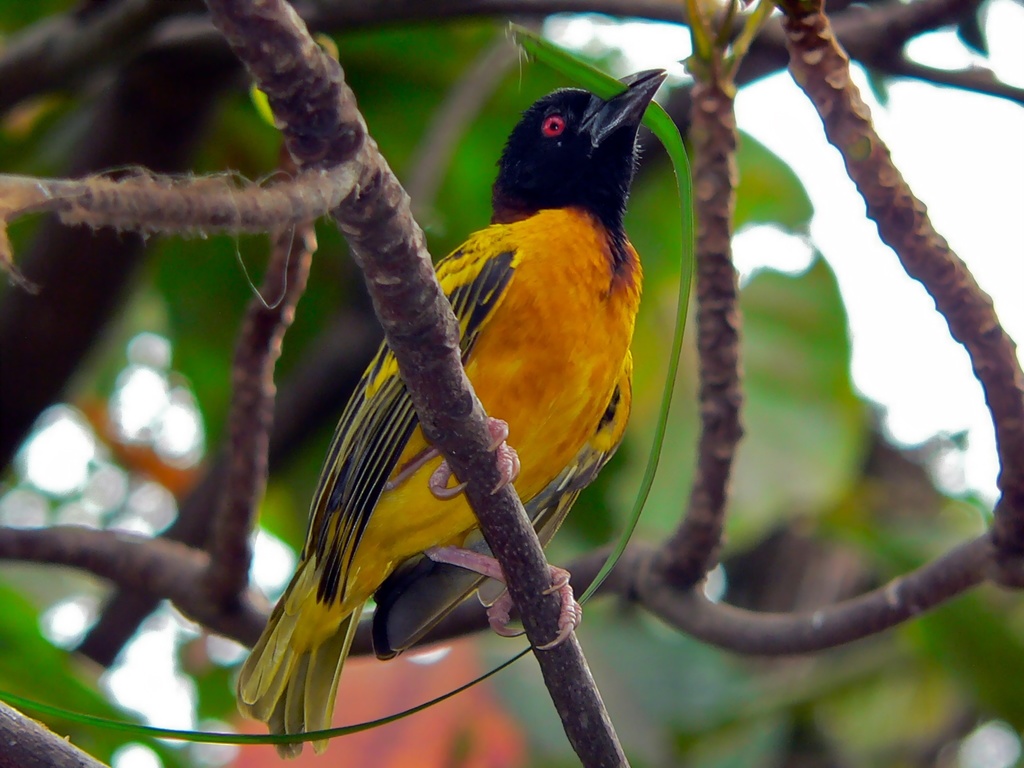
—observations
—countries
—peak records
Least ConcernConservation statusIUCN Red List categoriesLCNTVUENCREWEXLeast ConcernRed List categories, explained →
Diet & prey
- Grass seeds
- Termites
- Caterpillars
Predators
- Boomslang
- Barn Owl
- Black Kite
ThreatsAgricultural control measures, habitat disruption, and localized nest predation
HabitatsSavannas, woodlands, cultivated land, wetlands, and human settlements
Life span10–14 years
Classification
- OrderPasseriformes
- FamilyPloceidae
- GenusPloceus
- SpeciesPloceus cucullatus
Range data is not available yet.
Interaction riskLow
- Low
- Moderate
- High
- Very high
- Why interaction risk is low
- Safe to observe at a normal distance.
Responsible observation
- Look for colonial trees: Colonies often occupy single large trees or palms, making them easy to spot by sound.
- Watch male courtship: Visit in the breeding season to watch males display upside down from newly woven nests.
- Keep binoculars handy: Use optics to study the elaborate weaving technique without alarming the colony.
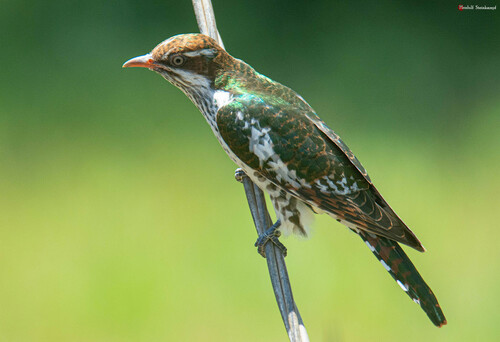
Brood Parasite (c) Rudolph Steenkamp, some rights reserved (CC BY-SA), uploaded by Rudolph Steenkamp · cc-by-sa Image unavailable
Neighbor 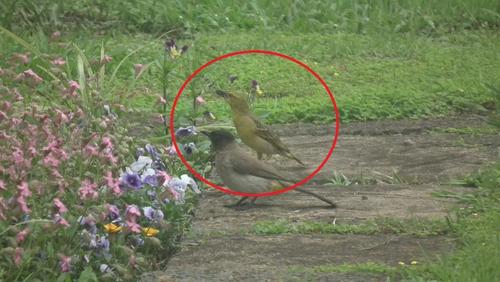
Close Relative (c) Shaun Swanepoel, some rights reserved (CC BY) · cc-by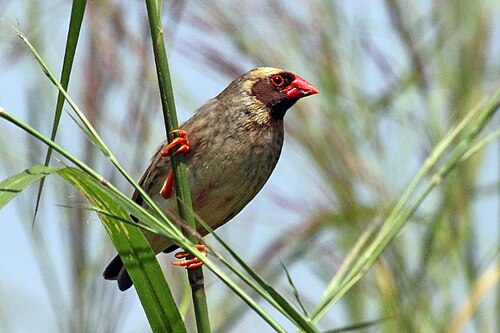
Same Family Charles J. Sharp / CC BY-SA 4.0 · cc-by-sa
Help improve the field guideSomething wrong?
Checking your Fauna account…Report a name, category, or profile issue for review.