
Bird
Baya Weaver
Ploceus philippinusAlso known as Indian Weaverbird, Common Baya
Baya weavers are renowned for their architectural prowess, gathering in bustling breeding colonies where males weave pendulous, retort-shaped grass nests complete with long vertical entrance tubes. During the monsoon, vibrant yellow-crowned males flutter their wings and chirp energetically to attract females, who thoroughly inspect the structural integrity of the nest before choosing a mate. Outside the breeding season, large nomadic flocks sweep through grasslands and paddy fields, foraging on seeds in tight, coordinated waves.
ArchitecturalColonialGranivore
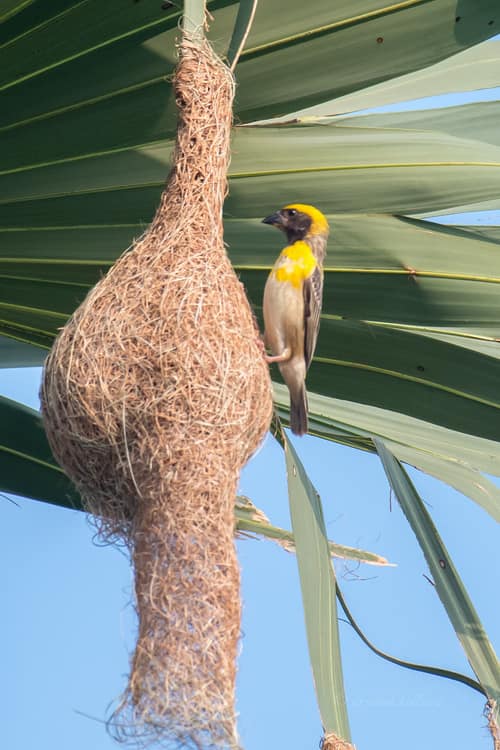
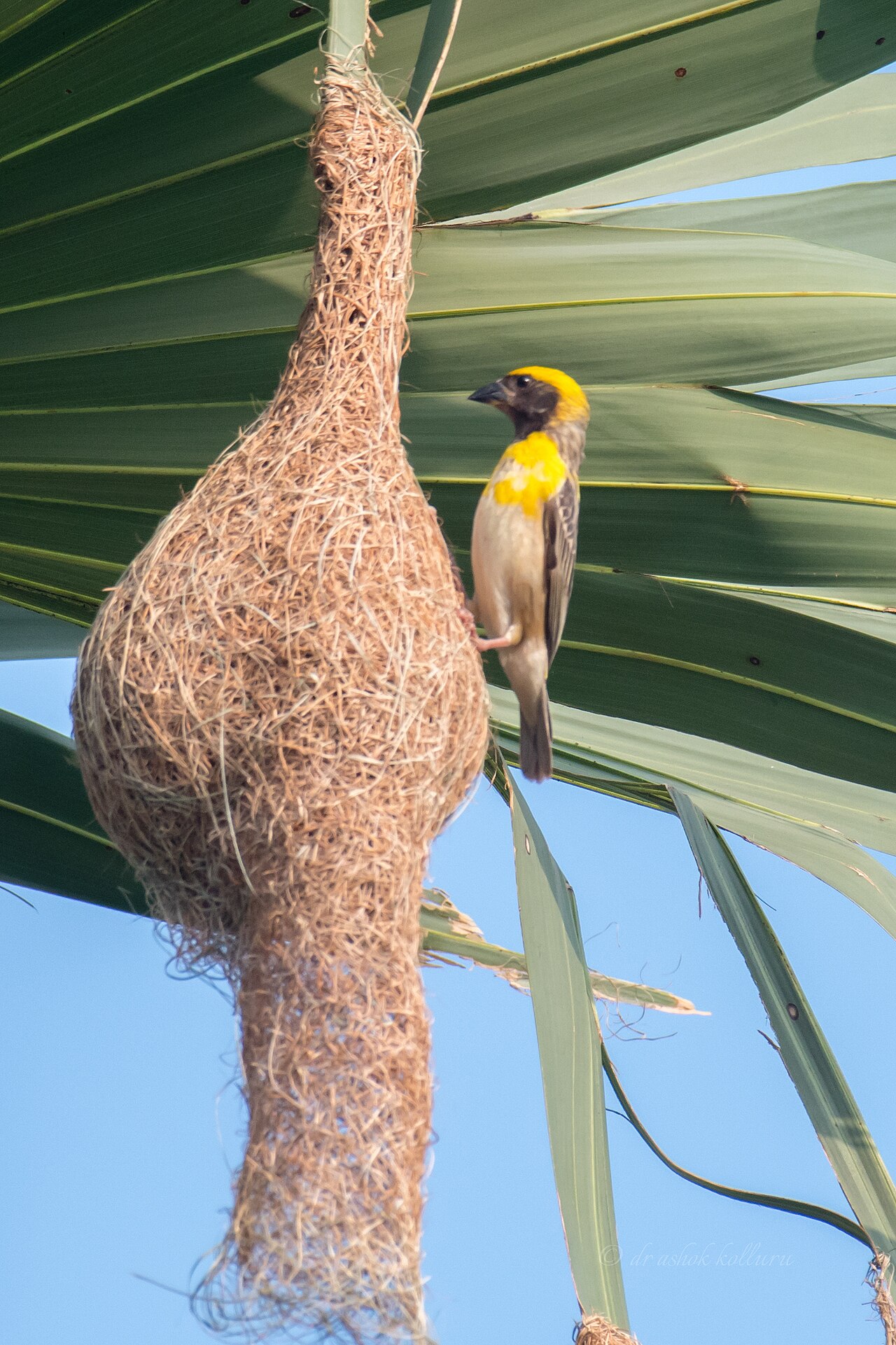
—observations
—countries
—peak records
Least ConcernConservation statusIUCN Red List categoriesLCNTVUENCREWEXLeast ConcernRed List categories, explained →
Diet & preyGrass seeds, Rice grain, Caterpillars and spiders
Predators
- Shikra
- Indian Rat Snake
- House Crow
ThreatsAgricultural pesticide use, removal of palm and thorny nesting trees, and trapping
HabitatsGrasslands, scrublands, cultivated fields, and wetland edges
Life span5–10 years
Classification
- FamilyPloceidae
- SpeciesPloceus philippinus
Range data is not available yet.
Interaction riskLow
- Low
- Moderate
- High
- Very high
- Why interaction risk is low
- Safe to observe at a normal distance.
Responsible observation
- Breeding Season: Look for active colonies in thorny trees or palm fronds overhanging water bodies during the monsoon.
- Observation: Use binoculars to watch males display with fluttering wings beside their half-finished nests.
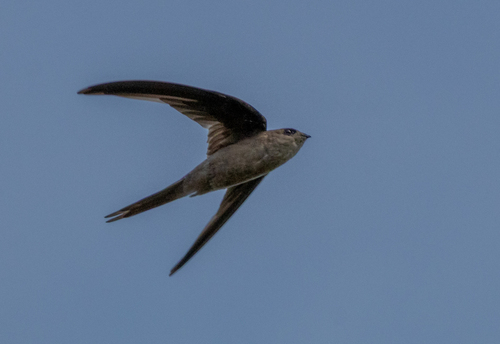
Nesting Neighbor (c) sunnyjosef, some rights reserved (CC BY), uploaded by sunnyjosef · cc-by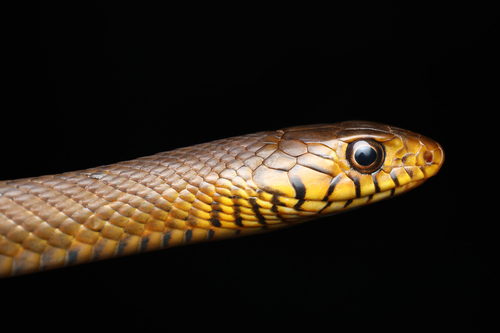
Predator (c) Arun Kumar Thyadi, some rights reserved (CC BY-SA) · cc-by-sa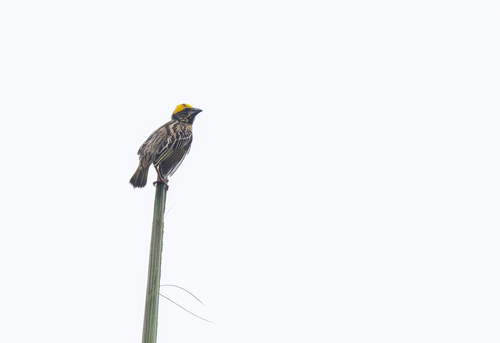
Close Relative (c) Forest Botial-Jarvis, some rights reserved (CC BY) · cc-by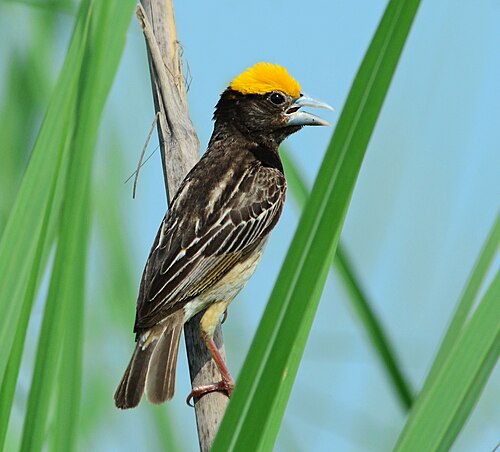
Close Relative Savi.odl / CC BY-SA 3.0 · cc-by-sa
Help improve the field guideSomething wrong?
Checking your Fauna account…Report a name, category, or profile issue for review.