
Bird
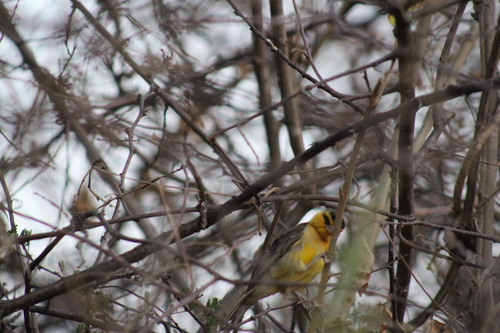
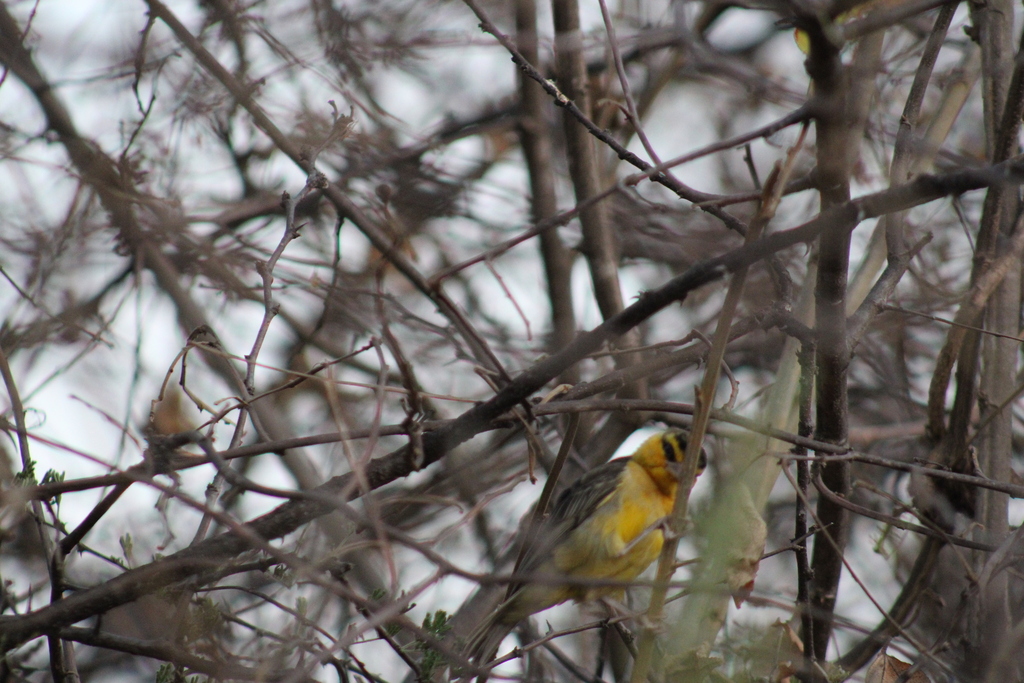
Black-necked Weaver
Ploceus nigricollisBlack-necked weavers are secretive songbirds of tropical African woodlands and forest edges, frequently foraging in pairs or small family parties rather than massive flocks. Unlike colonial weavers, they typically nest solitarily, crafting an intricate retort-shaped nest with a downward-facing entry tunnel woven from coarse grasses and palm fibers. They creep along tree trunks and vine tangles with agile precision, actively probing foliage and crevices for insects.
SongbirdInsectivoreForest Dweller
—observations
—countries
—peak records
Least ConcernConservation statusIUCN Red List categoriesLCNTVUENCREWEXLeast ConcernRed List categories, explained →
Diet & preyCaterpillars, Beetles, Spiders
Predators
- African Goshawk
- Boomslang
- African Harrier-Hawk
ThreatsHabitat fragmentation and severe deforestation
HabitatsForest edges, secondary woodland, riverine thickets, and overgrown gardens
Life span5–10 years
Classification
- OrderPasseriformes
- FamilyPloceidae
- GenusPloceus
- SpeciesPloceus nigricollis
Range data is not available yet.
Interaction riskLow
- Low
- Moderate
- High
- Very high
- Why interaction risk is low
- Safe to observe at a normal distance.
Responsible observation
- Binocular Spotting: Watch dense vine tangles and mid-story foliage where pairs forage quietly.
- Listen Carefully: Tune in for wheezy, chattering contact calls that betray their presence in thick cover.
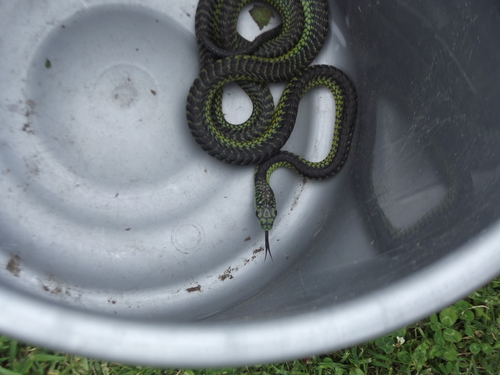
Predator no rights reserved · cc0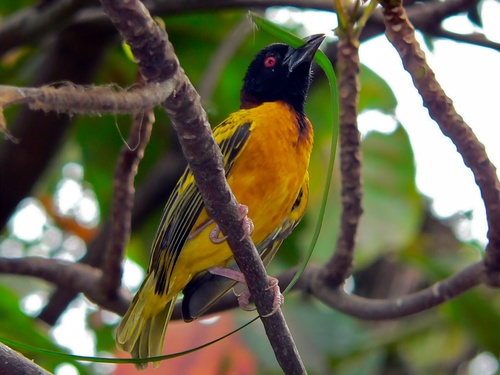
Close Relative (c) Bernard DUPONT, some rights reserved (CC BY-SA) · cc-by-sa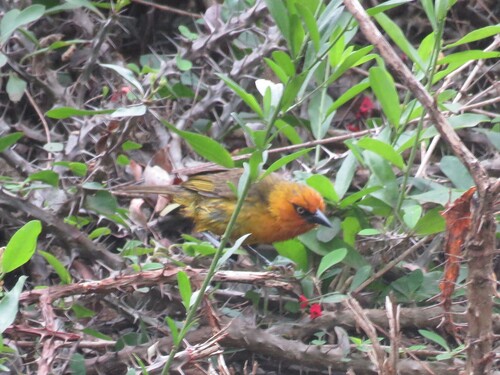
Close Relative (c) Bruno - Yolande Zanette, some rights reserved (CC BY) · cc-by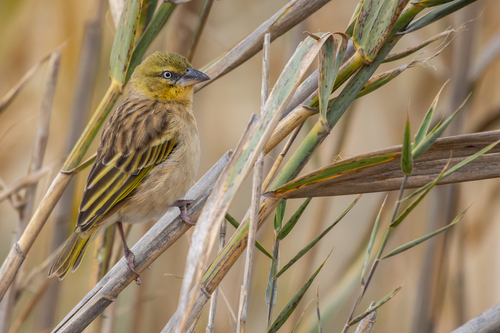
Close Relative (c) Diego González Dopico, some rights reserved (CC BY), uploaded by Diego González Dopico · cc-by
Help improve the field guideSomething wrong?
Checking your Fauna account…Report a name, category, or profile issue for review.