
Bird
African Firefinch
Lagonosticta rubricataAlso known as Blue-billed Firefinch, Dark-backed Firefinch
African firefinches spend their days foraging quietly on the ground in pairs or small family parties, fluttering through dense tangles and rank grass. Males display a striking crimson plumage with fine white specks along the flanks and a distinctive slate-blue bill, while females wear softer brownish-grey tones with subdued red accents. Pairs build concealed domed nests from grass blades and feathers low in thickets, communicating with soft trilling contact calls to stay connected beneath heavy cover.
SongbirdGranivoreColorful
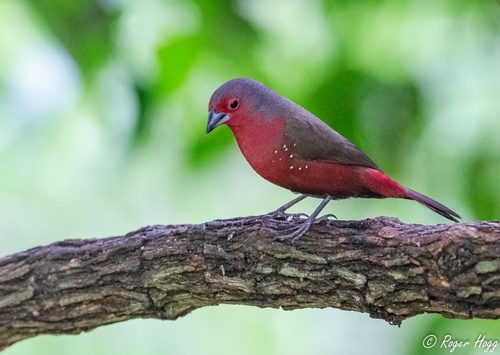
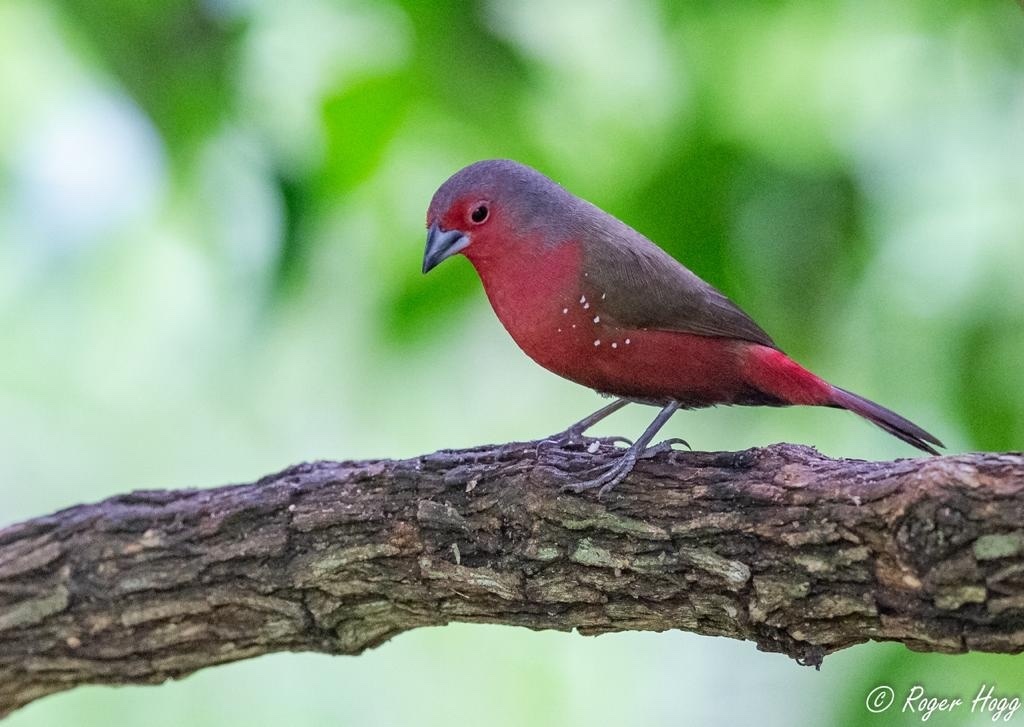
—observations
—countries
—peak records
Least ConcernConservation statusIUCN Red List categoriesLCNTVUENCREWEXLeast ConcernRed List categories, explained →
Diet & preyGrass seeds, Termites, Small spiders
Predators
- Little sparrowhawk
- Domestic cat
- Boomslang
ThreatsLocalized habitat clearing, agricultural expansion, and predation by domestic cats
HabitatsMoist savanna, dense scrub, woodland edges, and overgrown gardens
Life span3–6 years
Classification
- FamilyEstrildidae
- SpeciesLagonosticta rubricata
Range data is not available yet.
Interaction riskLow
- Low
- Moderate
- High
- Very high
- Why interaction risk is low
- Safe to observe at a normal distance.
Responsible observation
- Patience in Cover: Watch overgrown thickets quietly, as these shy finches feed mostly on bare ground under vegetation.
- Listen for Calls: Learn their distinctive soft, whistling trill, which often reveals their presence before they are seen.
 Image unavailable
Brood Parasite 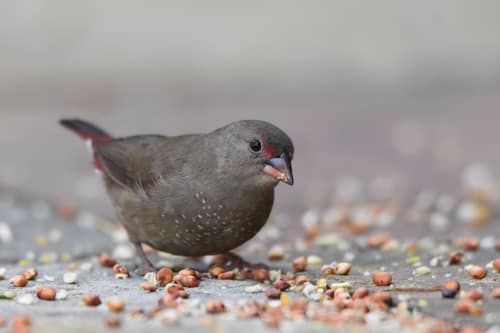
Close Relative (c) Justin Ponder, some rights reserved (CC BY), uploaded by Justin Ponder · cc-by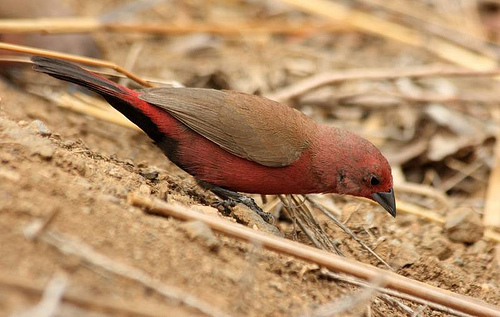
Close Relative (c) Alan Manson, some rights reserved (CC BY-SA) · cc-by-sa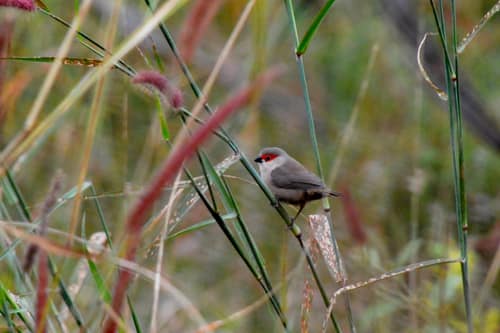
Same Family (c) Douglas, some rights reserved (CC BY), uploaded by Douglas · cc-by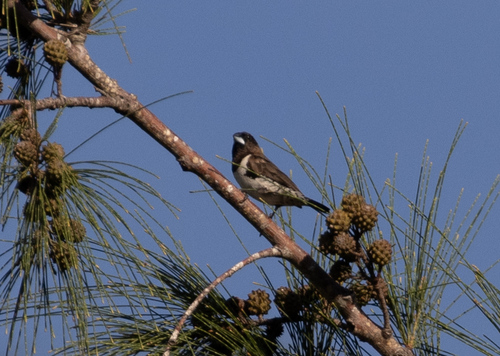
Same Family (c) avocat, some rights reserved (CC BY) · cc-by
Help improve the field guideSomething wrong?
Checking your Fauna account…Report a name, category, or profile issue for review.