
Bird
Aquatic Warbler
Acrocephalus paludicolaAquatic warblers inhabit expansive sedge marshes and wet meadows across eastern Europe, weaving intricate nests low in vegetation tussocks where damp ground provides cover. Adult males deliver a hurried, rolling song from exposed stems during early morning and late evening, defending loose territories while females rear young independently. Uniquely among European songbirds, they practice a promiscuous mating system where both males and females mate with multiple partners each season.
MigratoryInsectivorousWetland
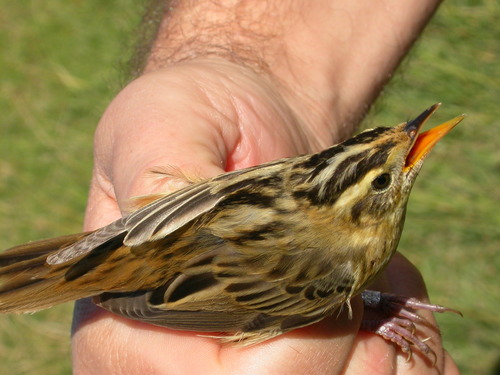
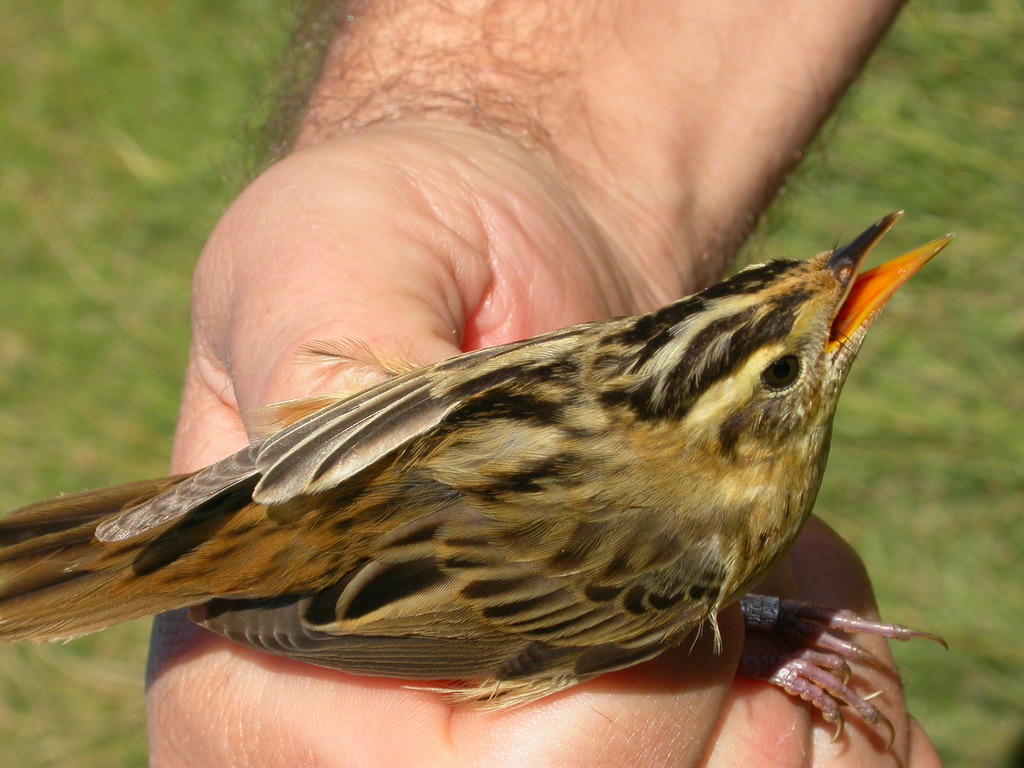
—observations
—countries
—peak records
VulnerableConservation statusIUCN Red List categoriesLCNTVUENCREWEXVulnerableRed List categories, explained →
Diet & preySpiders, Caterpillars, Damselflies
Predators
- Marsh Harrier
- American Mink
- Stoat
ThreatsWetland drainage, agricultural conversion, river canalization, peat extraction
HabitatsLowland sedge marshes, fen mires, floodplains
Life span3–6 years
Classification
- FamilyAcrocephalidae
- SpeciesAcrocephalus paludicola
Range data is not available yet.
Interaction riskLow
- Low
- Moderate
- High
- Very high
- Why interaction risk is low
- Safe to observe at a normal distance.
- What to notice
- Look for a small yellowish warbler featuring a bright pale central crown stripe and dark streaking across the back.
- Support conservation
- Maintain a respectful distance on marked paths and refrain from using audio playbacks near breeding grounds.
Responsible observation
- Observation Timing: Scan sedge beds at early morning or dusk during spring breeding when males sing from exposed stems.
- Auditory Identification: Listen for a hurried song starting with short clicking sounds and building into rapid trills.
- Habitat Caution: Stick strictly to boardwalks to avoid trampling delicate fen vegetation and low-built nests.
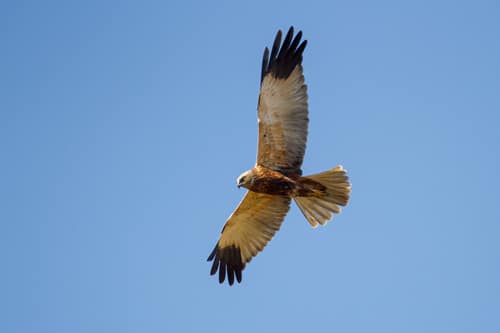
Predator (c) Artem Kuznetsov, some rights reserved (CC BY), uploaded by Artem Kuznetsov · cc-by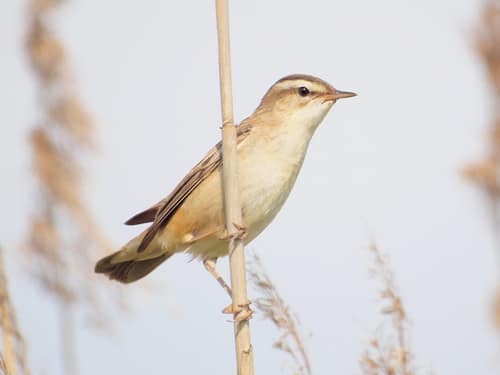
Close Relative (c) Billy Lindblom, some rights reserved (CC BY) · cc-by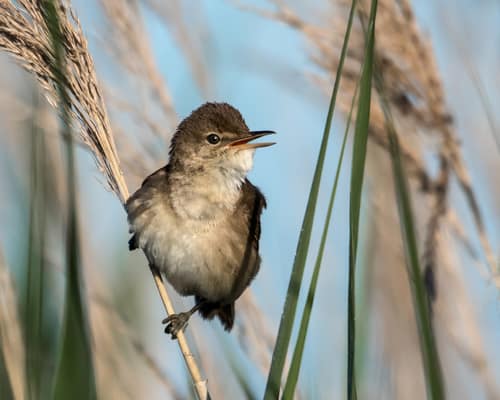
Close Relative (c) Alan Shearman, some rights reserved (CC BY) · cc-by Image unavailable
Close Relative
Help improve the field guideSomething wrong?
Checking your Fauna account…Report a name, category, or profile issue for review.