
Bird
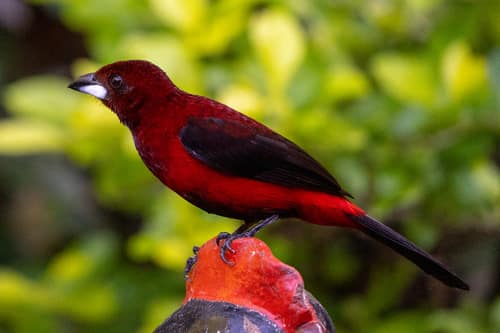
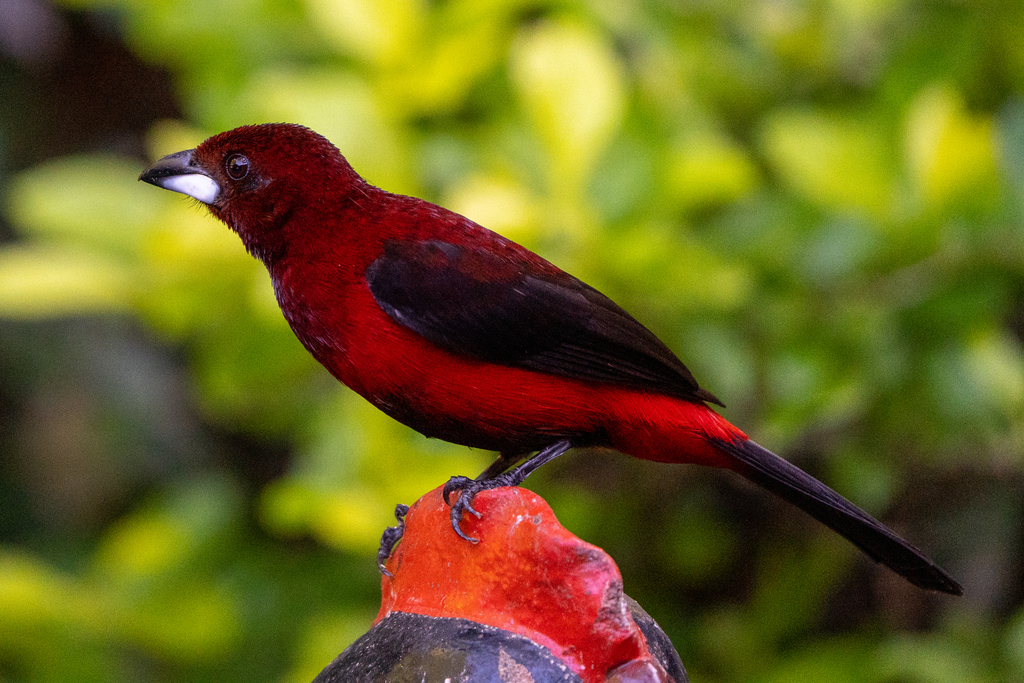
Crimson-backed Tanager
Ramphocelus dimidiatusAlso known as Sangre de Toro
Crimson-backed tanagers often travel in noisy, active family groups that forage together through tangled secondary growth, shrubby forest borders, and suburban clearings. Males flash a brilliant silver-white plate on their swollen lower bill alongside deep velvety red plumage, using sharp cheep calls to maintain flock contact. They readily tolerate disturbed landscapes and thrive around cultivated fruit gardens where they glean both small berries and slow-moving arthropods.
SongbirdFrugivoreNeotropical
—observations
—countries
—peak records
Least ConcernConservation statusIUCN Red List categoriesLCNTVUENCREWEXLeast ConcernRed List categories, explained →
Diet & preyCecropia catkins, Wild figs, Caterpillars
Predators
- Roadside Hawk
- Domestic cat
- Bird-eating snakes
ThreatsGenerally resilient, though pesticide misuse and extreme habitat fragmentation pose local pressures
HabitatsMoist lowland forest edges, scrubby clearings, plantations, and degraded woodland
Life span5–8 years
Classification
- OrderPasseriformes
- FamilyThraupidae
- GenusRamphocelus
- SpeciesRamphocelus dimidiatus
Range data is not available yet.
Interaction riskLow
- Low
- Moderate
- High
- Very high
- Why interaction risk is low
- Safe to observe at a normal distance.
Responsible observation
- Look near fruit trees: Check fruiting papaya, banana, or Cecropia trees in early morning when groups are most active.
- Listen for sharp calls: Trace their sharp, repetitive chink calls through roadside scrub to locate foraging parties.
- Maintain a respectful distance: Use binoculars rather than approaching closely, as birds will flush into dense cover when startled.
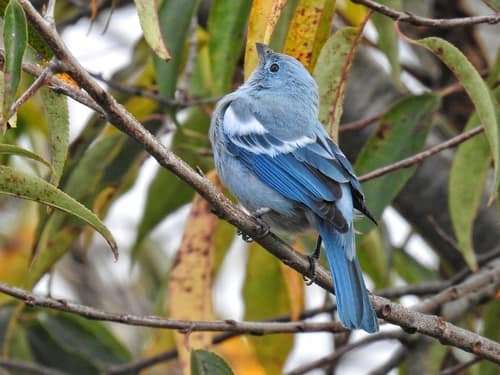
Frequent Companion (c) Esteban Poveda, some rights reserved (CC BY), uploaded by Esteban Poveda · cc-by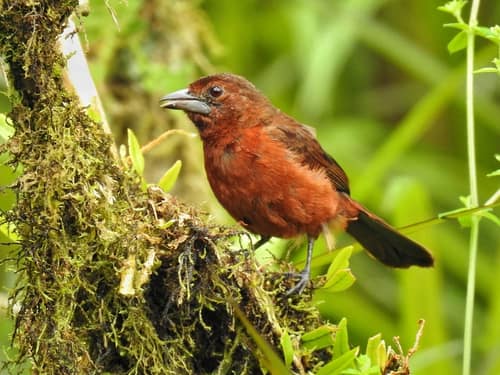
Close Relative (c) Esteban Poveda, some rights reserved (CC BY), uploaded by Esteban Poveda · cc-by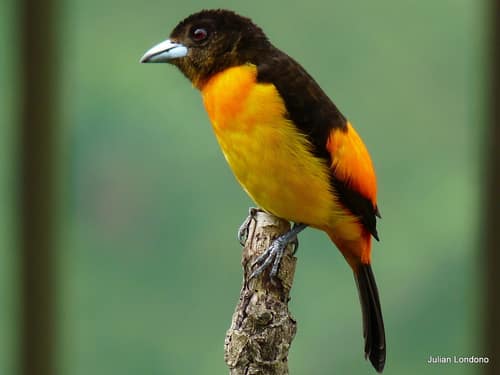
Close Relative (c) julian londono, some rights reserved (CC BY-SA) · cc-by-sa Image unavailable
Close Relative
Help improve the field guideSomething wrong?
Checking your Fauna account…Report a name, category, or profile issue for review.