
Bird
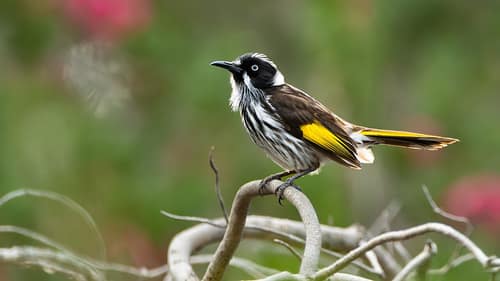
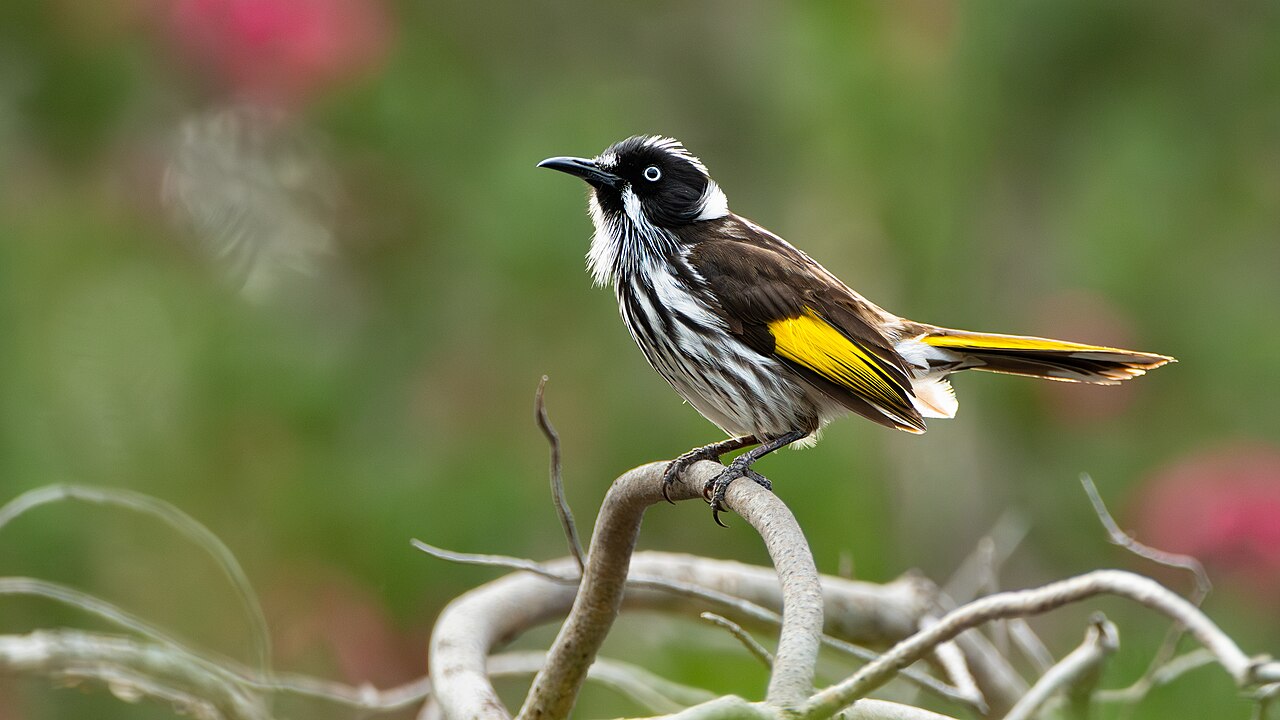
New Holland Honeyeater
Phylidonyris novaehollandiaeAlso known as Yellow-winged Honeyeater, White-eyed Honeyeater
New Holland Honeyeaters are energetic, vocal birds that dart through flowering banksias and grevilleas in noisy, chattering flocks. Their striking black-and-white plumage, bright yellow wing patches, and piercing white eyes make them unmistakable in southern Australian bushland and suburban gardens. When a predator such as a hawk or snake appears, whole groups band together to sound sharp alarm calls and mob the intruder until it retreats.
NectarivoreVocalDiurnal
—observations
—countries
—peak records
Least ConcernConservation statusIUCN Red List categoriesLCNTVUENCREWEXLeast ConcernRed List categories, explained →
Diet & preyFloral nectar, Small insects, Spiders
Predators
- Collared Sparrowhawk
- Laughing Kookaburra
- Domestic Cat
ThreatsHabitat fragmentation, predation by domestic cats, and competition from noisy miners.
HabitatsCoastal heathland, eucalypt woodland, mallee scrub, and urban gardens across southern Australia.
Life span5–10 years in the wild
Classification
- OrderPasseriformes
- FamilyMeliphagidae
- GenusPhylidonyris
- SpeciesPhylidonyris novaehollandiae
Range data is not available yet.
Interaction riskLow
- Low
- Moderate
- High
- Very high
- Why interaction risk is low
- Safe to observe at a normal distance.
Responsible observation
- Listen First: Track their high, metallic chirps and rapid chattering calls before scanning flowering shrubs.
- Plant Native: Flowering banksias, grevilleas, and bottlebrushes attract foraging flocks to backyard gardens.
- Keep Cats Indoors: Domestic cats pose a major threat to ground-foraging and low-nesting honeyeaters.
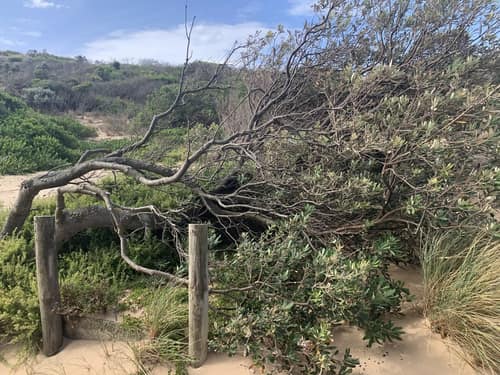
Food Source (c) 呂一起(Lu i-chi), some rights reserved (CC BY), uploaded by 呂一起(Lu i-chi) · cc-by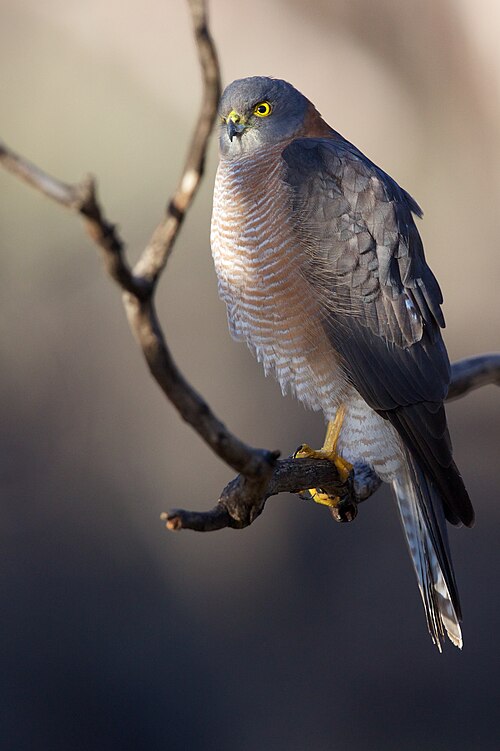
Predator sunphlo from South Australia / CC BY-SA 2.0 · cc-by-sa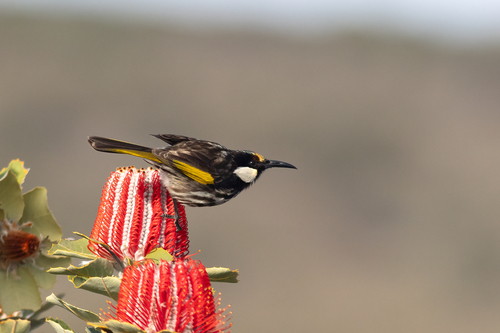
Close Relative (c) Kym Nicolson, some rights reserved (CC BY), uploaded by Kym Nicolson · cc-by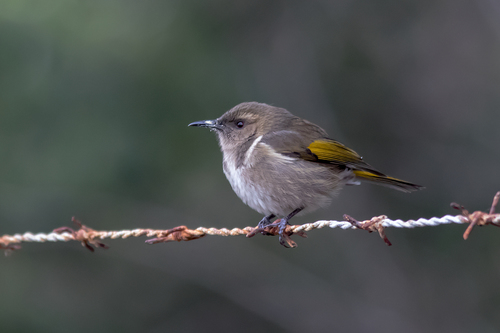
Close Relative (c) Andrew Allen, some rights reserved (CC BY), uploaded by Andrew Allen · cc-by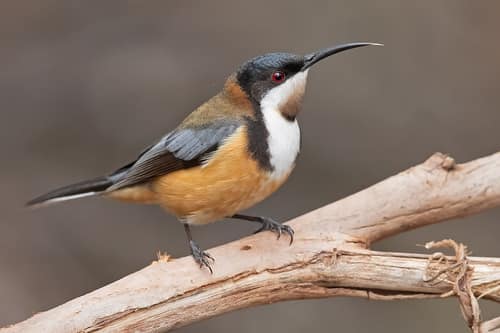
Same Family JJ Harrison (https://www.jjharrison.com.au/) / CC BY-SA 4.0 · cc-by-sa
Help improve the field guideSomething wrong?
Checking your Fauna account…Report a name, category, or profile issue for review.