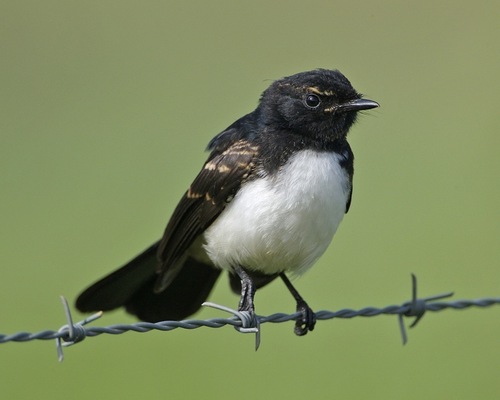
Also known as Peewee, Mudlark, Murray Magpie, Peewit
Magpie-larks are territorial, ground-foraging monarchs famous for their synchronized antiphonal duetting, where mated pairs raise their wings and call in alternating notes to advertise their territory. Both sexes construct substantial bowl-shaped nests out of wet mud, animal hair, and grass on horizontal tree limbs or utility poles. Readily adapting to human-modified landscapes, they boldly strut across urban lawns and sports fields with a distinctive rhythmic head-bobbing walk.
ThreatsCollisions with vehicles, secondary poisoning from pesticides, and attacks by domestic cats
HabitatsOpen woodlands, farmlands, urban parks, sports ovals, and wetlands
Life span10–14 years
Classification
OrderPasseriformes
FamilyMonarchidae
GenusGrallina
SpeciesGrallina cyanoleuca
Range & activity
Range data is not available yet.
Safe observation
Interaction riskLow
Low
Moderate
High
Very high
Why interaction risk is low
May swoop or peck during spring nesting, but safe to observe from a respectful distance.
Responsible observation
Observation tip: Watch their facial markings to tell sexes apart; males have a black throat and white eyebrow, while females have a white throat and no eyebrow.
Breeding season: Keep clear of active mud nests during spring, as nesting pairs may aggressively swoop intruders or peck at reflective car mirrors.

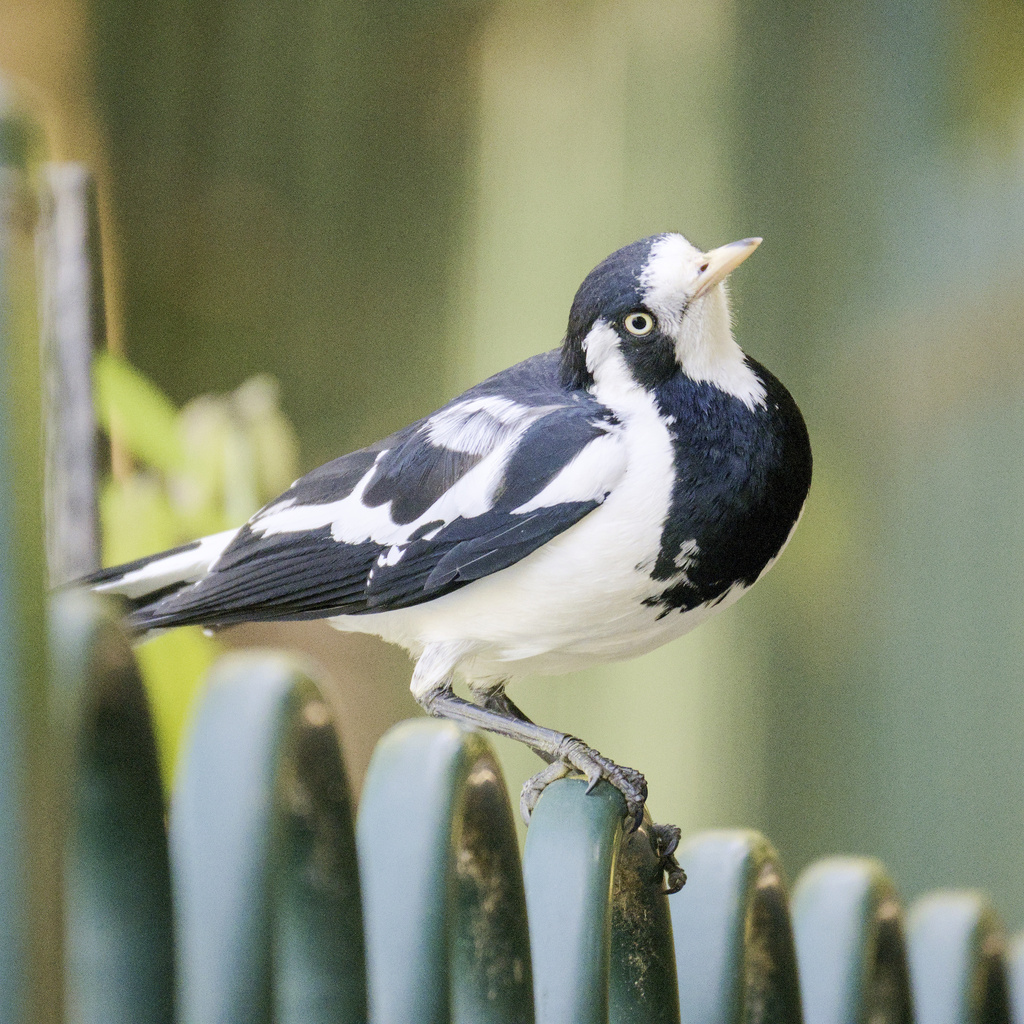
 Image unavailable