
Bird
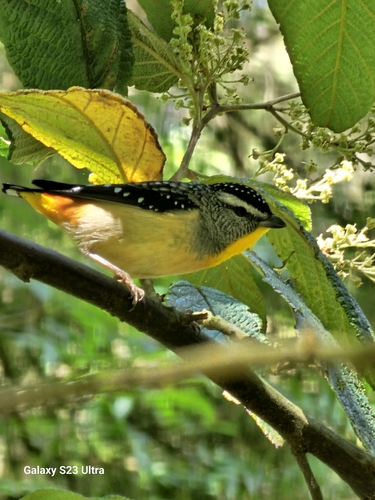
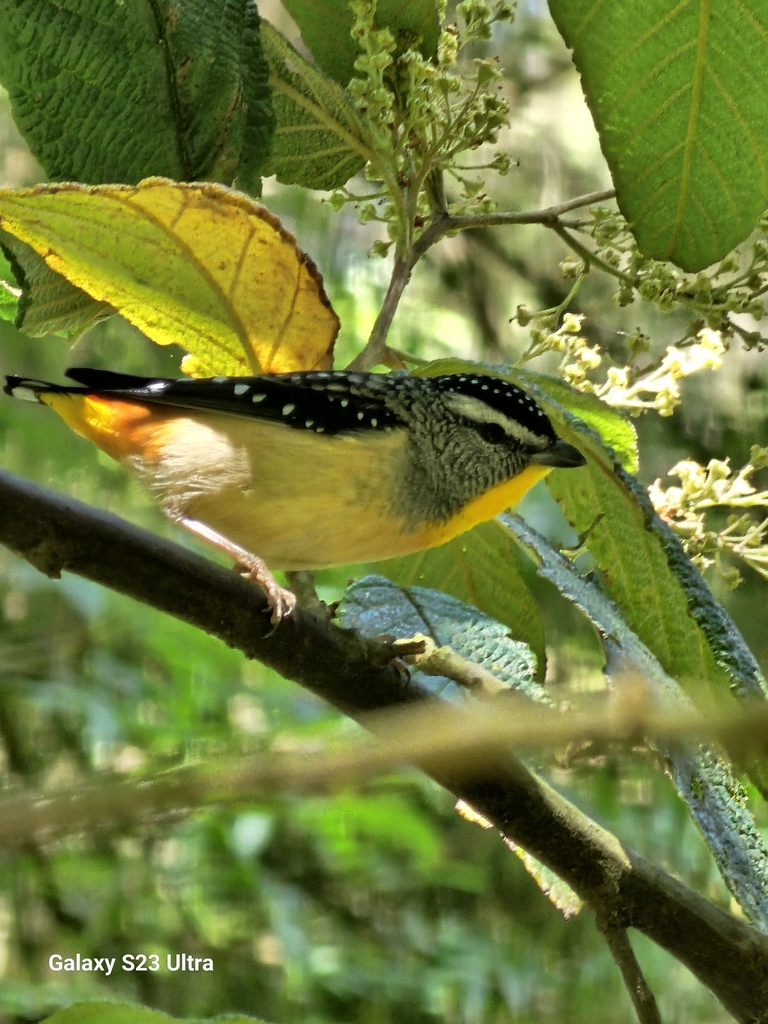
Spotted Pardalote
Pardalotus punctatusAlso known as Diamondbird, Spotted Diamondbird, Bank Diamond
Spotted pardalotes spend most of their lives high in the eucalyptus canopy gleaning lerps, the sweet protective casings secreted by psyllid nymphs. Breeding pairs descend to ground level to excavate deep nesting tunnels into earthy banks, railway cuttings, or tree root balls. Their repetitive, bell-like calls ring across southeastern woodlands throughout the spring breeding season.
Canopy DwellerBurrow NesterAustralian Endemic
—observations
—countries
—peak records
Least ConcernConservation statusIUCN Red List categoriesLCNTVUENCREWEXLeast ConcernRed List categories, explained →
Diet & preyLerp Insects, Psyllids, Spiders
Predators
- Feral Cat
- Pied Currawong
- Collared Sparrowhawk
ThreatsHabitat clearing, land degradation, and feral cat predation
HabitatsEucalypt forests, woodlands, coastal scrub, and mallee
Life span4–8 years
Classification
- OrderPasseriformes
- FamilyPardalotidae
- GenusPardalotus
- SpeciesPardalotus punctatus
Range data is not available yet.
Interaction riskLow
- Low
- Moderate
- High
- Very high
- Why interaction risk is low
- Safe to observe at a normal distance.
Responsible observation
- Listen carefully: Track down their high, bell-like three-note piping whistle in tall eucalypts.
- Watch earthy banks: Look along road cuttings and creek embankments in spring to spot pairs digging tunnels.
- Scan outer foliage: Use binoculars to search the tips of sunlit canopy leaves where they feed.
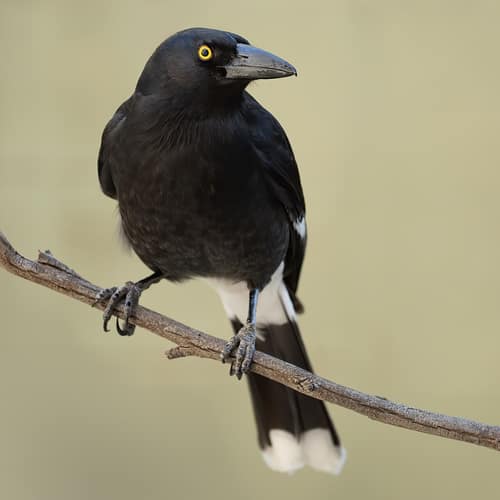
Predator JJ Harrison (https://www.jjharrison.com.au/) / CC BY-SA 4.0 · cc-by-sa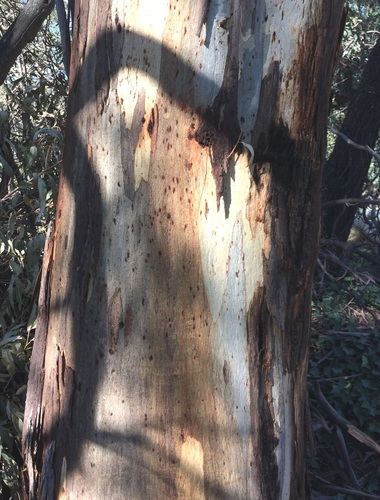
Host Plant (c) Geekstreet, some rights reserved (CC BY-SA) · cc-by-sa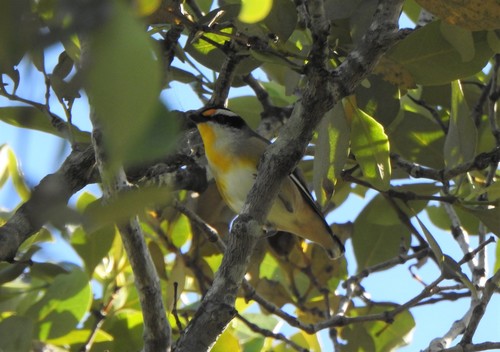
Close Relative (c) Greg Tasney, some rights reserved (CC BY-SA) · cc-by-sa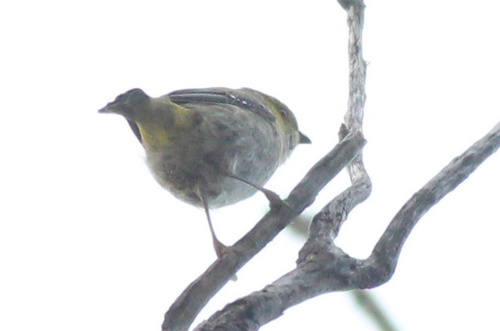
Close Relative (c) Jan Ebr & Ivana Ebrová, some rights reserved (CC BY) · cc-by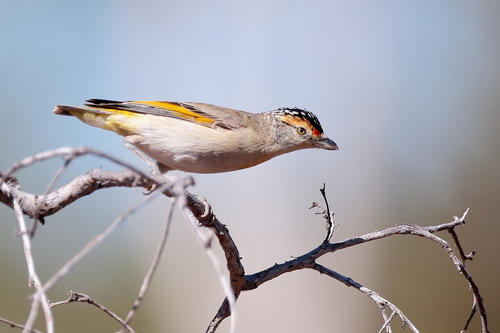
Close Relative (c) Graham Winterflood, some rights reserved (CC BY-SA), uploaded by Graham Winterflood · cc-by-sa
Help improve the field guideSomething wrong?
Checking your Fauna account…Report a name, category, or profile issue for review.