
Bird · GBIF taxon 2484184
Rusty Blackbird
Euphagus carolinusAlso known as Rusty Grackle
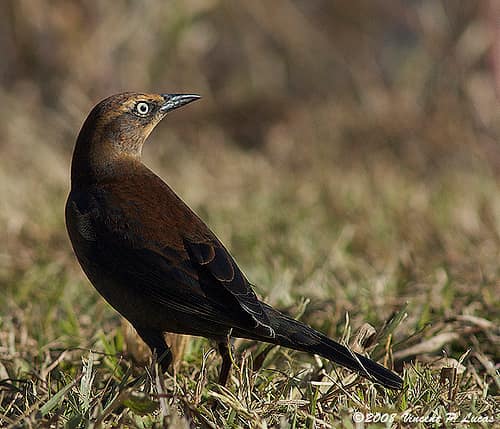
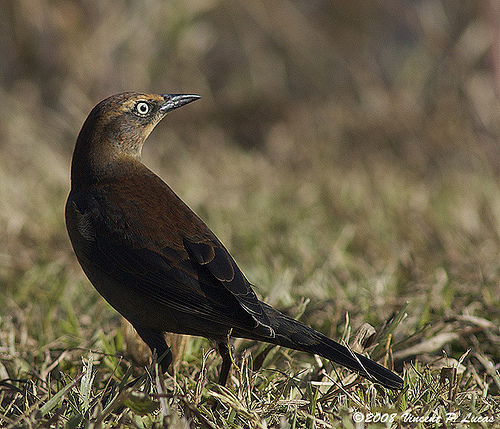
The Rusty Blackbird is a slim blackbird with a pale yellow eye; winter birds show rusty feather edges that wear away before breeding. It forages on wet ground and in shallow water, flipping leaves and probing mud in boreal wetlands and wooded swamps.
Boreal BlackbirdWetland ForagerDeclining Migrant
—observations
—countries
—peak records
VulnerableConservation statusIUCN Red List categoriesLCNTVUENCREWEXVulnerableRed List categories, explained →
Diet & prey
- Aquatic insect larvae
- Snails
- Small fish
Predators
- Cooper's Hawks
- Great Horned Owls
- American Mink
ThreatsWetland drainage, boreal habitat change, mercury contamination, climate change, collisions, and historic blackbird control programs
HabitatsBoreal muskeg, wooded wetlands, bogs, beaver ponds, flooded forest, and winter bottomland swamps
Life spanUsually several years; banding records show that some survive beyond eight years
Size / weightNot available
Classification
- FamilyIcteridae
- SpeciesEuphagus carolinus
Range data is not available yet.
Interaction riskLow
- Low
- Moderate
- High
- Very high
- Why interaction risk is low
- Watch quietly from firm ground and avoid flushing feeding groups from scarce wetland habitat.
- What to notice
- Combine the pale yellow eye, slender bill, wet-ground foraging, and seasonally rusty-edged plumage for identification.
- Support conservation
- Observe from a distance, avoid repeated playback near breeding habitat, and generalize locations of active nests.
Responsible observation
- Eyes: Look for a conspicuous pale yellow eye on both sexes.
- Season: Expect rusty-edged winter plumage and glossier breeding plumage.
- Behavior: Watch for birds flipping wet leaves while walking rather than hopping.
Help improve the field guideSomething wrong?
Checking your Fauna account…Report a name, category, or profile issue for review.