
Bird · GBIF taxon 2483606
Eastern Phoebe
Sayornis phoebeAlso known as Bridge Pewee, Phoebe Bird
Eastern phoebes are energetic, brownish-gray flycatchers recognized by their constant downward tail-pumping motion while perched on low branches. They are among the first migratory songbirds to return north in early spring, feeding heavily on flying insects snapped mid-air from open perches. Their mud and moss nests are frequently constructed on human structures like porch ledges, barn rafters, and bridge abutments.
FlycatcherInsectivoreSongbird
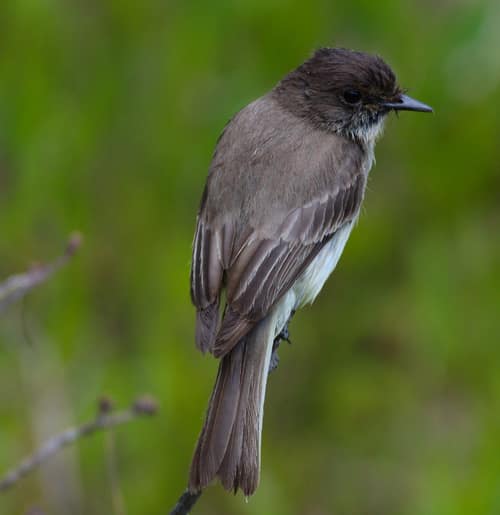
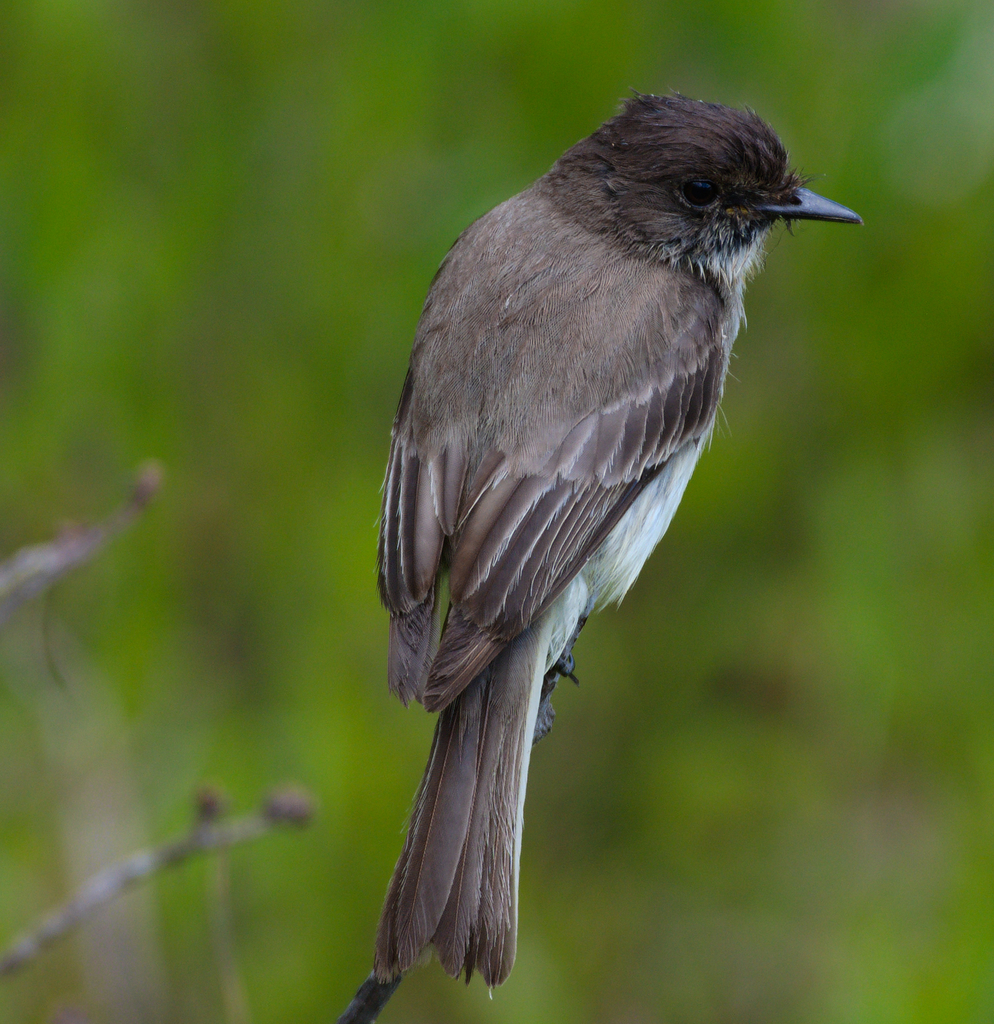
—observations
—countries
—peak records
Least ConcernConservation statusIUCN Red List categoriesLCNTVUENCREWEXLeast ConcernRed List categories, explained →
Diet & prey
- Beetles
- Flies
- Moths
Predators
- Cooper's Hawk
- Eastern Screech-Owl
- Domestic Cat
ThreatsPesticide reduction of prey, window collisions, and nest parasitism
HabitatsOpen woodlands, stream banks, farms, suburban yards, and bridge crossings
Life span5–9 years
Size / weightNot available
Classification
- OrderPasseriformes
- FamilyTyrannidae
- GenusSayornis
- SpeciesSayornis phoebe
Range data is not available yet.
Interaction riskLow
- Low
- Moderate
- High
- Very high
- Why interaction risk is low
- Safe to observe at a normal distance.
Responsible observation
- Watch the Tail: Look for a persistent downward tail-pumping motion whenever the bird perches.
- Listen for the Song: Identify them by their sharp, raspy 'fee-bee' call repeated steadily from low perches.
- Check Shelter Eaves: Look for moss-covered mud nests tucked under porch roofs, sheds, or bridge girders.
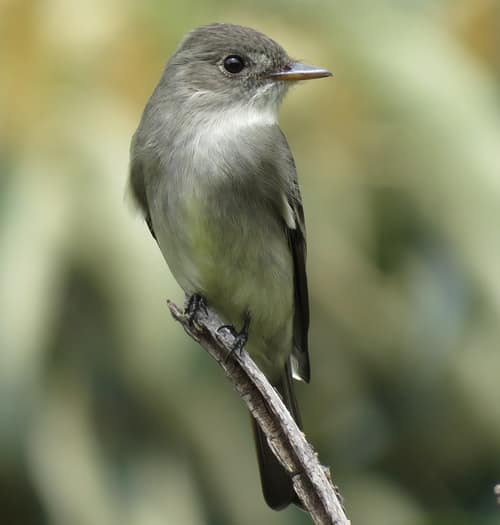
Co-occurring Flycatcher (c) Juan Carlos Caicedo Hernández, some rights reserved (CC BY), uploaded by Juan Carlos Caicedo Hernández · cc-by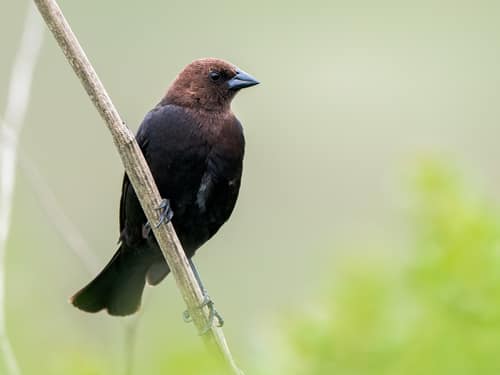
Nest Parasite (c) cello caruso-turiello, some rights reserved (CC BY), uploaded by cello caruso-turiello · cc-by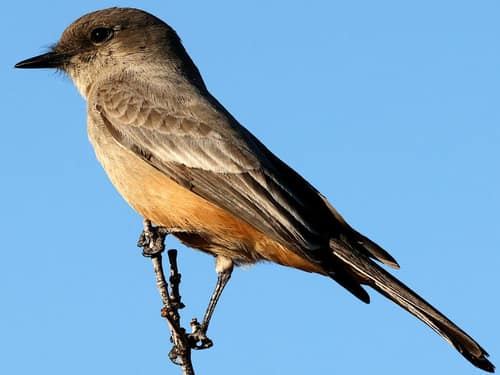
Close Relative (c) Peter Chen 2.0, some rights reserved (CC BY) · cc-by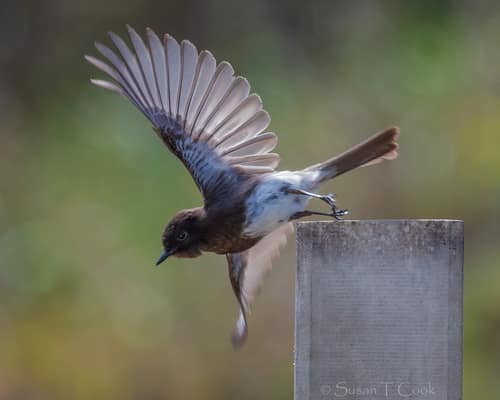
Close Relative (c) Channel City Camera Club, some rights reserved (CC BY) · cc-by
Help improve the field guideSomething wrong?
Checking your Fauna account…Report a name, category, or profile issue for review.