
Bird · GBIF taxon 2483597
Great Crested Flycatcher
Myiarchus crinitusPerched high in the deciduous canopy, the Great Crested Flycatcher proclaims its territory with a loud, rising whistle that cuts through dense summer foliage. Unlike most flycatchers, this species nests in tree hollows and famously weaves shed snakeskins or crinkly cellophane into its nest lining to deter predators. After breeding across eastern North America, these intrepid insect hunters undertake long autumn migrations to winter in the tropical forests of Central and northwestern South America.
SongbirdCanopy DwellerMigratory
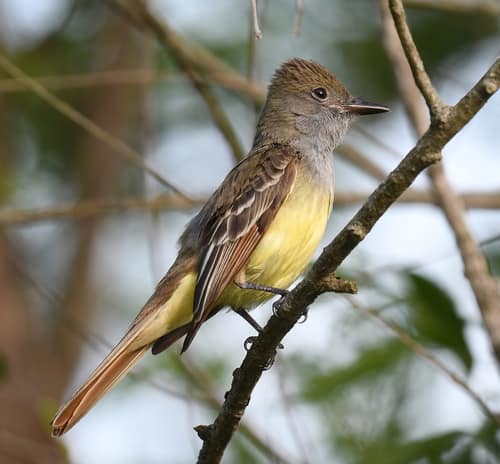
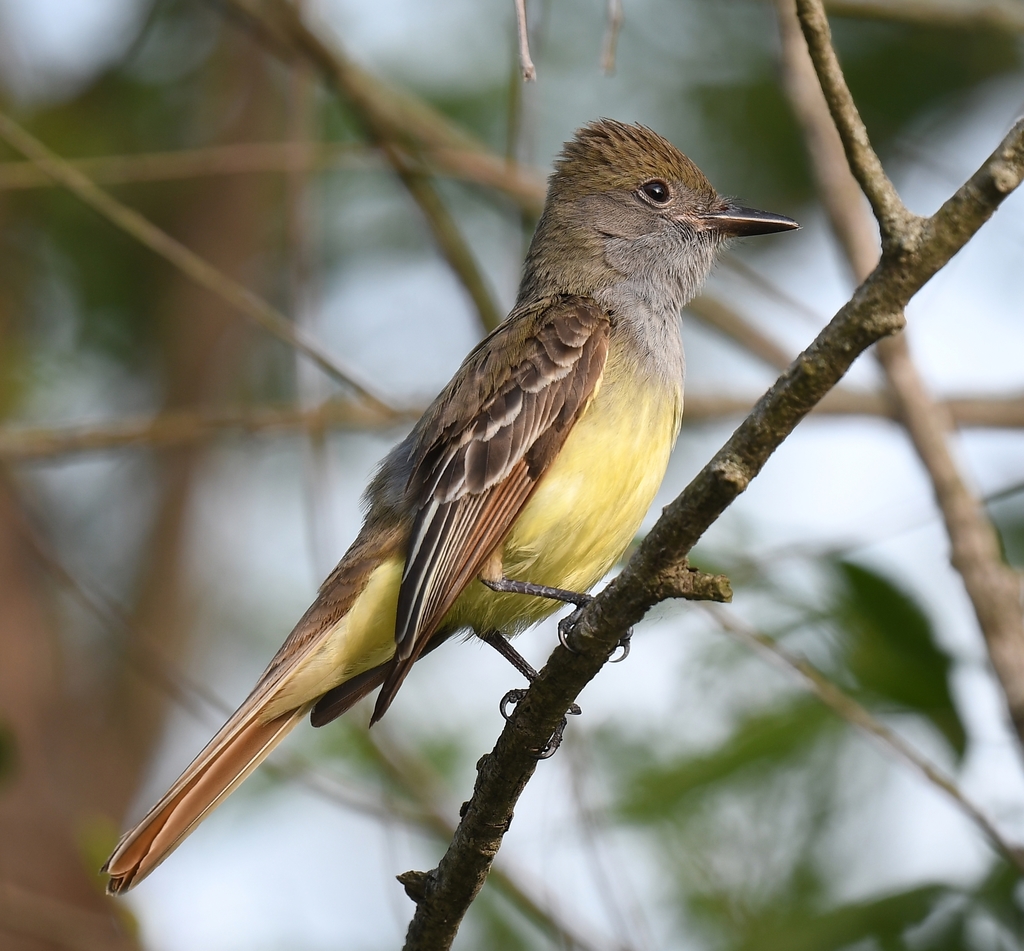
—observations
—countries
—peak records
Least ConcernConservation statusIUCN Red List categoriesLCNTVUENCREWEXLeast ConcernRed List categories, explained →
Diet & prey
- Cicadas
- Butterflies
- Beetles
Predators
- Cooper's Hawk
- Eastern Screech-Owl
- Rat Snake
ThreatsLoss of mature cavity-bearing trees and deforestation on wintering grounds
HabitatsDeciduous and mixed woodlands, forest edges, orchards, and swamp forests
Life span6–14 years
Size / weightNot available
Classification
- OrderPasseriformes
- FamilyTyrannidae
- GenusMyiarchus
- SpeciesMyiarchus crinitus
Range data is not available yet.
Interaction riskLow
- Low
- Moderate
- High
- Very high
- Why interaction risk is low
- Safe to observe at a normal distance.
Responsible observation
- Audio cues: Listen for a loud, emphatic 'wheep!' high in the canopy to locate them.
- Nest boxes: Mount properly sized cavity boxes in wooded yards to invite nesting pairs.
- Binocular viewing: Scan high bare snags along forest edges where they perch to forage.
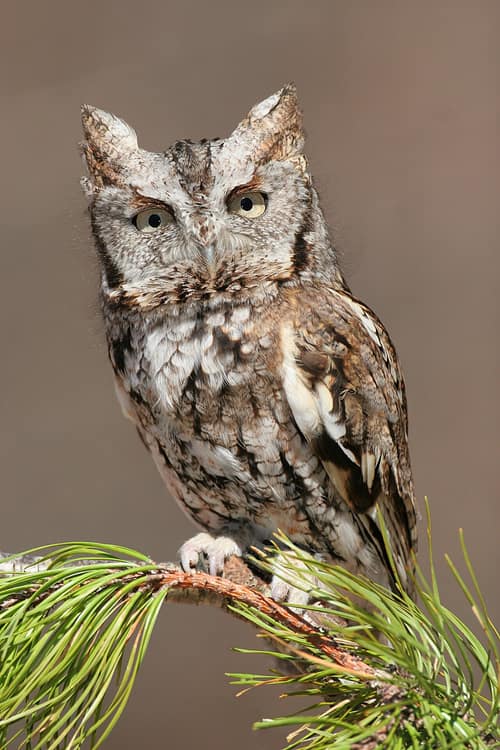
Competitor Wolfgang Wander / CC BY-SA 3.0 · cc-by-sa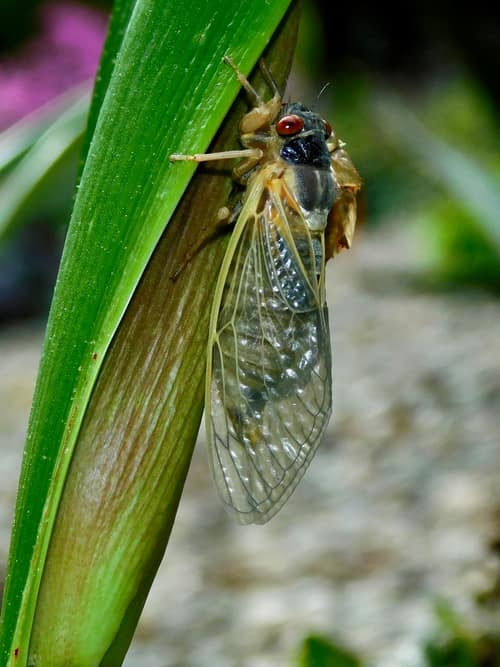
Prey (c) Michael J. Papay, some rights reserved (CC BY) · cc-by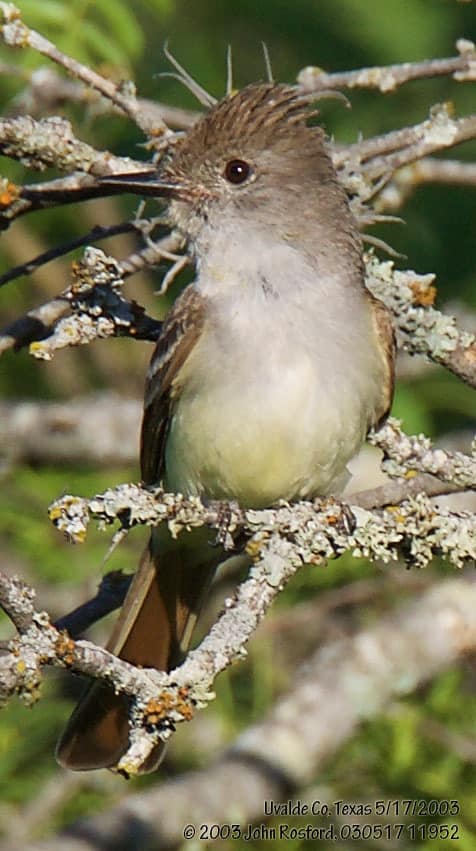
Close Relative (c) John Rosford, some rights reserved (CC BY) · cc-by Image unavailable
Close Relative 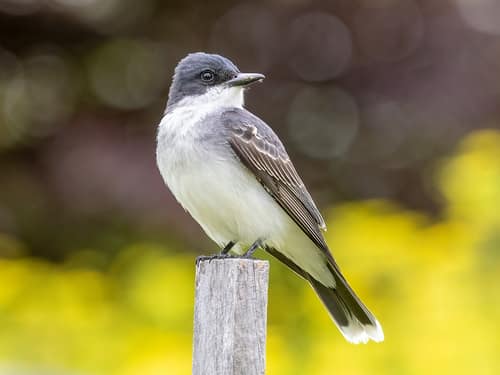
Family Member Rhododendrites / CC BY-SA 4.0 · cc-by-sa
Help improve the field guideSomething wrong?
Checking your Fauna account…Report a name, category, or profile issue for review.