
Bird · GBIF taxon 2482755
Great Kiskadee
Pitangus sulphuratusAlso known as Kiskadee Flycatcher, Bem-te-vi, Bienteveo
Great kiskadees are boisterous, adaptable flycatchers recognized by their piercing calls and bold black-and-white face masks. They hunt aggressively from exposed perches, plunging into shallow water for small fish or darting into foliage to snatch insects and berries. Pairs vigorously defend their territory, mobbing hawks and nest predators while constructing massive, domed stick nests lined with soft grasses.
VocalOmnivorousAdaptable
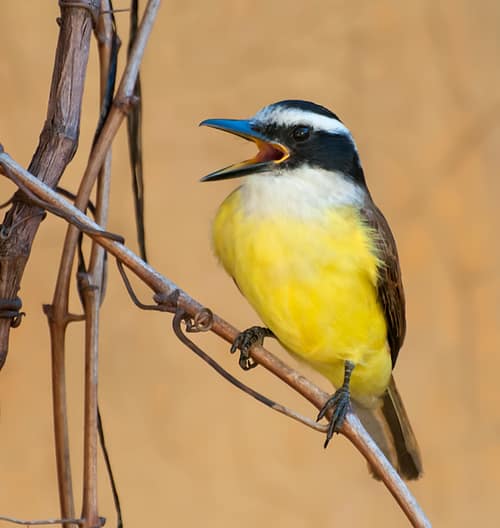
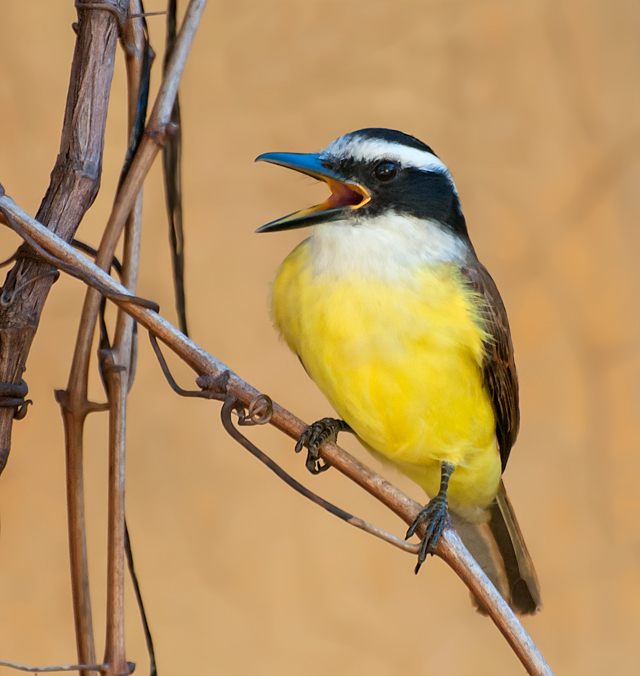
—observations
—countries
—peak records
Least ConcernConservation statusIUCN Red List categoriesLCNTVUENCREWEXLeast ConcernRed List categories, explained →
Diet & prey
- Dragonflies
- Small minnows
- Tree frogs
Predators
- Roadside Hawk
- Barn Owl
- Feral cat
ThreatsPesticide runoff affecting prey bases and local habitat loss
HabitatsOpen woodlands, river edges, marshes, agricultural lands, and urban parks
Life span8–12 years
Size / weightNot available
Classification
- OrderPasseriformes
- FamilyTyrannidae
- GenusPitangus
- SpeciesPitangus sulphuratus
Range data is not available yet.
Interaction riskLow
- Low
- Moderate
- High
- Very high
- Why interaction risk is low
- Safe to observe at a normal distance.
Responsible observation
- Auditory Identification: Listen for its loud, onomatopoeic namesake call carrying over waterways.
- Waterway Scanning: Look for birds scanning water surfaces from dead snags or low branches.
- Nest Watching: Check telephone poles and tree forks for large, domed clumps of twigs.
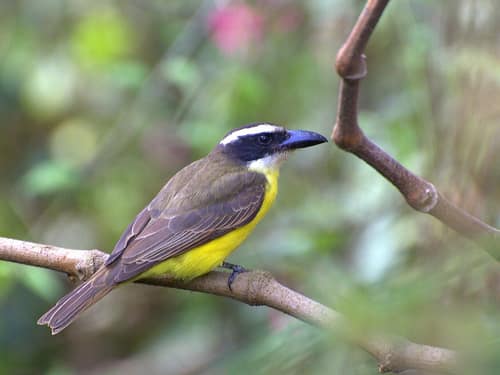
Look-alike Dario Sanches / CC BY-SA 2.0 · cc-by-sa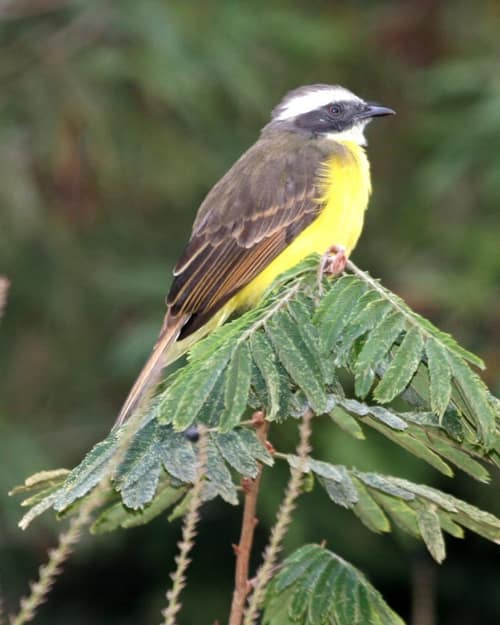
Look-alike (c) Lip Kee Yap, some rights reserved (CC BY-SA) · cc-by-sa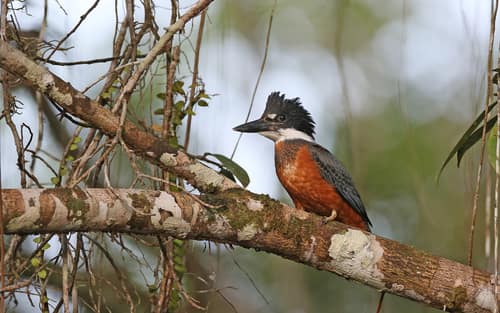
Competitor (c) Christoph Moning, some rights reserved (CC BY), uploaded by Christoph Moning · cc-by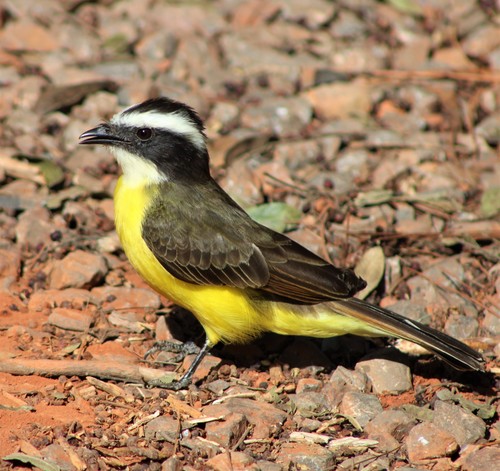
Same Family (c) Pedro Sisnando Araújo dos Santos, some rights reserved (CC BY), uploaded by Pedro Sisnando Araújo dos Santos · cc-by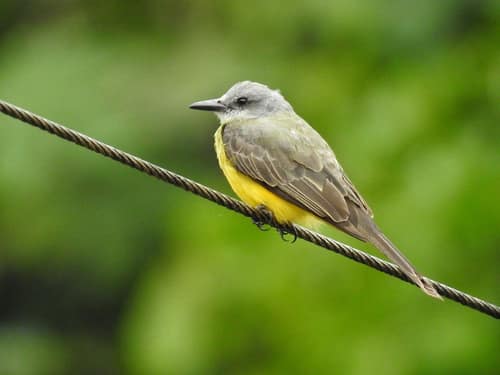
Same Family (c) Esteban Poveda, some rights reserved (CC BY), uploaded by Esteban Poveda · cc-by
Help improve the field guideSomething wrong?
Checking your Fauna account…Report a name, category, or profile issue for review.