
Bird · GBIF taxon 2482100
Eurasian Stone-curlew
Burhinus oedicnemusAlso known as Eurasian Thick-knee, Stone-curlew
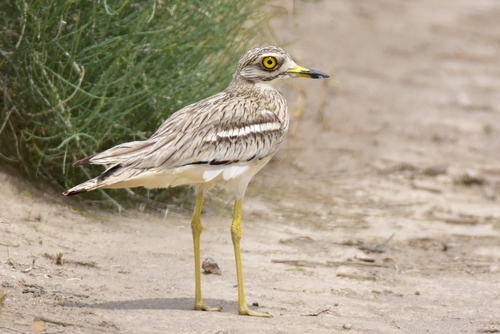
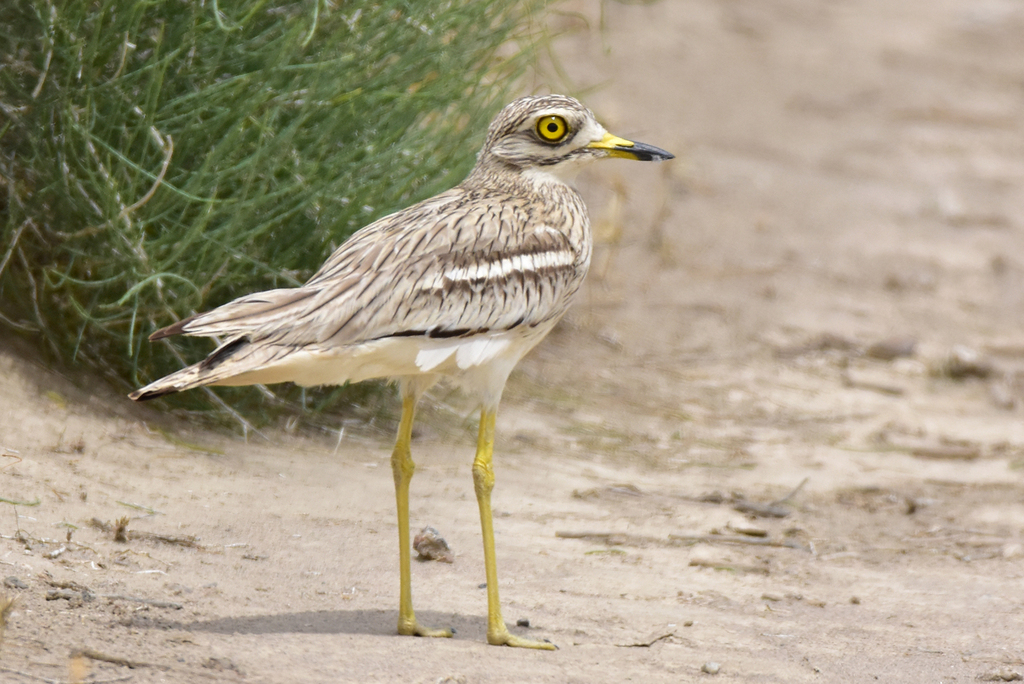
Eurasian stone-curlews spend daylight hours crouched motionless on dry, stony ground where their streaked, sandy plumage renders them virtually invisible. At twilight, they become active, stepping on long yellow legs to hunt beetles, worms, and small lizards across open, sparsely vegetated landscapes. During the breeding season, pairs advertise their territory with piercing, curlew-like wails that carry over long distances in the night air.
NocturnalCamouflagedGround-nesting
—observations
—countries
—peak records
Least ConcernConservation statusIUCN Red List categoriesLCNTVUENCREWEXLeast ConcernRed List categories, explained →
Diet & prey
- Beetles
- Earthworms
- Small Lizards
Predators
- Red Foxes
- Mustelids
- Large Owls
ThreatsAgricultural intensification, habitat loss, nest destruction
HabitatsDry grasslands, heaths, stony arable fields, semi-deserts
Life span10–15 years
Size / weightNot available
Classification
- FamilyBurhinidae
- SpeciesBurhinus oedicnemus
Range data is not available yet.
Interaction riskLow
- Low
- Moderate
- High
- Very high
- Why interaction risk is low
- Safe to observe at a normal distance.
- What to notice
- Recognize this species by its cryptic sandy-brown streaking, long yellow legs, and remarkably large yellow eyes.
- Support conservation
- Observe from a wide distance using optics and keep dogs on short leads when traversing dry heathlands or stony fields.
Responsible observation
- Spotting at Dusk: Scan stony heathlands at twilight when birds emerge from cover to forage.
- Listening at Night: Identify their location by listening for loud, mournful calls after dark.
- Protecting Nests: Stay on designated paths from April to July to avoid disturbing ground nests.
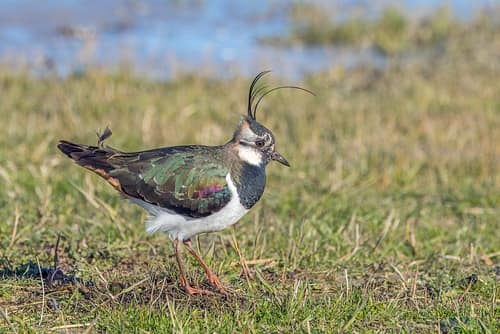
Frequent Companion Charles J. Sharp / CC BY-SA 4.0 · cc-by-sa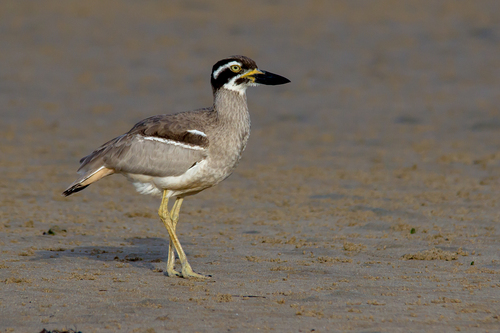
Close Relative (c) Andrew Allen, some rights reserved (CC BY), uploaded by Andrew Allen · cc-by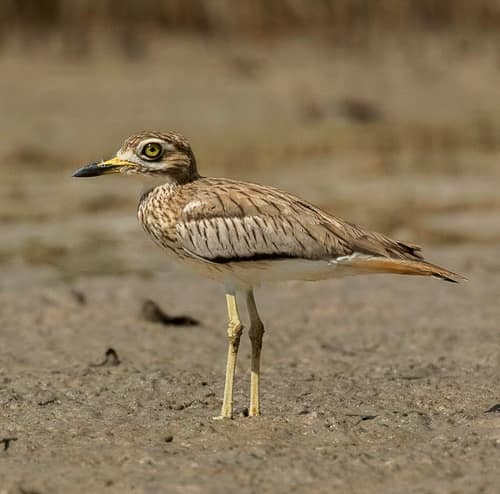
Close Relative Francesco Veronesi from Italy / CC BY-SA 2.0 · cc-by-sa
Help improve the field guideSomething wrong?
Checking your Fauna account…Report a name, category, or profile issue for review.