
Bird
Pheasant-tailed Jacana
Hydrophasianus chirurgusAlso known as Water Pheasant, Lily-trotter
Pheasant-tailed jacanas are striking wetland birds celebrated for their impossibly long toes that allow them to walk effortlessly across lily pads and floating mats of vegetation. During the summer breeding season, adults undergo a dramatic transformation, growing a sweeping, dark tail that can measure nearly thirty centimeters alongside a brilliant white-and-yellow head. Females territory-hold and mate with multiple males, leaving each mate with a nest constructed on floating weeds to incubate and raise the precocial chicks alone.
WetlandMigratoryPolyandrous
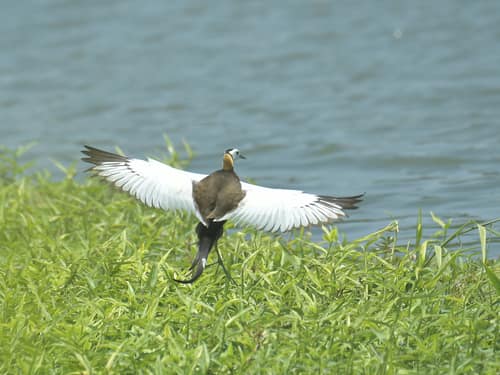
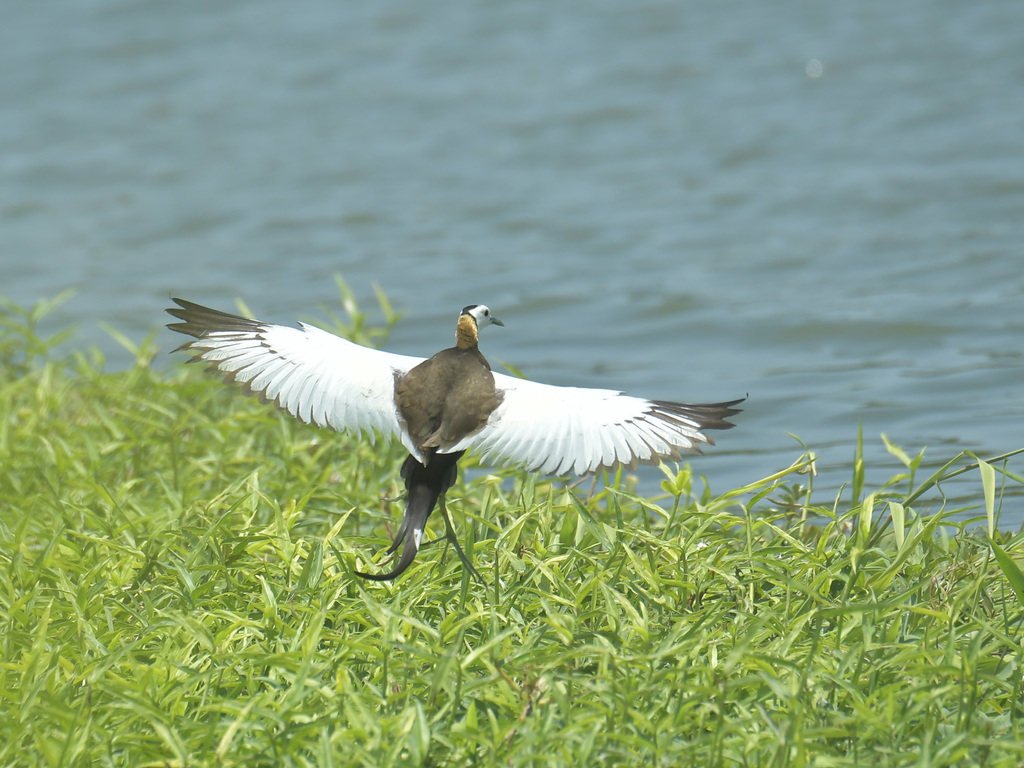
—observations
—countries
—peak records
Least ConcernConservation statusIUCN Red List categoriesLCNTVUENCREWEXLeast ConcernRed List categories, explained →
Diet & preyAquatic insects, Mollusks, Water lily seeds
Predators
- Harriers
- Snakes
- Large predatory fish
ThreatsWetland loss, agricultural pollution, human disturbance
HabitatsFreshwater marshes, shallow lakes, lotus ponds, flooded fields
Life span7–10 years
Classification
- FamilyJacanidae
- SpeciesHydrophasianus chirurgus
Range data is not available yet.
Interaction riskLow
- Low
- Moderate
- High
- Very high
- Why interaction risk is low
- Safe to observe at a normal distance.
- What to notice
- Look for white-and-chocolate birds with exceptionally long, dark tail streamers foraging on floating foliage.
- Support conservation
- Observe from shorelines or boardwalks with a spotting scope, avoiding boat travel through shallow lily beds during breeding months.
Responsible observation
- Spotting floating nests: Scan shallow lotus ponds for delicate platforms woven from aquatic weeds.
- Seasonal timing: Look for their sweeping tail plumes during the summer breeding months.
- Respectful distance: Use binoculars from the shoreline to prevent disturbing brooding males.
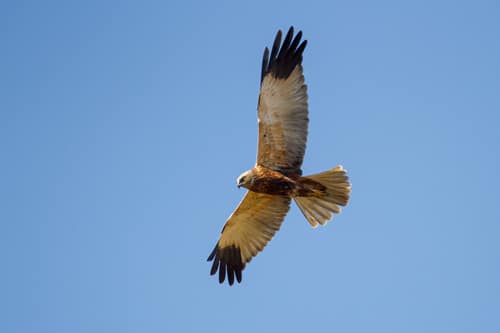
Predator (c) Artem Kuznetsov, some rights reserved (CC BY), uploaded by Artem Kuznetsov · cc-by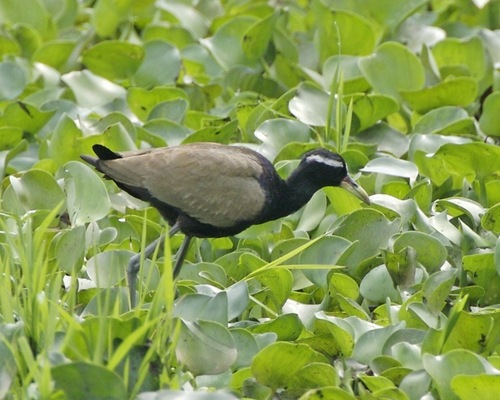
Close Relative (c) Lip Kee Yap, some rights reserved (CC BY-SA) · cc-by-sa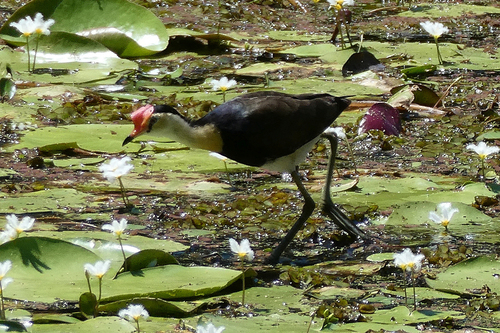
Close Relative no rights reserved · cc0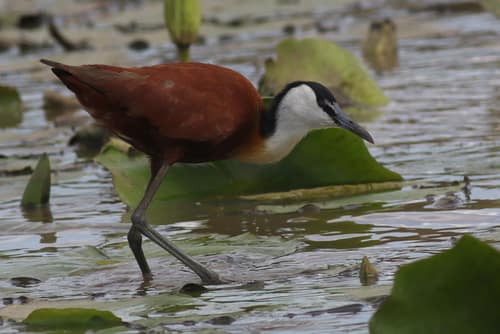
Close Relative (c) Jan Ebr & Ivana Ebrová, some rights reserved (CC BY), uploaded by Jan Ebr & Ivana Ebrová · cc-by
Help improve the field guideSomething wrong?
Checking your Fauna account…Report a name, category, or profile issue for review.