
Bird · GBIF taxon 2481364
White-tailed Tropicbird
Phaethon lepturusAlso known as Yellow-billed Tropicbird, Longtail, White Tropicbird
White-tailed tropicbirds spend most of their lives soaring gracefully over warm ocean waters, hovering high above the waves before plunge-diving for prey. During the breeding season, pairs execute breathtaking aerial courtship displays, flying in synchronized swoops while fluttering their long white tail streamers. They nest in dark crevices on rocky cliffs or tropical islets, returning to the same site year after year to raise a single chick.
SeabirdOceanicPelagic
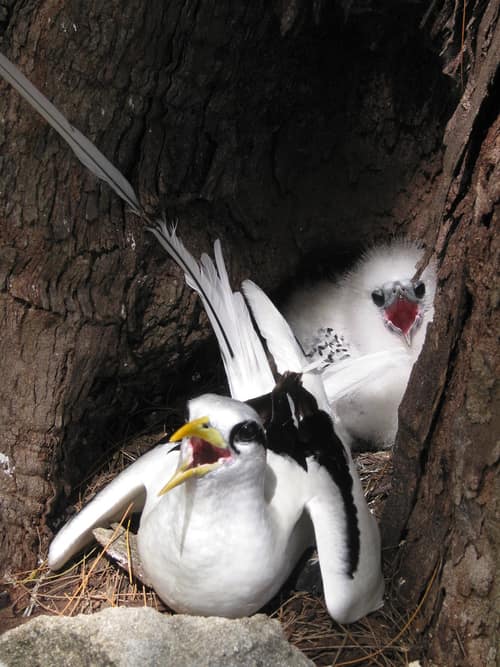
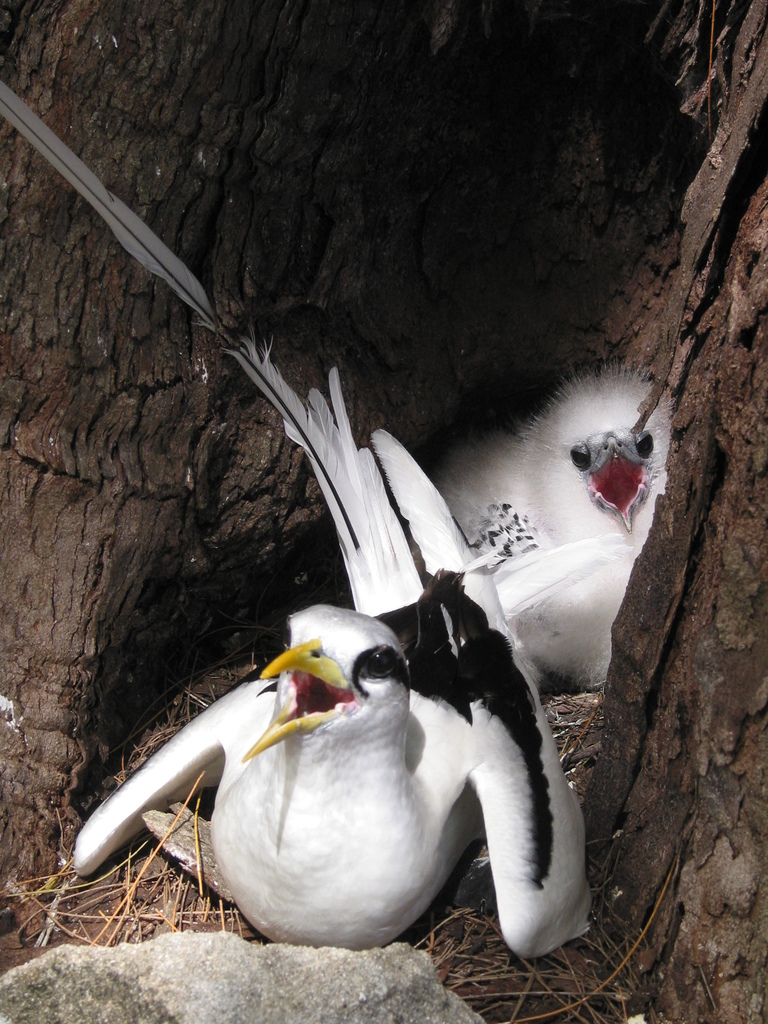
—observations
—countries
—peak records
Least ConcernConservation statusIUCN Red List categoriesLCNTVUENCREWEXLeast ConcernRed List categories, explained →
Diet & prey
- Flying Fish
- Squid
- Crabs
Predators
- Feral Cats
- Rats
- Large Raptors
ThreatsInvasive island predators (rats, feral cats), severe storms, and habitat degradation
HabitatsTropical oceans, pelagic waters, offshore islets, and coastal cliffs
Life span15–30 years
Size / weightNot available
Classification
- FamilyPhaethontidae
- SpeciesPhaethon lepturus
Range data is not available yet.
Interaction riskLow
- Low
- Moderate
- High
- Very high
- Why interaction risk is low
- Possesses a strong, sharp bill that can deliver a severe bite if nesting crevices are approached.
- What to notice
- Recognizable by gleaming white plumage, black diagonal wing bars, a yellow-orange bill, and long tail feathers.
- Support conservation
- Keep clear of cliff edges and nest sites; observe silently from a safe distance without disturbing brooding birds.
Responsible observation
- Observation: View nesting cliffs with binoculars or a spotting scope from established trails.
- Nest Protection: Avoid reaching into dark cliff crevices or burrows on island breeding grounds.
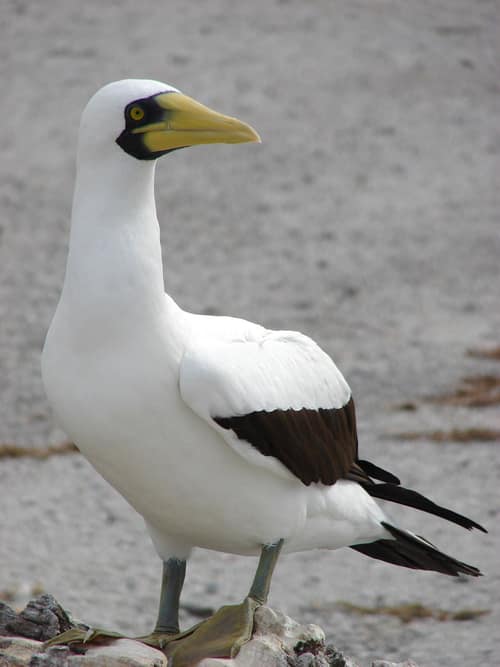
Frequent Companion Forest & Kim Starr / CC BY 3.0 · cc-by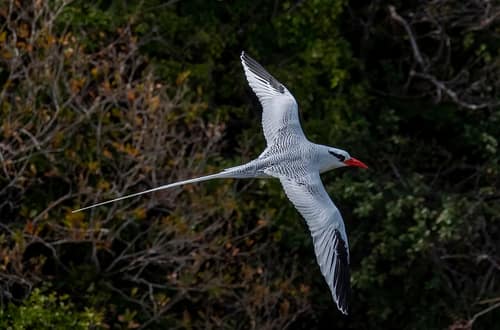
Close Relative Red-billed tropicbird / CC0 · cc0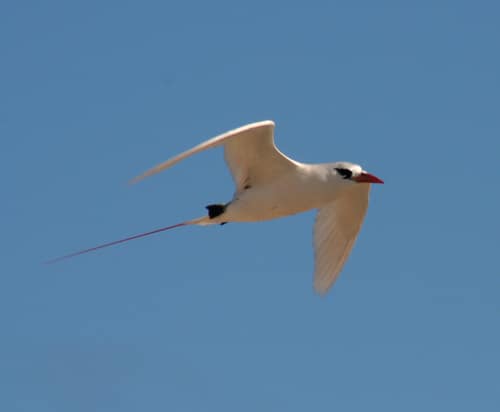
Close Relative (c) Duncan, some rights reserved (CC BY-SA) · cc-by-sa
Help improve the field guideSomething wrong?
Checking your Fauna account…Report a name, category, or profile issue for review.