
Bird
Caspian Tern
Hydroprogne caspiaCaspian Terns are the world's largest terns, with broad wings, a shallowly forked tail, and a heavy red bill tipped dark. Their hoarse calls and powerful headfirst dives distinguish them from smaller, more delicate terns.
seabirdfish huntercolonial nester
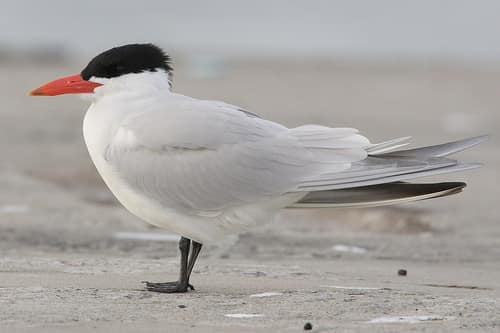
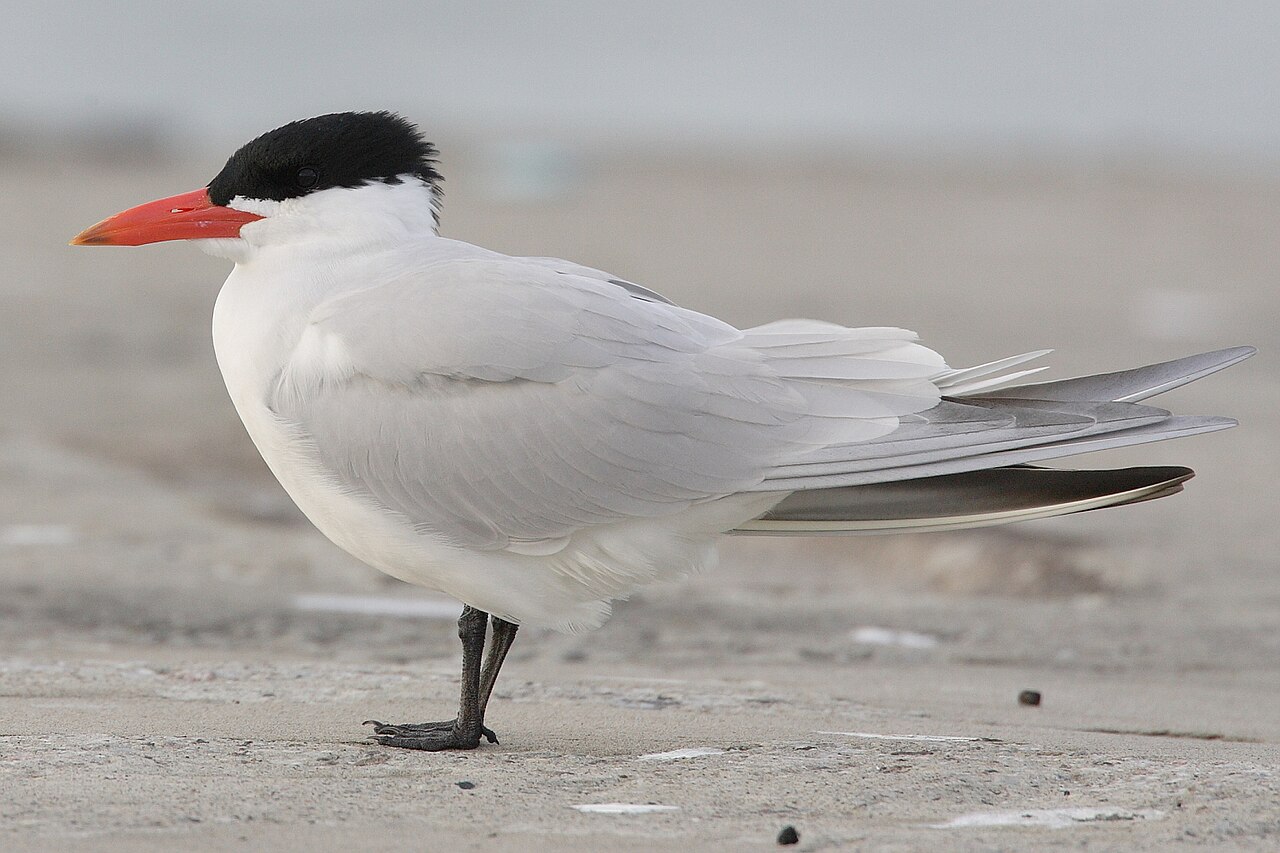
—observations
—countries
—peak records
Least ConcernConservation statusIUCN Red List categoriesLCNTVUENCREWEXLeast ConcernRed List categories, explained →
Diet & preySmall fish, crustaceans, aquatic insects
Predators
- gulls
- eagles
- foxes
ThreatsDisturbance at colonies, changing water levels, contaminants, fishing line, and loss of nesting sites
HabitatsCoasts, estuaries, large lakes, rivers, reservoirs, and open nesting islands
Life spanA long-lived bird that commonly survives more than ten years and may exceed twenty
Classification
- OrderCharadriiformes
- FamilyLaridae
- GenusHydroprogne
- SpeciesHydroprogne caspia
Range data is not available yet.
Interaction riskLow
- Low
- Moderate
- High
- Very high
- Why interaction risk is low
- Give nesting colonies ample space and never force adults into flight.
Responsible observation
- Identify: Look for a massive red bill, black cap, and broad gull-like wings.
- Watch: Follow hovering birds as they fold their wings into steep fishing dives.
Keep collecting in Fauna
Found in Collections
Species set Pro
Shore Life
Caspian Tern is found in this collection. Identify it in Fauna to fill this slot and continue your progress.
Unlock to track progress
Help improve the field guideSomething wrong?
Checking your Fauna account…Report a name, category, or profile issue for review.