
Bird
Little Blue Heron
Egretta caeruleaAlso known as Little Blue Egret
Little blue herons undergo a striking plumage transformation, spending their first year in pure white feathers before molting into a slate-blue adult plumage with a purple-maroon head. Unlike their fast-moving relatives, these patient wading birds stalk shallow waters with deliberate, slow steps, pausing to impale small fish and crustaceans with a sharp, two-toned bill. They frequently nest in mixed colonies alongside egrets and ibises, where white juveniles blend in to gain safety in numbers.
Wading BirdAquaticDimorphic
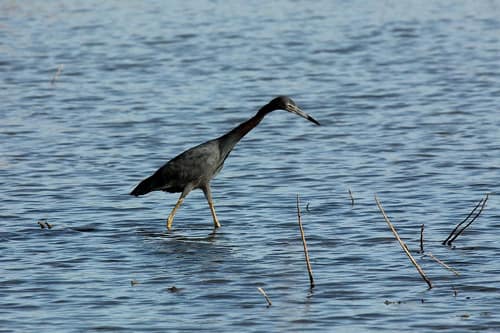
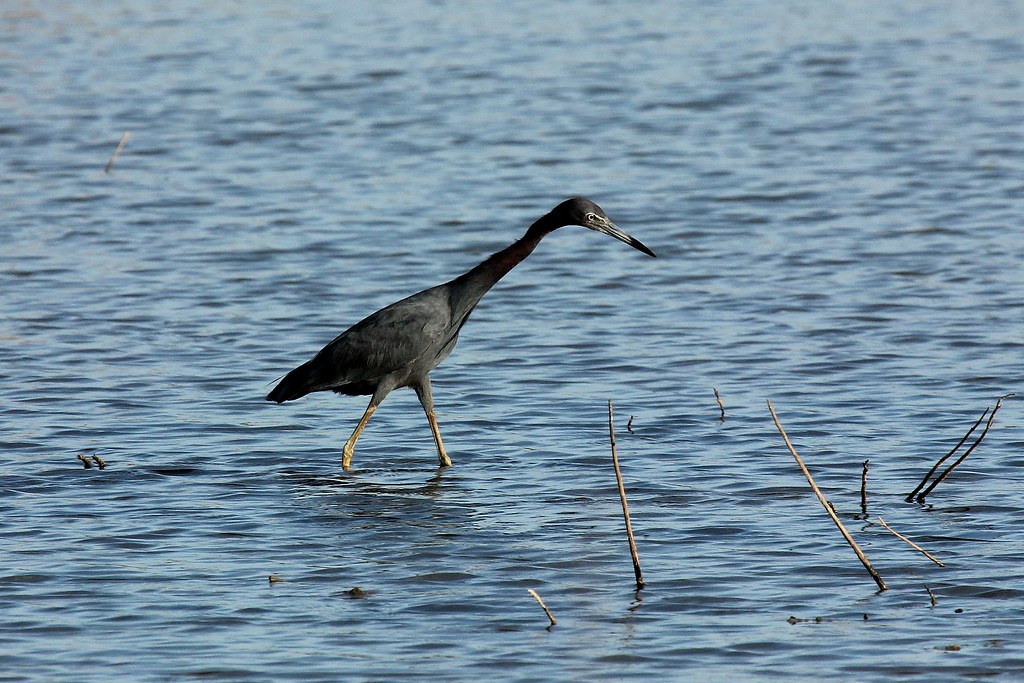
—observations
—countries
—peak records
Least ConcernConservation statusIUCN Red List categoriesLCNTVUENCREWEXLeast ConcernRed List categories, explained →
Diet & preyFish, Crayfish, Frogs
Predators
- American Alligators
- Raccoons
- Great Horned Owls
ThreatsWetland degradation, coastal development, water pollution, and invasive species
HabitatsFreshwater swamps, marshes, coastal lagoons, mangroves, and flooded fields
Life span7–14 years
Classification
- OrderPelecaniformes
- FamilyArdeidae
- GenusEgretta
- SpeciesEgretta caerulea
Range data is not available yet.
Interaction riskLow
- Low
- Moderate
- High
- Very high
- Why interaction risk is low
- Safe to observe from a respectful distance.
Responsible observation
- Observation Distance: Maintain a quiet distance of at least 20 meters to avoid flushing foraging birds.
- Identify Juveniles: Look for two-toned blue and black bills to distinguish white juveniles from snowy egrets.
- Watch Behavior: Observe their slow, methodical stalking technique along marsh edges compared to faster egrets.
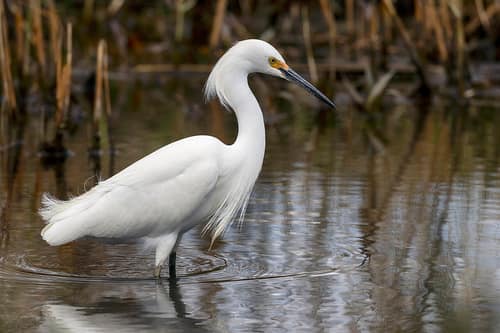
Look-Alike Chuck Homler d/b/a Focus On Wildlife / CC BY-SA 4.0 · cc-by-sa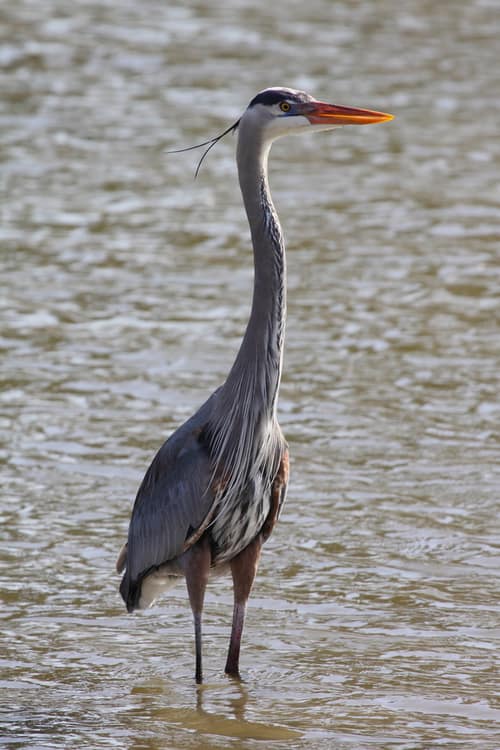
Ecological Neighbor (c) Basar, some rights reserved (CC BY-SA) · cc-by-sa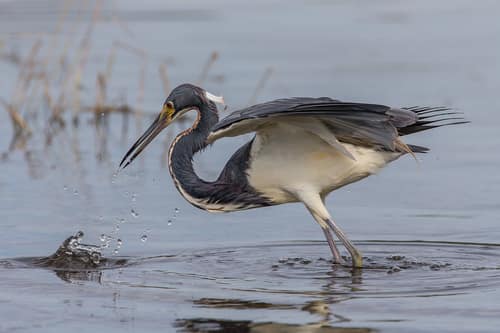
Close Relative "Tricolored Heron" by Andy Morffew is licensed under CC BY 2.0. To view a copy of this license, visit https://creativecommons.org/licenses/by/2.0/. · cc-by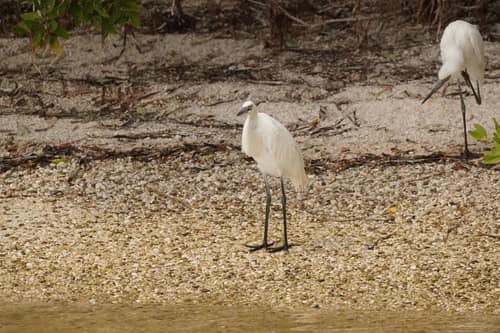
Close Relative no rights reserved · cc0
Keep collecting in Fauna
Found in Collections
Ecosystem chain
Wetland Territory
Little Blue Heron is found in this collection. Identify it in Fauna to fill this slot and continue your progress.
—/12
Help improve the field guideSomething wrong?
Checking your Fauna account…Report a name, category, or profile issue for review.