
Bird · GBIF taxon 2480805
Black-faced Spoonbill
Platalea minorAlso known as Lesser Spoonbill
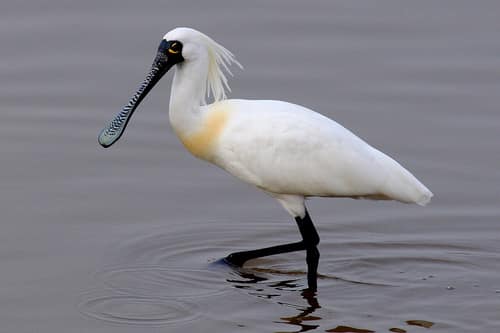
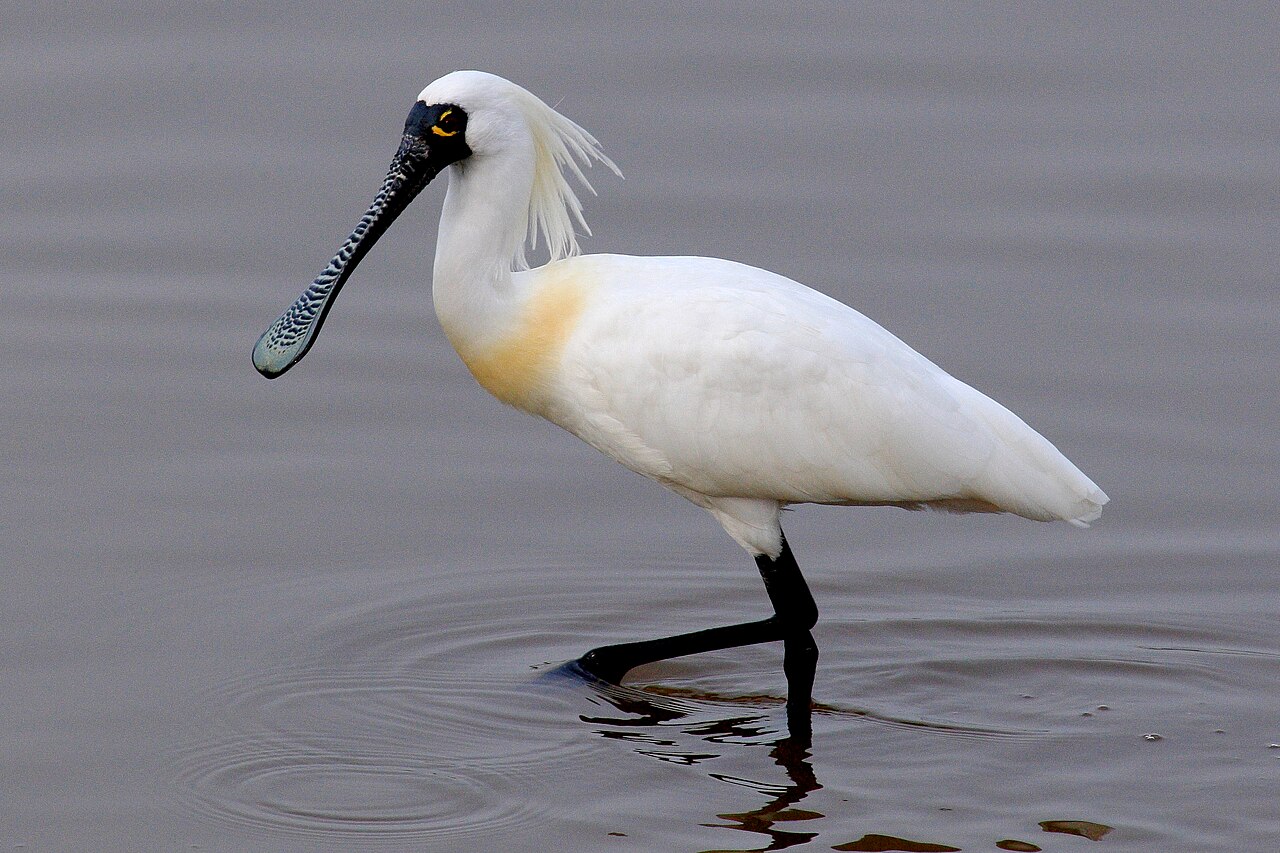
Black-faced spoonbills sweep their distinctively flattened, spatulate bills side to side through shallow water, using sensitive tactile nerve endings to snatch aquatic prey. During the breeding season, adults sprout a rich yellow chest patch and a flowing bushy crest behind their dark bare faces. These highly gregarious wading birds depend on a delicate network of East Asian coastal mudflats, estuaries, and offshore rocky islets to survive.
Wading BirdMigratoryCoastal
—observations
—countries
—peak records
VulnerableConservation statusIUCN Red List categoriesLCNTVUENCREWEXVulnerableRed List categories, explained →
Diet & prey
- Small fish
- Shrimp
- Aquatic insects
Predators
- Large raptors
- Corvids
- Snakes
ThreatsCoastal development, wetland reclamation, industrial pollution, and human disturbance
HabitatsCoastal mudflats, estuaries, mangroves, and artificial fish ponds
Life span15–20 years
Size / weightNot available
Classification
- FamilyThreskiornithidae
- SpeciesPlatalea minor
Range data is not available yet.
Interaction riskLow
- Low
- Moderate
- High
- Very high
- Why interaction risk is low
- Safe to observe from a distance at coastal wetlands.
- What to notice
- Look for pure white plumage paired with a black spatulate beak and a completely bare black face.
- Support conservation
- Maintain a generous distance using spotting scopes, avoiding any noise or movement that flushes feeding or roosting flocks.
Responsible observation
- Keep Distance: Maintain a quiet buffer of at least 100 meters on mudflats to avoid flushing feeding flocks.
- Observe Foraging: Look for their distinctive side-to-side bill sweeping motion in shallow coastal waters.
- Visit Key Sites: Look for them at protected reserves in Hong Kong, Taiwan, or South Korea during winter.
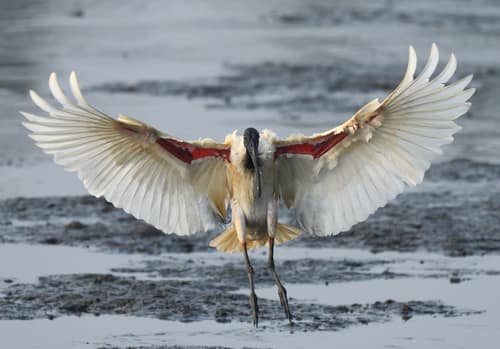
Habitat Companion (c) sunnyjosef, some rights reserved (CC BY), uploaded by sunnyjosef · cc-by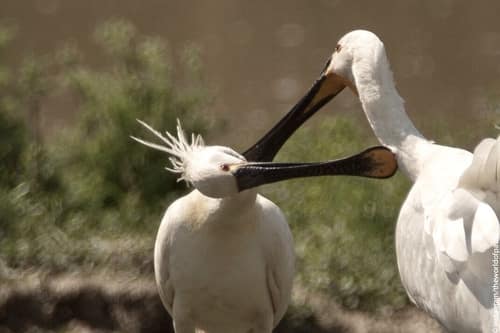
Close Relative (c) Paolo, some rights reserved (CC BY), uploaded by Paolo · cc-by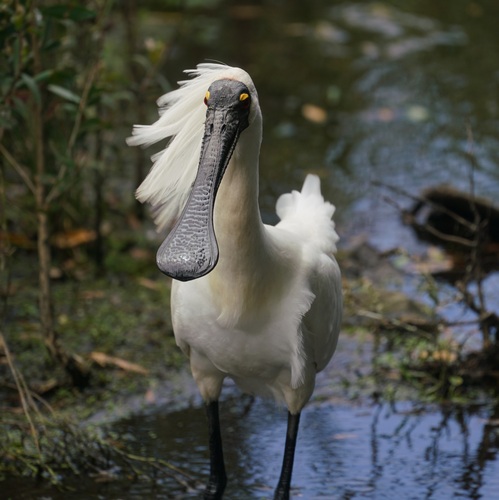
Close Relative (c) Tim, some rights reserved (CC BY) · cc-by
Help improve the field guideSomething wrong?
Checking your Fauna account…Report a name, category, or profile issue for review.