Perched motionless atop roadside poles, fence posts, or dead trees, the long-crested eagle scans tall grass for small rodents before dropping in a steep, decisive dive. Its long, pliable crest droops or raises in the breeze, serving as a dynamic mood indicator while resting between hunts. In flight, dramatic white patches under the wings contrast starkly against its dark, chocolate-brown plumage.
Diet & preyVlei Rat, Greater Cane Rat, Common Reed Frog
Predators
Verreaux's Eagle-Owl
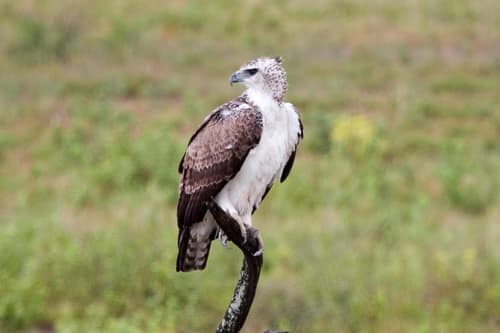
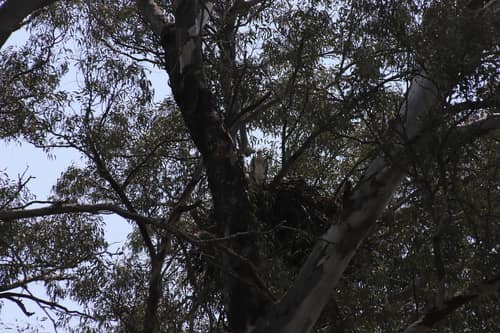
Martial Eagle
ThreatsHabitat clearance, collisions with power lines, and secondary poisoning from rodenticides
HabitatsForest edges, moist woodlands, wetlands, marsh borders, and agricultural land
Life span10–15 years in the wild
Classification
OrderAccipitriformes
FamilyAccipitridae
GenusLophaetus
SpeciesLophaetus occipitalis
Range & activity
Range data is not available yet.
Safe observation
Interaction riskLow
Low
Moderate
High
Very high
Why interaction risk is low
Safe to observe at a normal distance.
Responsible observation
Scanning Roadsides: Look along telephone lines and fence posts flanking moist agricultural fields or marshes, where they frequently hunt.
Binocular Distance: Stay inside your vehicle when observing roadside individuals; vehicles make excellent natural blinds that rarely flush perched raptors.

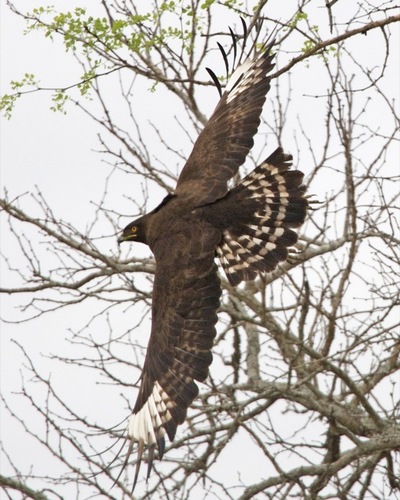
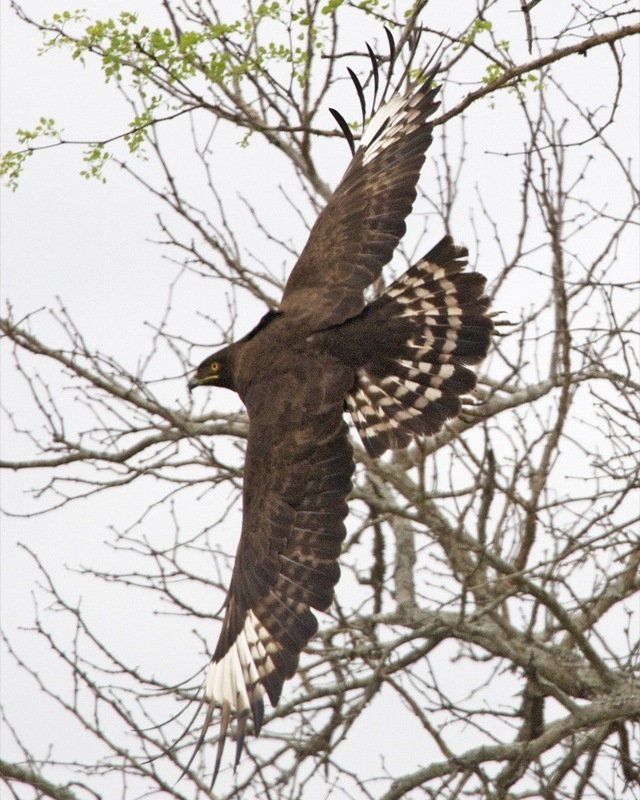
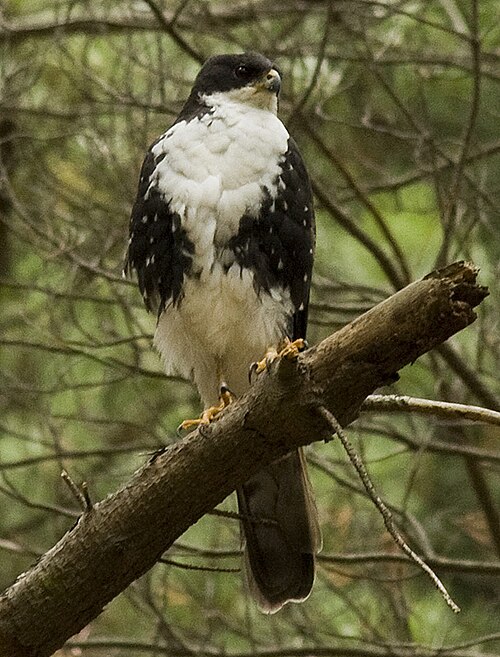
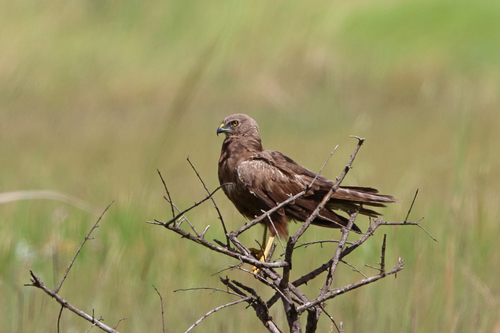
 Image unavailable