
Bird
Great Frigatebird
Fregata minorAlso known as Man-o'-war Bird, Pacific Frigatebird
Great frigatebirds are consummate masters of soaring flight, possessing the highest wing-area-to-body-mass ratio of any bird. Males court prospective mates in low nesting shrubs by inflating their crimson gular sacs into massive, taut balloons while clattering their bills and shivering their wings. Incapable of swimming due to un-waterproofed plumage, they pluck flying fish from the sea surface or harass other seabirds midair until they surrender their catch.
PelagicAerialSeabird
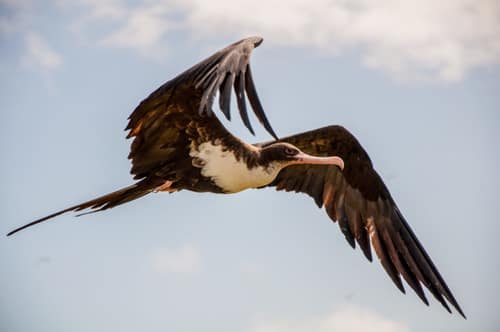
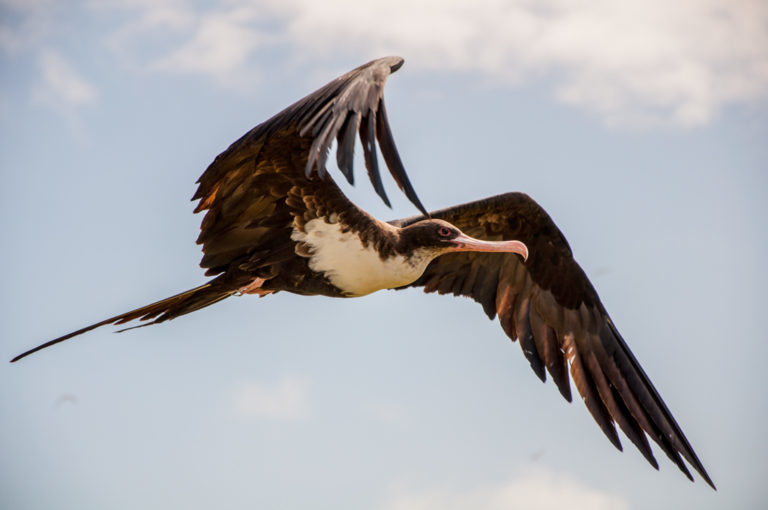
—observations
—countries
—peak records
Least ConcernConservation statusIUCN Red List categoriesLCNTVUENCREWEXLeast ConcernRed List categories, explained →
Diet & preyFlying fish, Oceanic squid, Sooty Tern chicks
Predators
- Feral cat
- Black rat
- Tiger shark
ThreatsInvasive island predators such as feral cats and rats, marine plastic ingestion, and human disturbance
HabitatsTropical pelagic oceans, coral atolls, and oceanic island breeding colonies
Life span30–40 years
Classification
- FamilyFregatidae
- SpeciesFregata minor
Range data is not available yet.
Interaction riskLow
- Low
- Moderate
- High
- Very high
- Why interaction risk is low
- Safe to observe at a normal distance.
- What to notice
- Look for enormous black silhouettes with deeply forked tails and angular, bent wings overhead.
- Support conservation
- Maintain a distance of at least 5 meters from ground nests and never walk between breeding pairs.
Responsible observation
- Observe from trails: Stay strictly on designated paths to avoid trampling low nests in coastal scrub.
- Look up in thermal air: Scan ocean winds and cliff edges to see them soaring effortlessly without flapping.
- Keep binocular distance: Use optics to watch male display postures without causing defensive stress.
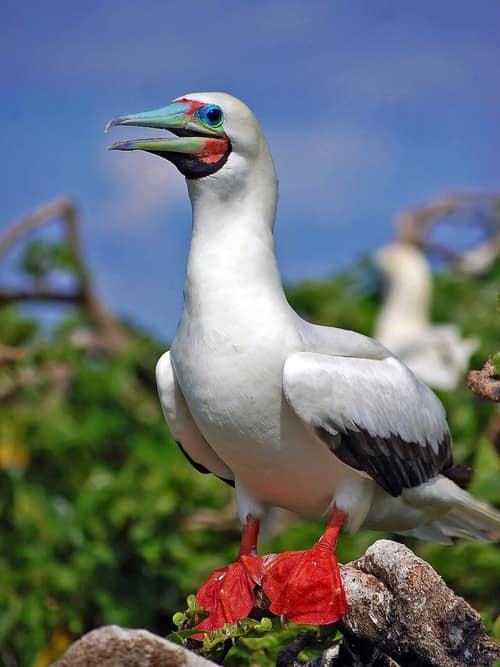
Kleptoparasitic Target Gregg Yan / CC BY-SA 3.0 · cc-by-sa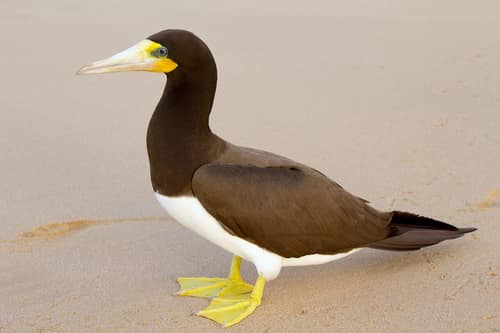
Competitor Danilo da Castro / CC BY-SA 3.0 · cc-by-sa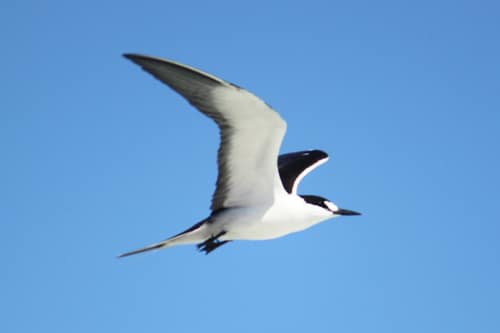
Prey (c) Kyle Van Houtan, some rights reserved (CC BY), uploaded by Kyle Van Houtan · cc-by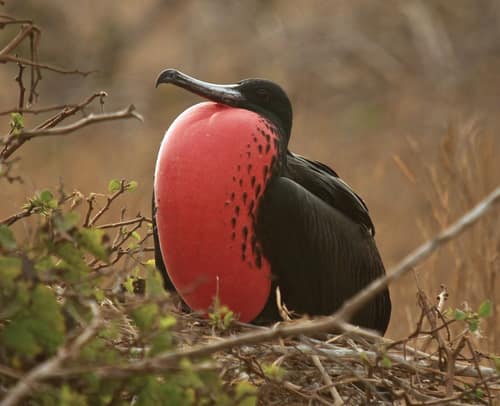
Close Relative Andrew Turner from Washington, DC, United States / CC BY 2.0 · cc-by Image unavailable
Close Relative
Help improve the field guideSomething wrong?
Checking your Fauna account…Report a name, category, or profile issue for review.