
Bird
Christmas Island Frigatebird
Fregata andrewsiAlso known as Christmas Frigatebird
Christmas Island frigatebirds are magnificent oceanic wanderers endowed with enormous wingspans and deeply forked tails that allow effortless soaring over tropical seas for weeks without landing. Breeding males inflate an enormous, balloon-like scarlet throat pouch to woo females high in canopy trees, clattering their bills loudly in display. Highly adapted for an aerial life, their feathers lack waterproofing, so they snatch flying fish from the water's surface or harass boobies mid-air to pirate their catch.
PelagicEndemicSeabird
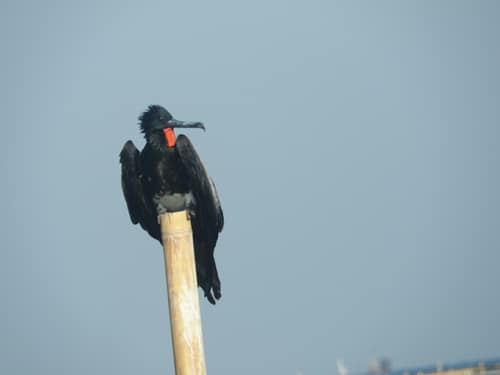
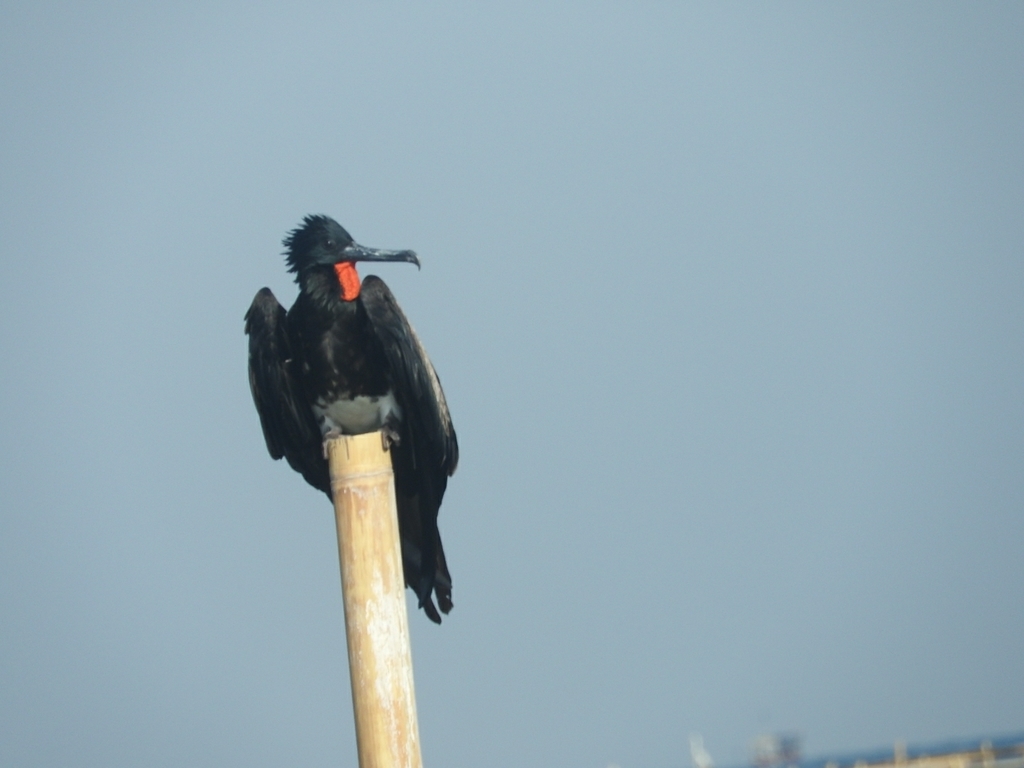
—observations
—countries
—peak records
VulnerableConservation statusIUCN Red List categoriesLCNTVUENCREWEXVulnerableRed List categories, explained →
Diet & preyFlying Fish, Squid, Seabird Chicks
Predators
- Yellow Crazy Ant
- Black Rat
ThreatsPhosphate mining habitat loss, invasive yellow crazy ants, and severe storms
HabitatsTropical ocean waters and dense island canopy forests
Life span25–40 years
Classification
- FamilyFregatidae
- SpeciesFregata andrewsi
Range data is not available yet.
Interaction riskLow
- Low
- Moderate
- High
- Very high
- Why interaction risk is low
- Safe to observe at a normal distance.
- What to notice
- Look for a large black seabird with a white belly patch, long hooked bill, and deeply forked tail.
- Support conservation
- Observe nesting trees from marked roads and trails; keep noise to a minimum and never use drones near roosts.
Responsible observation
- Canopy Scanning: Look high into tall rainforest emergent trees such as Indian almond to spot roosts and nests.
- Ocean Watching: Scan coastal thermals and feeding flocks of boobies for the distinctive white belly patch.
- Breeding Season: Visit Christmas Island between March and July to see males displaying their scarlet gular sacs.
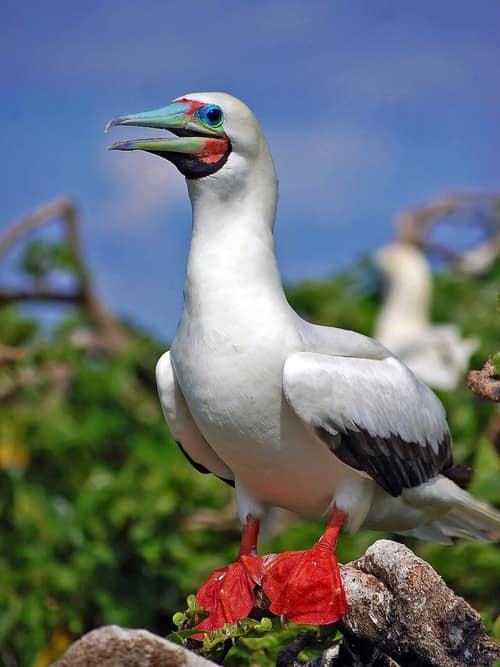
Prey Gregg Yan / CC BY-SA 3.0 · cc-by-sa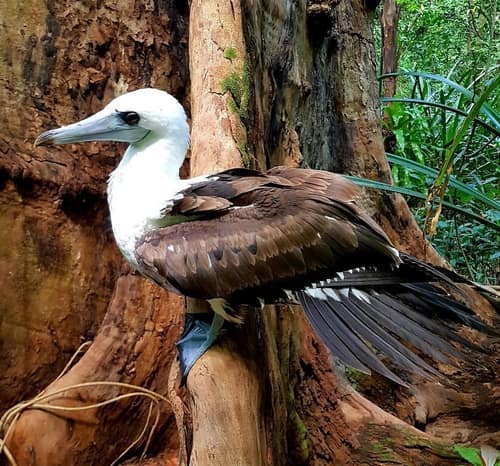
Competitor (c) Christina Lipka, some rights reserved (CC BY-SA) · cc-by-sa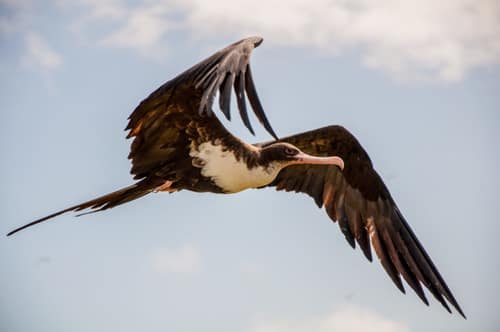
Close Relative (c) James Weaver, some rights reserved (CC BY), uploaded by James Weaver · cc-by Image unavailable
Close Relative
Help improve the field guideSomething wrong?
Checking your Fauna account…Report a name, category, or profile issue for review.