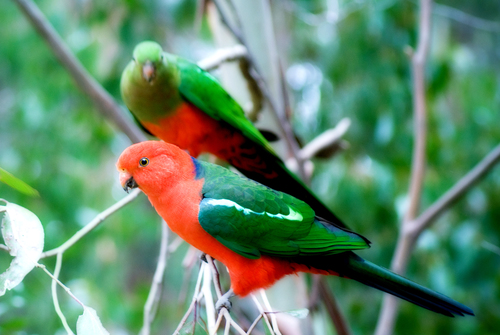
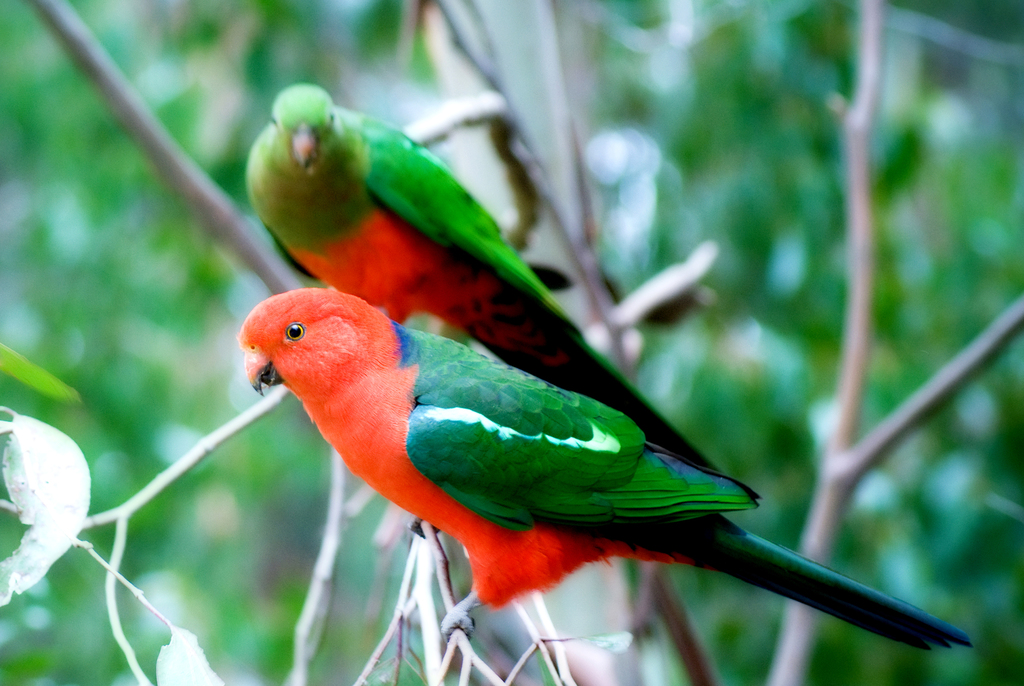
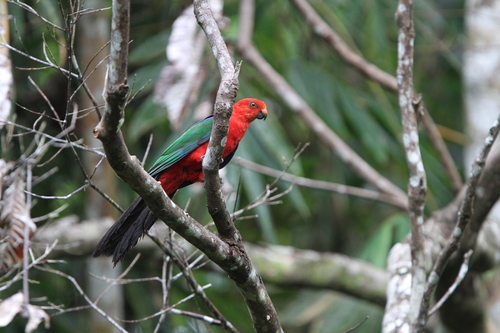
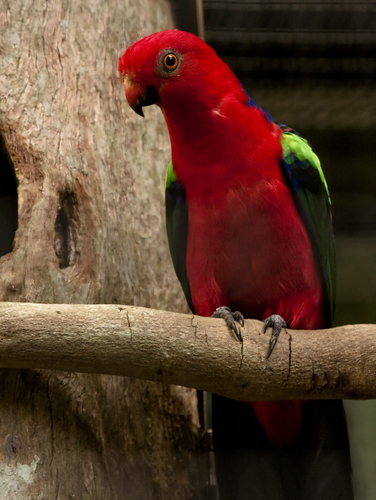
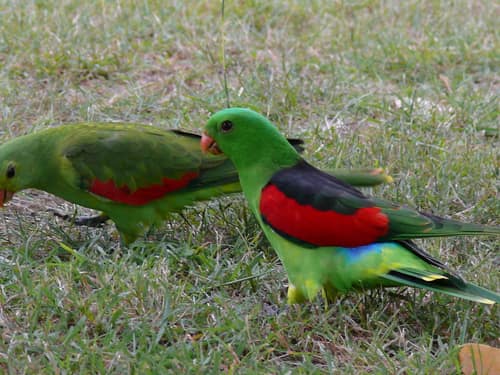
Australian King Parrots are striking, sexually dimorphic birds in which adult males wear a brilliant scarlet head and breast while females show mostly green plumage with a red belly. Pairs and small family groups forage quietly in the canopy for seeds, berries, and blossoms, announcing their flight through tall forests with sharp, metallic piping calls. During spring and summer, females nest deep inside tall eucalypt hollows while males bring regurgitated food to the incubating mate and chicks.
Diet & preyEucalyptus seeds, Acacia seeds, Native figs and berries
Predators
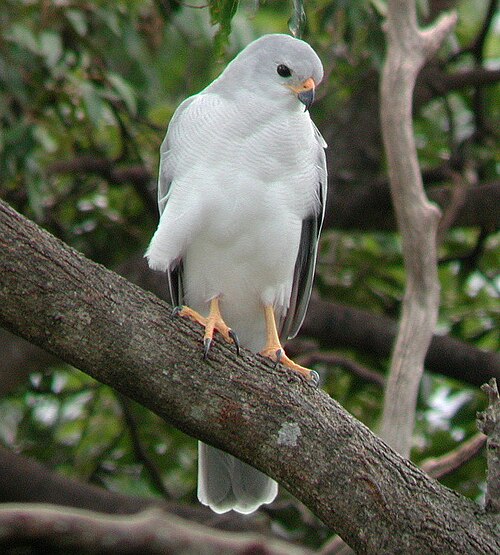
Grey Goshawk
Wedge-tailed Eagle
Carpet Python
ThreatsHabitat clearing, loss of old-growth hollow-bearing trees, and road collisions
HabitatsSubtropical and temperate rainforests, wet eucalypt forests, wooded uplands, and leafy suburban gardens
Life span15–25 years in the wild
Classification
FamilyPsittacidae
SpeciesAlisterus scapularis
Range & activity
Range data is not available yet.
Safe observation
Interaction riskLow
Low
Moderate
High
Very high
Why interaction risk is low
Strong beak can deliver a painful bite if handled or cornered; observe from a comfortable distance.
Why it is dangerous
Thick, curved bills evolved to crack hard seeds and nuts can inflict deep pinches or break skin if a bird feels trapped.
How to recognize a risky encounter
Large, long-tailed parrots with bright green wings; males have scarlet heads and breasts, while females and juveniles are mostly green with red bellies.
What to do
Never attempt to pick up or hand-feed wild birds; if an injured bird needs rescue, drape a towel over it gently and contact wildlife care.
Responsible observation
Listen Overhead: Track their sharp, metallic piping calls in the canopy before spotting their bright plumage.
Avoid Hand-Feeding: Wild birds fed on balconies can become overly bold and vulnerable to beak-and-feather disease.
Check Gum Trees: Look for quiet pairs cracking seeds in tall eucalypts and wattles near rainforest edges.