
Bird · GBIF taxon 2479804
Green-cheeked Parakeet
Pyrrhura molinaeAlso known as Green-cheeked Conure
Green-cheeked parakeets travel through forest canopies in energetic flocks of up to thirty individuals. These agile acrobats forage high in trees for native seeds, fruits, and flowers while maintaining constant vocal contact with flockmates. Outside of the breeding season, communal roosts assemble in tree hollows to rest together through the night.
FlockingCanopy DwellerSocial
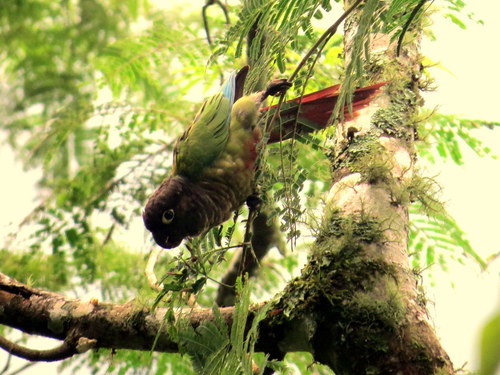
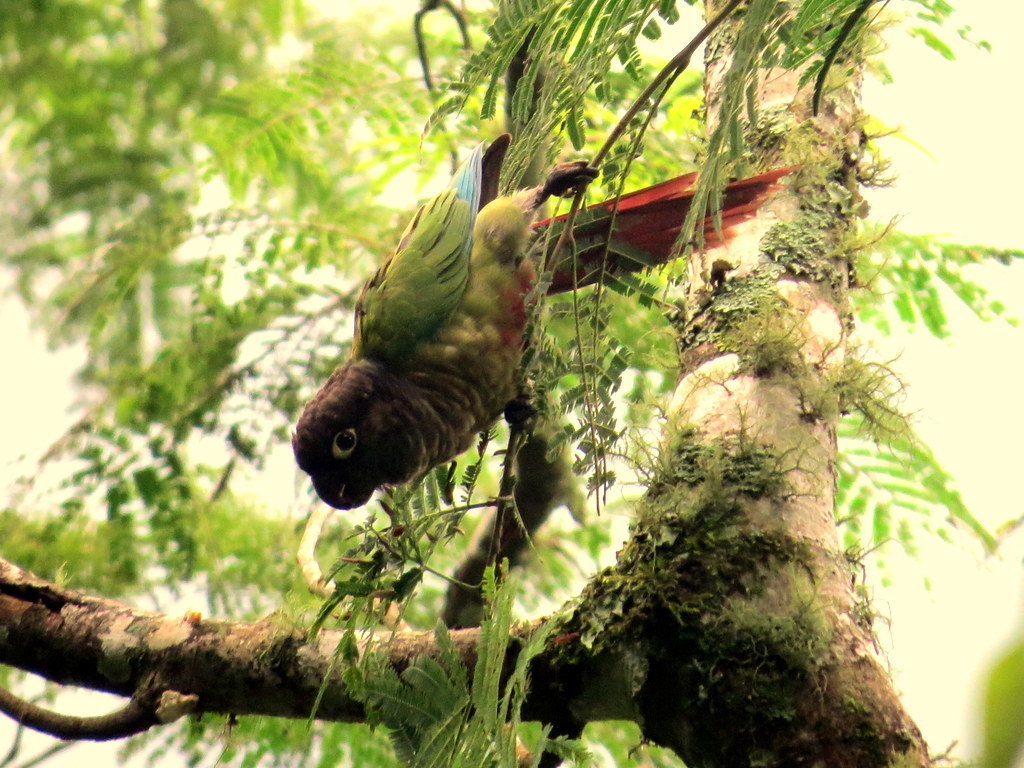
—observations
—countries
—peak records
Least ConcernConservation statusIUCN Red List categoriesLCNTVUENCREWEXLeast ConcernRed List categories, explained →
Diet & prey
- Tree Seeds
- Wild Fruits
- Flower Nectar
Predators
- Falcons
- Tree Snakes
- Small Mammals
ThreatsDeforestation, habitat degradation, and trapping for the pet trade
HabitatsForest canopy, gallery forests, deciduous woodlands, and palm groves
Life span10–15 years in the wild
Classification
- OrderPsittaciformes
- FamilyPsittacidae
- GenusPyrrhura
- SpeciesPyrrhura molinae
Range data is not available yet.
Interaction riskLow
- Low
- Moderate
- High
- Very high
- Why interaction risk is low
- Delivers a painful bite with its hooked beak if cornered or handled; observe quietly from a distance.
Responsible observation
- Observation: Look for active foraging groups in fruiting canopy trees during early morning hours.
- Listening: Identify flocks by their rapid, high-pitched chatter while in flight.
- Distance: Avoid approaching active nest cavities in hollow trees during the breeding season.
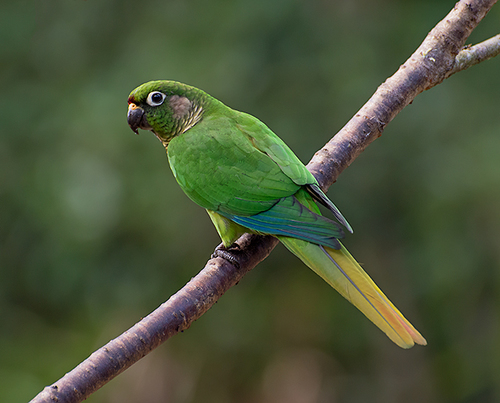
Close Relative (c) Dario Sanches, some rights reserved (CC BY-SA) · cc-by-sa Image unavailable
Close Relative 
Family Member (c) Artur Alves, some rights reserved (CC BY) · cc-by
Help improve the field guideSomething wrong?
Checking your Fauna account…Report a name, category, or profile issue for review.