
Bird · GBIF taxon 2479694
Rainbow Lorikeet
Trichoglossus moluccanusAlso known as Blue-bellied Lorikeet, Swainson's Lorikeet, Blue Mountain Lorikeet
Rainbow lorikeets travel in boisterous, tightly knit pairs or flocks that sweep through blossoming canopies with piercing screeches. Equipped with brush-tipped tongues uniquely adapted for harvesting nectar and pollen, they serve as vital pollinators for eucalyptus, melaleuca, and banksia woodlands. These highly social parrots aggressively defend productive blossom patches and tree-hollow nesting sites from birds twice their size.
VibrantSocialNectarivore
 1 / 7
1 / 7—observations
—countries
—peak records
Least ConcernConservation statusIUCN Red List categoriesLCNTVUENCREWEXLeast ConcernRed List categories, explained →
Diet & prey
- Eucalyptus blossom nectar
- Banksia pollen
- Native figs
Predators
- Peregrine Falcon
- Brown Goshawk
- Powerful Owl
ThreatsPsittacine beak and feather disease, competition for nesting hollows, and domestic pet predation
HabitatsRainforests, coastal heath, eucalypt woodlands, and suburban parks
Life span15–20 years in the wild
Size / weightNot available
Classification
- OrderPsittaciformes
- FamilyPsittacidae
- GenusTrichoglossus
- SpeciesTrichoglossus moluccanus
Range data is not available yet.
Interaction riskLow
- Low
- Moderate
- High
- Very high
- Why interaction risk is low
- Can deliver a painful bite if cornered or handled; observe wild flocks from a short distance.
- Why it is dangerous
- Parrots possess powerful zygodactyl talons and strong, hooked beaks designed to crack seeds and wood, which easily tear human skin.
- How to recognize a risky encounter
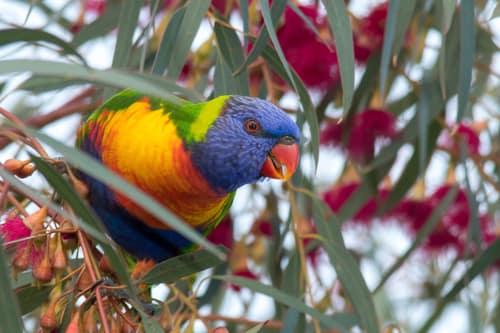
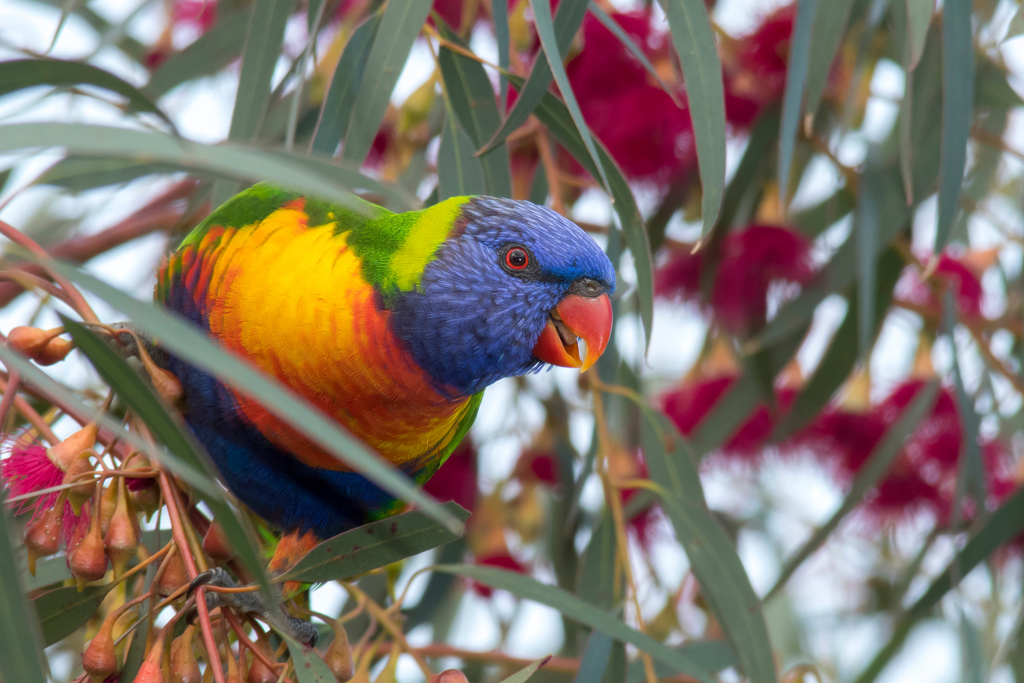
- Look for a bright blue head and belly contrasted against a fiery orange breast and luminous green wings.
- What to do
- Do not attempt to catch, restrain, or pick up grounded adults; contact a certified wildlife rescuer with protective gloves.
Responsible observation
- Listening for Calls: Tune in for rapid, metallic chattering and screeching echoing from flowering crowns.
- Observing Etiquette: Avoid offering commercial bread or honey mixtures, which cause fatal bone disease.
- Watching Feeding Behavior: Look for rapid head bobbing and brush-tongue flicking amid eucalypt blossoms.
 Image unavailable
Ecological Competitor 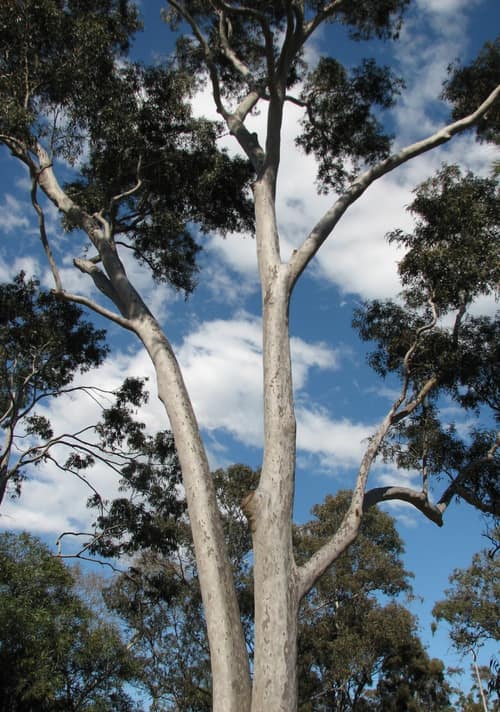
Food Resource Melburnian / CC BY 3.0 · cc-by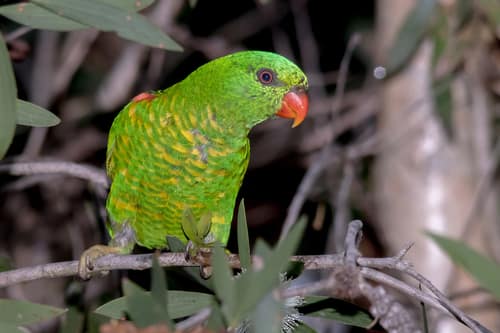
Close Relative (c) Andrew Allen, some rights reserved (CC BY), uploaded by Andrew Allen · cc-by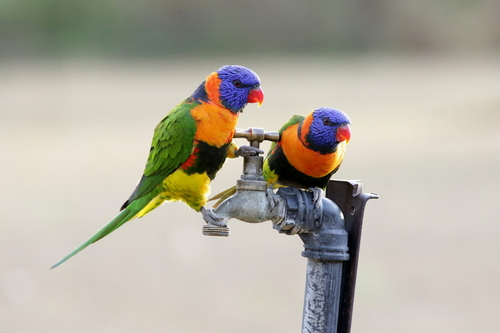
Close Relative (c) Graham Winterflood, some rights reserved (CC BY-SA) · cc-by-sa
Help improve the field guideSomething wrong?
Checking your Fauna account…Report a name, category, or profile issue for review.