
Bird · GBIF taxon 2479661
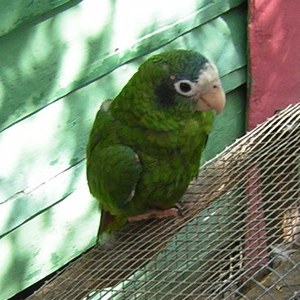
Hispaniolan Amazon
Amazona ventralisAlso known as Hispaniolan Parrot, Cotorra, Hispaniolan Green Parrot
Hispaniolan Amazons travel in noisy pairs or small flocks through mountain forests and lowland dry woods, calling loudly in flight with raspy shrieks. These highly social parrots nest in natural tree cavities and rock crevices, feeding heavily on seeds, palm fruits, and agricultural crops. Widespread deforestation and poaching for the illegal pet trade have driven significant population declines across Haiti and the Dominican Republic.
EndemicVocalFrugivore
—observations
—countries
—peak records
VulnerableConservation statusIUCN Red List categoriesLCNTVUENCREWEXVulnerableRed List categories, explained →
Diet & prey
- Royal palm fruits
- Pine seeds
- Cactus fruits
Predators
- Red-tailed Hawk
- Hispaniolan Boa
- Feral Cat
ThreatsIllegal pet trade, habitat fragmentation, and nest poaching
HabitatsMontane pine forest, lowland dry forest, and agricultural plantations
Life span30–50 years
Size / weightNot available
Classification
- FamilyPsittacidae
- SpeciesAmazona ventralis
Range data is not available yet.
Interaction riskLow
- Low
- Moderate
- High
- Very high
- Why interaction risk is low
- Safe to observe at a normal distance.
- What to notice
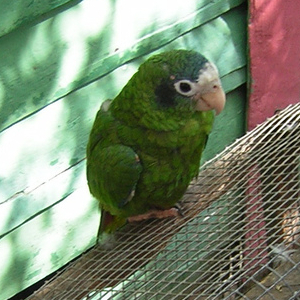
- Look for bright green plumage, a white forehead, blue ear coverts, and a maroon belly patch.
- Support conservation
- Observe quietly from afar without disturbing nest sites or using loud call playbacks.
Responsible observation
- Listening for Calls: Listen for loud, harsh screeching calls echoing through forest canopies early in the morning.
- Binocular Viewing: Scan upper branches of pine and broadleaf trees where flocks gather to feed on pine nuts and wild berries.
- Nest Etiquette: Keep a generous distance from active tree cavities to prevent nest abandonment during breeding.
 Image unavailable
Co-occurring Endemic 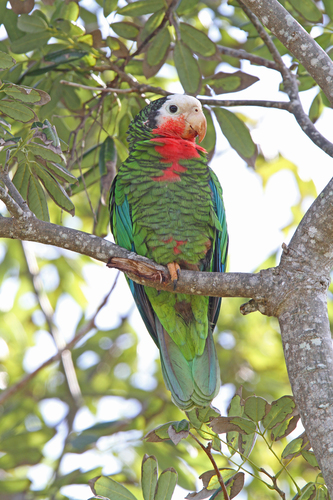
Close Relative (c) Christoph Moning, some rights reserved (CC BY), uploaded by Christoph Moning · cc-by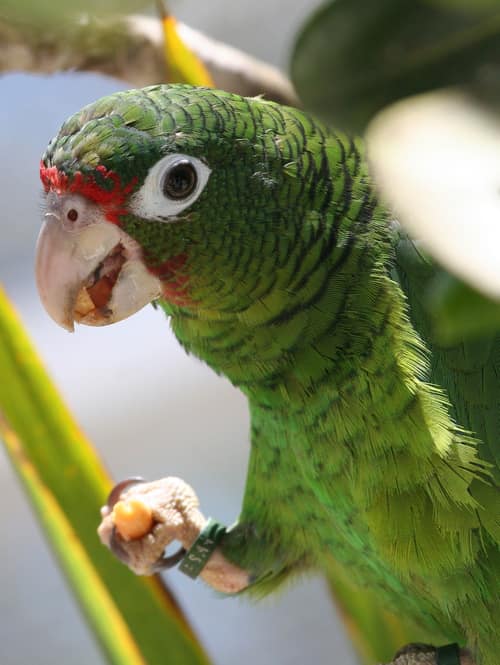
Close Relative (c) U.S. Fish and Wildlife Service Southeast Region, some rights reserved (CC BY) · cc-by
Help improve the field guideSomething wrong?
Checking your Fauna account…Report a name, category, or profile issue for review.