
Bird
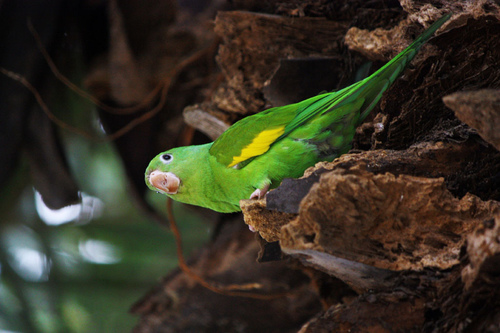
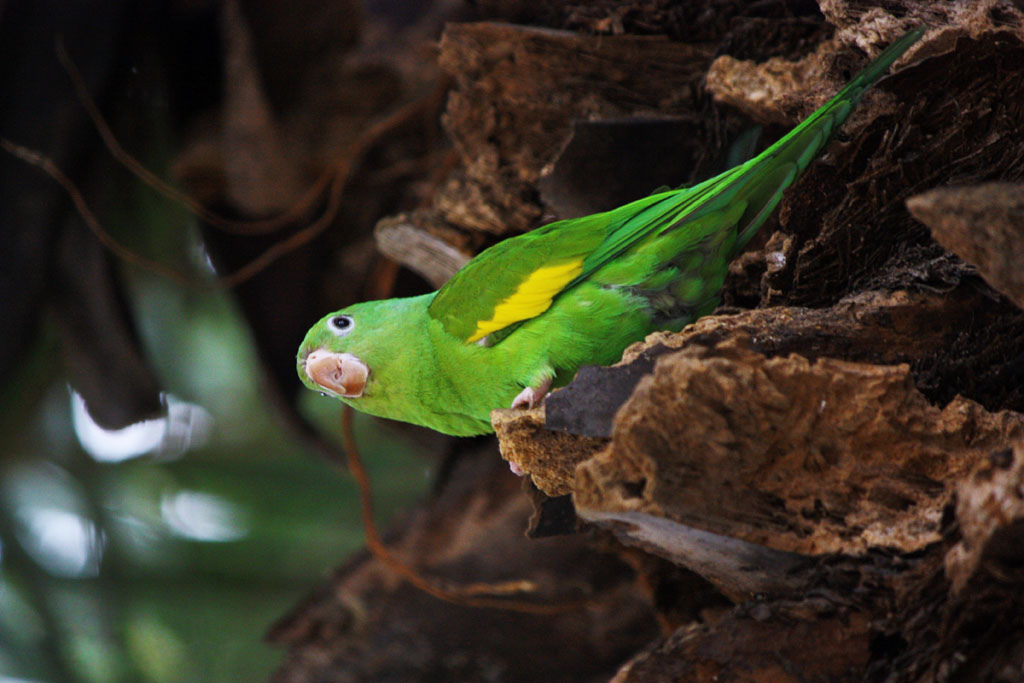
Yellow-chevroned Parakeet
Brotogeris chiririAlso known as Chiriri Parakeet, Yellow-winged Parakeet
Yellow-chevroned parakeets travel in loud, energetic flocks that weave through forest canopies and suburban parklands in search of flowers and fruit. Pairs form strong monogamous bonds, preening each other constantly and nesting deep inside natural tree hollows or arboreal termite mounds. Introduced populations thrive in urban environments by feeding on exotic flowering trees, garden palms, and bird feeders.
SocialFrugivorousAdaptable
—observations
—countries
—peak records
Least ConcernConservation statusIUCN Red List categoriesLCNTVUENCREWEXLeast ConcernRed List categories, explained →
Diet & preyFig fruits, Palm seeds, Eucalyptus nectar
Predators
- Falcons
- Hawks
- Snakes
ThreatsHabitat fragmentation and illegal pet trade trapping
HabitatsTropical dry forests, savannas, gallery woodlands, and urban parks
Life span15–25 years
Classification
- OrderPsittaciformes
- FamilyPsittacidae
- GenusBrotogeris
- SpeciesBrotogeris chiriri
Range data is not available yet.
Interaction riskLow
- Low
- Moderate
- High
- Very high
- Why interaction risk is low
- Strong beaks can deliver a painful bite if handled; observe wild flocks from a comfortable distance.
Responsible observation
- Listen for Calls: Locate noisy feeding flocks in tree canopies by listening for sharp, high-pitched chatter.
- Look for Yellow Wings: Spot the bright yellow wing bar visible during rapid, direct flight.
- Respect Nest Sites: Keep a respectful distance from nesting cavities in palm trees or arboreal termite mounds.
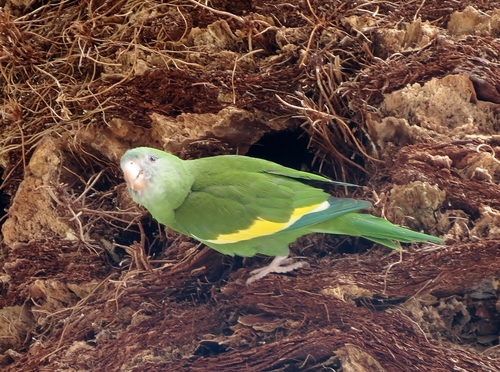
Close Relative (c) Paul Bedell, some rights reserved (CC BY-SA), uploaded by Paul Bedell · cc-by-sa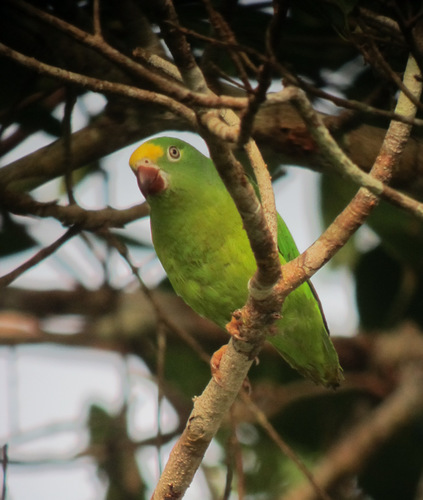
Close Relative (c) Félix Uribe, some rights reserved (CC BY-SA) · cc-by-sa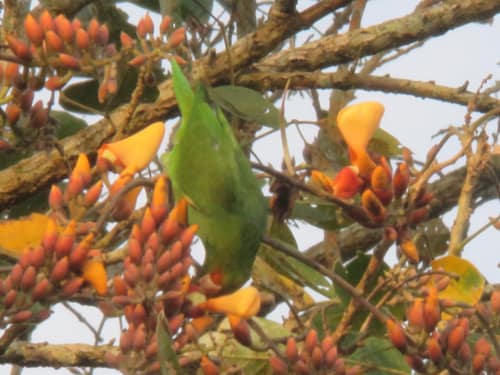
Close Relative (c) Vincent A. Vos, some rights reserved (CC BY), uploaded by Vincent A. Vos · cc-by
Help improve the field guideSomething wrong?
Checking your Fauna account…Report a name, category, or profile issue for review.