
Bird · GBIF taxon 2479580
Gray-cheeked Parakeet
Brotogeris pyrrhopteraAlso known as Grey-cheeked Parakeet, Fire-winged Parakeet
Gray-cheeked parakeets form boisterous, tight-knit pairs and small flocks that traverse the deciduous dry forests of western Ecuador and northwestern Peru. They feed primarily on tree seeds, blossoms, and fruits, often hanging upside down from outer twigs while communicating through rapid, metallic chattering. Mated pairs demonstrate strong lifelong bonds, mutually preening their soft plumage and nesting high inside tree cavities or arboreal termite mounds.
TropicalFlockingCavity Nester
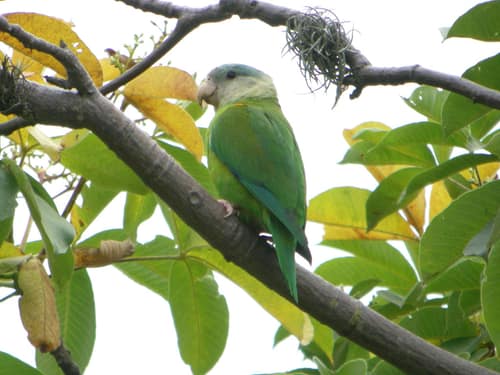
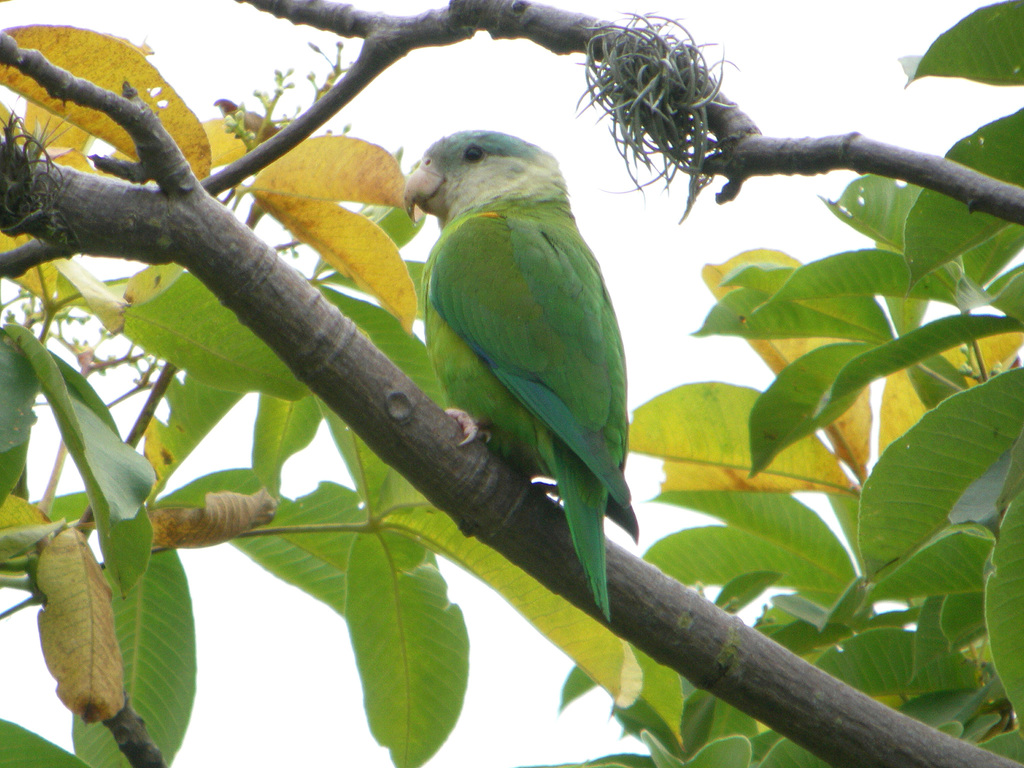
Licensed reference(c) markaharper1, some rights reserved (CC BY-SA) · cc-by-sa
—observations
—countries
—peak records
VulnerableConservation statusIUCN Red List categoriesLCNTVUENCREWEXVulnerableRed List categories, explained →
Diet & prey
- Figs
- Ceiba seeds
- Flower nectar
Predators
- Bat Falcon
- Bicolored Hawk
- Arboreal snakes
ThreatsHabitat destruction, fragmentation, and historic capture for the pet trade
HabitatsTumbesian dry forests, deciduous woodlands, scrublands, and humid forest borders
Life span15–25 years
Size / weightNot available
Classification
- OrderPsittaciformes
- FamilyPsittacidae
- GenusBrotogeris
- SpeciesBrotogeris pyrrhoptera
Range data is not available yet.
Interaction riskLow
- Low
- Moderate
- High
- Very high
- Why interaction risk is low
- Safe to observe at a normal distance.
- What to notice
- Small green parakeet with pale grayish-white cheeks, yellowish crown, and brilliant orange-red underwing patches visible in flight.
- Support conservation
- Observe from a distance using binoculars, avoid disturbing active nest hollows in mature trees, and never purchase wild-caught birds.
Responsible observation
- Flock Listening: Listen for high-pitched, chattering screeches at dawn and dusk as flocks commute between roosts and foraging grounds.
- Flight Identification: Look beneath the wing during flight to spot the vivid orange-red underwing coverts contrasting with green flight feathers.
- Ethical Viewing: Keep a respectful distance from active tree hollows during breeding season to prevent nest abandonment.
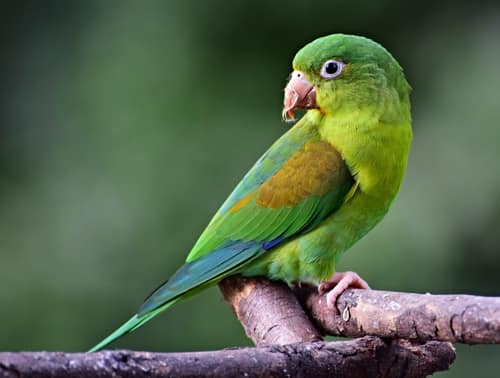
Same Genus (c) Alejandro Bayer Tamayo, some rights reserved (CC BY-SA) · cc-by-sa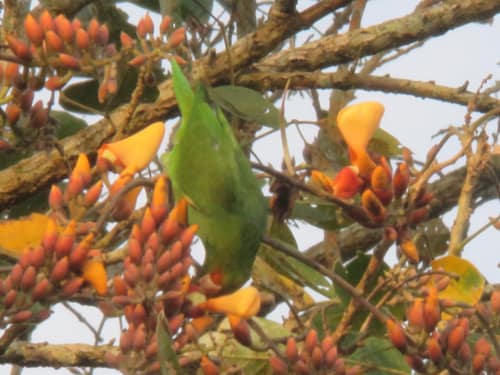
Same Genus (c) Vincent A. Vos, some rights reserved (CC BY), uploaded by Vincent A. Vos · cc-by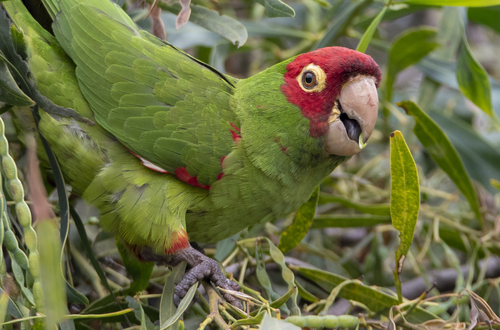
Flock Companion (c) David F. Belmonte, some rights reserved (CC BY), uploaded by David F. Belmonte · cc-by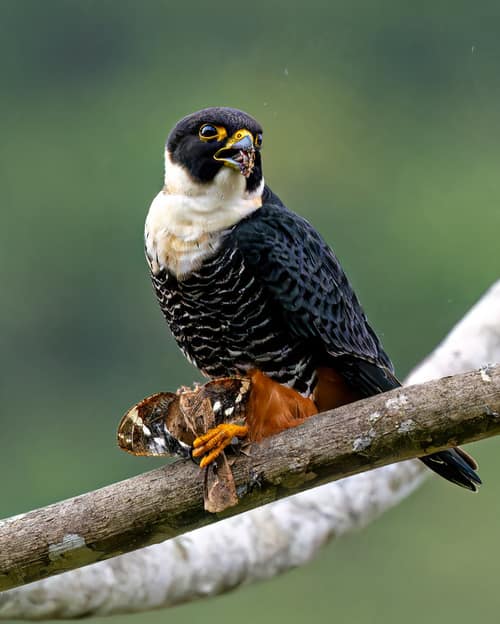
Predator no rights reserved, uploaded by Paulo Mascaretti · cc0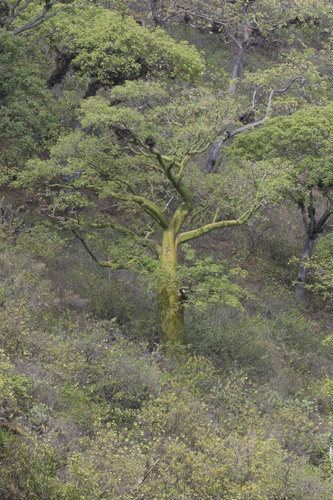
Nesting Tree (c) Kristof Zyskowski, some rights reserved (CC BY), uploaded by Kristof Zyskowski · cc-by
Help improve the field guideSomething wrong?
Checking your Fauna account…Report a name, category, or profile issue for review.