
Bird · GBIF taxon 2479407
Monk Parakeet
Myiopsitta monachusAlso known as Quaker Parrot, Monk Parrot, Quaker Parakeet
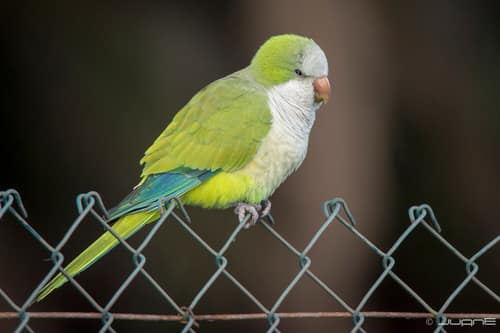
Monk parakeets are unique among parrots for building massive, multi-chambered communal stick nests that can host dozens of breeding pairs and persist for generations. Highly gregarious and vocal, flocks maintain constant contact through an elaborate repertoire of raspy squawks, chatters, and screeches while foraging for seeds and buds. Their remarkable cold tolerance and adaptability have allowed introduced populations to thrive in urban centers far beyond their native South American range.
Urban WildlifeSocialVocal
—observations
—countries
—peak records
Least ConcernConservation statusIUCN Red List categoriesLCNTVUENCREWEXLeast ConcernRed List categories, explained →
Diet & prey
- Grass Seeds
- Tree Buds
- Wild Berries
Predators
- Peregrine Falcon
- Cooper's Hawk
- Domestic Cat
ThreatsAgricultural pest persecution, the pet trade, and targeted culling in introduced areas
HabitatsSavannas, open woodlands, scrub forests, agricultural lands, and urban parks
Life span15–20 years in the wild (up to 30 years in captivity)
Size / weightNot available
Classification
- OrderPsittaciformes
- FamilyPsittacidae
- GenusMyiopsitta
- SpeciesMyiopsitta monachus
Range data is not available yet.
Interaction riskLow
- Low
- Moderate
- High
- Very high
- Why interaction risk is low
- Possesses a strong hooked bill capable of delivering a painful bite if cornered; observe from a distance.
- Why it is dangerous
- The stout, hooked bill is built for crushing hard seeds and can deliver a deep, crushing bite if the bird is cornered or handled.
- How to recognize a risky encounter
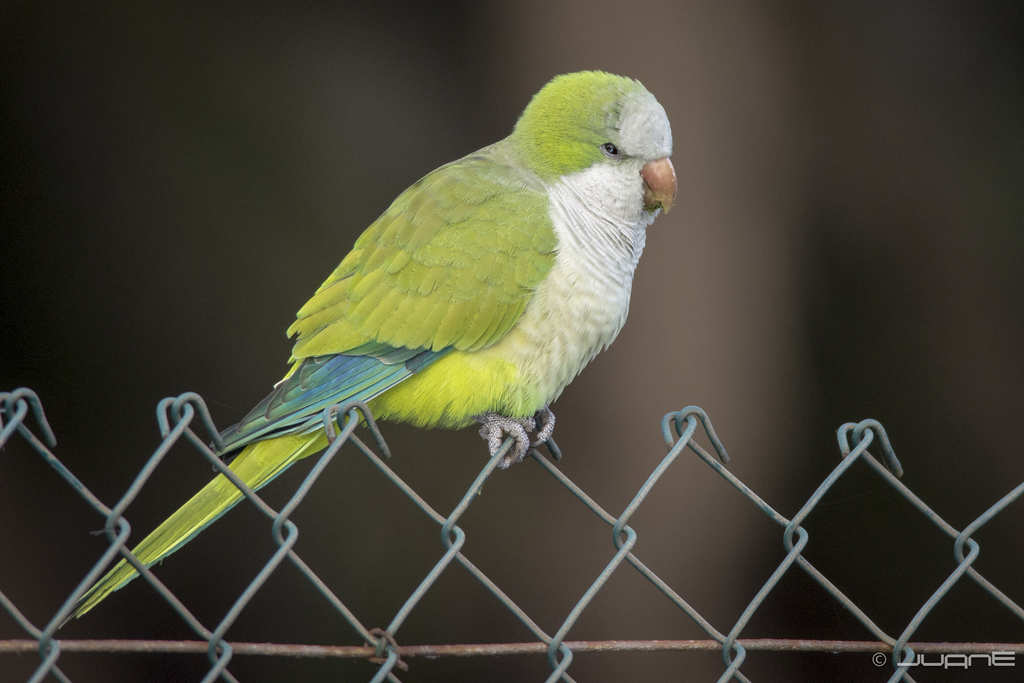
- Recognizable by bright lime-green plumage, a soft grey forehead and chest, a pale orange bill, and long pointed tail feathers.
- What to do
- Do not attempt to touch or rescue grounded adults without thick protective gloves; call a local licensed wildlife rehabilitator.
Responsible observation
- Look for Nesting Compounds: Scan utility poles and mature deciduous trees for bulky, tangled stick nests.
- Listen for Calls: Track loud, harsh, metallic squawks echoing across open parks to locate feeding flocks.
- Maintain Space: Avoid approaching low feeding groups closely to prevent scattering the flock.
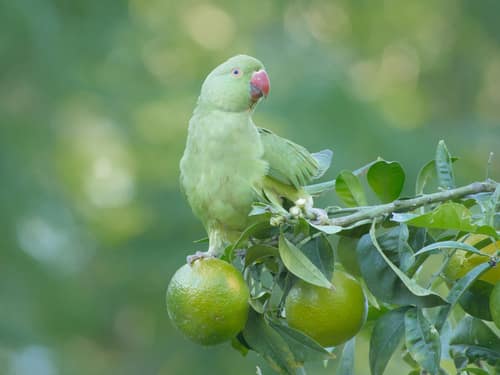
Competitor (c) Cristian Hurtado Cusnir, some rights reserved (CC BY), uploaded by Cristian Hurtado Cusnir · cc-by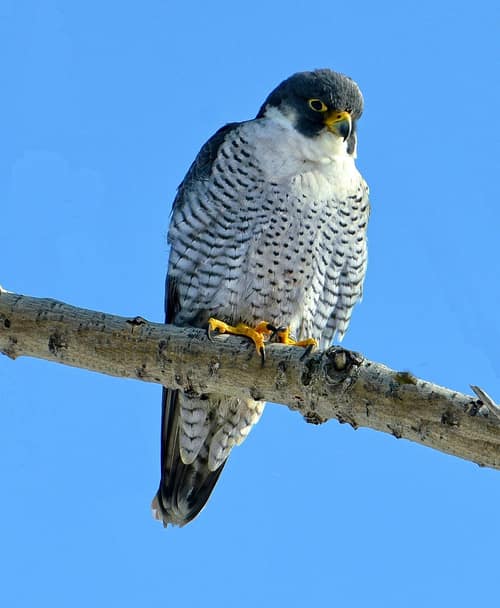
Predator Mykola Swarnyk / CC BY-SA 3.0 · cc-by-sa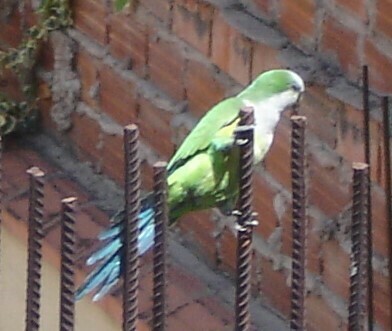
Close Relative (c) fernando vilar, some rights reserved (CC BY) · cc-by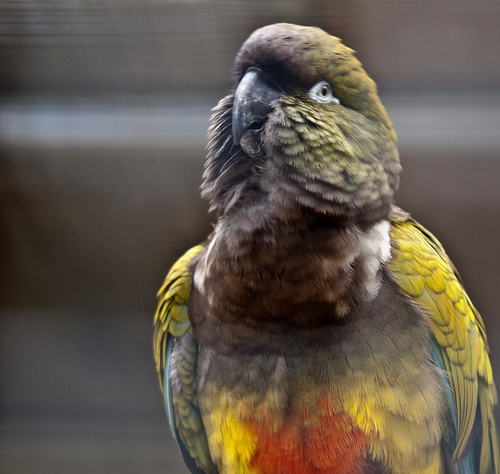
Same Family (c) Rakkhi Samarasekera, some rights reserved (CC BY) · cc-by
Help improve the field guideSomething wrong?
Checking your Fauna account…Report a name, category, or profile issue for review.