
Bird · GBIF taxon 2479104
Aratinga erythrogenys
Aratinga erythrogenysAlso known as Cherry-Headed Conure, Red-Headed Conure, Red-Masked Conure
Red-masked parakeets travel in raucous, tightly knit flocks that announce their arrival with piercing communal shrieks echoing across dry woodlands and urban parks. Pairs mate for life, preening each other continuously and nesting high inside tree cavities or crevices along steep river cliffs. Beyond their native Pacific slope range, escapees have founded famous naturalized colonies in coastal cities across North America.
SocialVocalColorful
—observations
—countries
—peak records
Near ThreatenedConservation statusIUCN Red List categoriesLCNTVUENCREWEXNear ThreatenedRed List categories, explained →
Diet & prey
- Wild figs
- Cactus fruit
- Flower blossoms
Predators
- Raptors
- Arboreal snakes
- Feral cats
ThreatsIllegal trapping for the cage-bird trade and agricultural habitat loss
HabitatsDeciduous dry forest, scrubland, gallery woodland, and urban parks
Life span20–30 years
Size / weightNot available
Classification
- FamilyPsittacidae
- SpeciesAratinga erythrogenys
Range data is not available yet.
Interaction riskLow
- Low
- Moderate
- High
- Very high
- Why interaction risk is low
- Safe to observe at a normal distance.
- What to notice
- Bright grass-green plumage accented by an extensive cherry-red head, forecrown, and wing bends.
- Support conservation
- Observe from a distance using binoculars to avoid flushing feeding or nesting flocks.
Responsible observation
- Locating Flocks: Listen for sharp, screeching calls that reveal high canopy roosts.
- Urban Roosts: Scan mature exotic palms and eucalyptus trees in coastal cities at dusk.
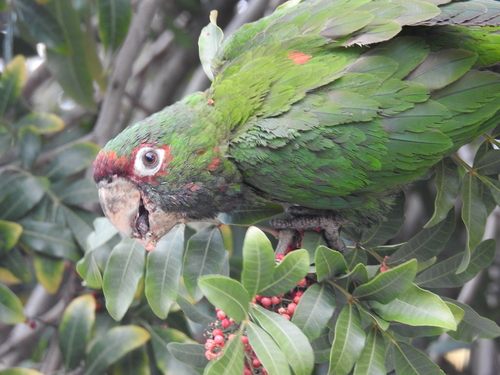
Frequent Companion (c) James M. Maley, some rights reserved (CC BY), uploaded by James M. Maley · cc-by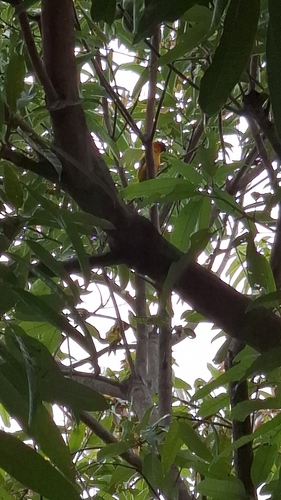
Close Relative (c) Artur Alves, some rights reserved (CC BY) · cc-by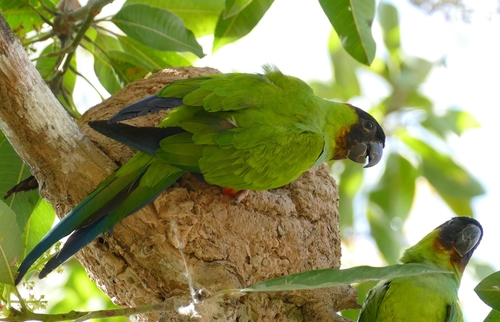
Close Relative (c) Bernard DUPONT, some rights reserved (CC BY-SA) · cc-by-sa
Help improve the field guideSomething wrong?
Checking your Fauna account…Report a name, category, or profile issue for review.