
Bird · GBIF taxon 2479015
Double-toothed Barbet
Lybius bidentatusAlso known as Tooth-billed Barbet, Double-toothed African Barbet
Double-toothed barbets are stocky, vividly colored birds recognized by their black upperparts, bright red bellies, and massive yellowish bills featuring two tooth-like serrations on the upper mandible. Living in pairs or small family groups, they inhabit forest edges, gallery woodlands, and orchards across tropical Africa, maintaining territories through synchronized duet singing. They excavate deep nest cavities in rotting tree branches, providing critical breeding shelters that later benefit other forest cavity nesters.
ArborealFrugivorousVocal
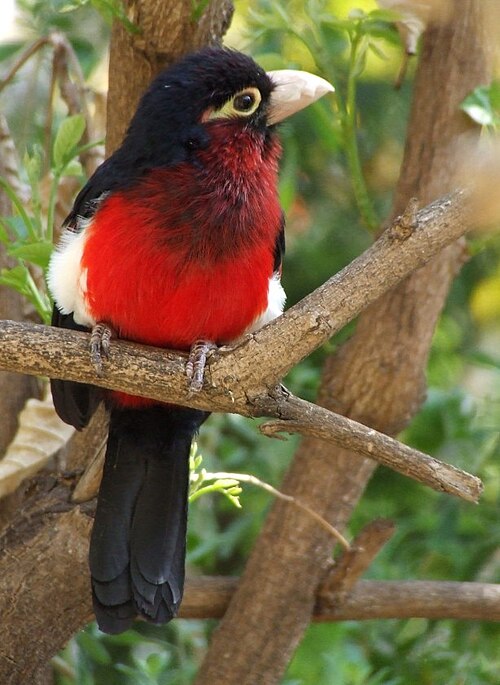
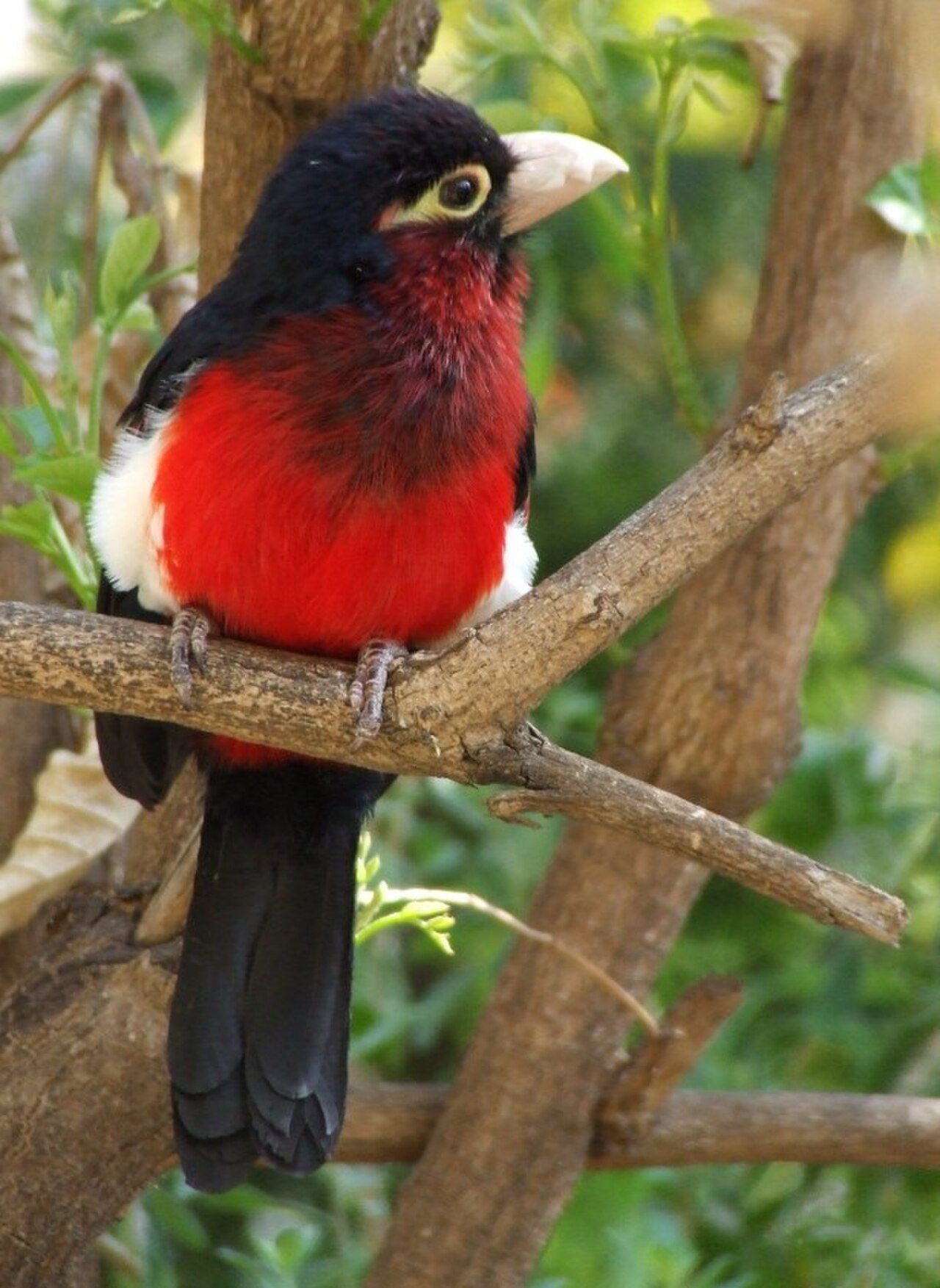
—observations
—countries
—peak records
Least ConcernConservation statusIUCN Red List categoriesLCNTVUENCREWEXLeast ConcernRed List categories, explained →
Diet & prey
- Figs
- Berries
- Beetles
Predators
- Raptors
- Snakes
- Arboreal monkeys
ThreatsDeforestation and forest degradation
HabitatsMoist lowland forests, gallery forests, savannas, secondary growth, and gardens
Life span5–10 years
Classification
- OrderPiciformes
- FamilyLybiidae
- GenusLybius
- SpeciesLybius bidentatus
Range data is not available yet.
Interaction riskLow
- Low
- Moderate
- High
- Very high
- Why interaction risk is low
- Safe to observe at a normal distance.
Responsible observation
- Listen for Duets: Look into the upper canopy when hearing harsh, synchronized chattering calls made by mated pairs.
- Check Fig Trees: Scan fruiting wild fig trees during early morning hours when pairs congregate to feed.
- Observe Dead Snags: Look for circular nest holes in dead branches where adults return to roost or feed young.
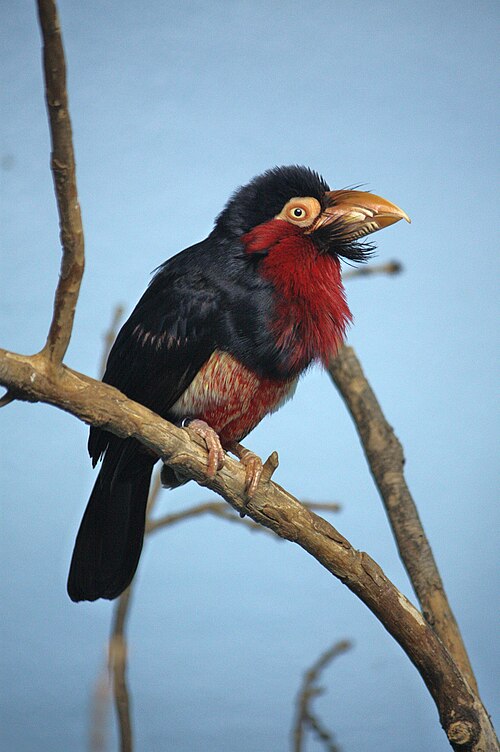
Close Relative Postdlf / CC BY-SA 3.0 · cc-by-sa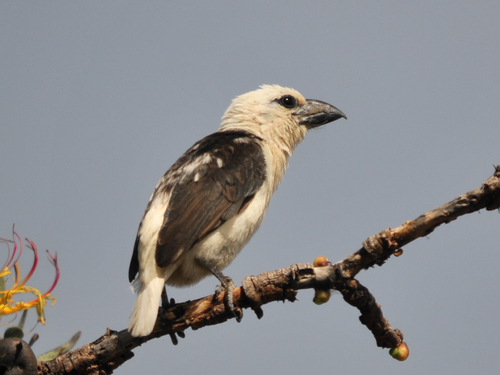
Close Relative (c) William Stephens, some rights reserved (CC BY) · cc-by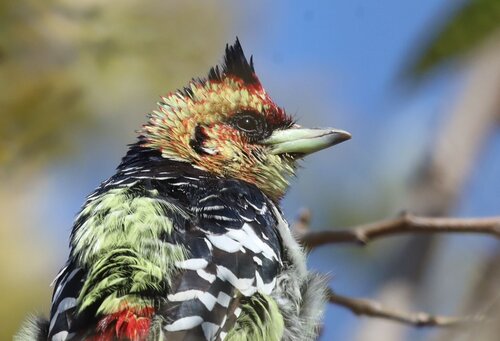
Family Member (c) Paul Hoekman, some rights reserved (CC BY), uploaded by Paul Hoekman · cc-by
Family Member no rights reserved, uploaded by Dave Brown · cc0
Help improve the field guideSomething wrong?
Checking your Fauna account…Report a name, category, or profile issue for review.