
Bird
D'Arnaud's Barbet
Trachyphonus darnaudiiAlso known as D'Arnaud's Ground Barbet
D'Arnaud's barbets spend much of their day hopping across bare earth and low scrub, foraging for insects, seeds, and small fallen fruit. Pairs reinforce pair bonds through a striking synchronized duet, bobbing, bowing, and flicking their tails in mechanical unison from elevated perches. Rather than carving cavities into wood like most relatives, cooperative family groups dig deep vertical tunnels into level ground or termite banks to roost and raise chicks.
Ground-dwellingVocalSocial
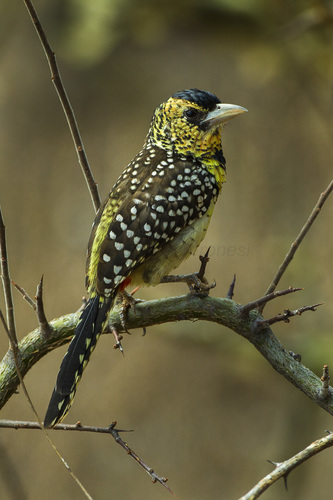
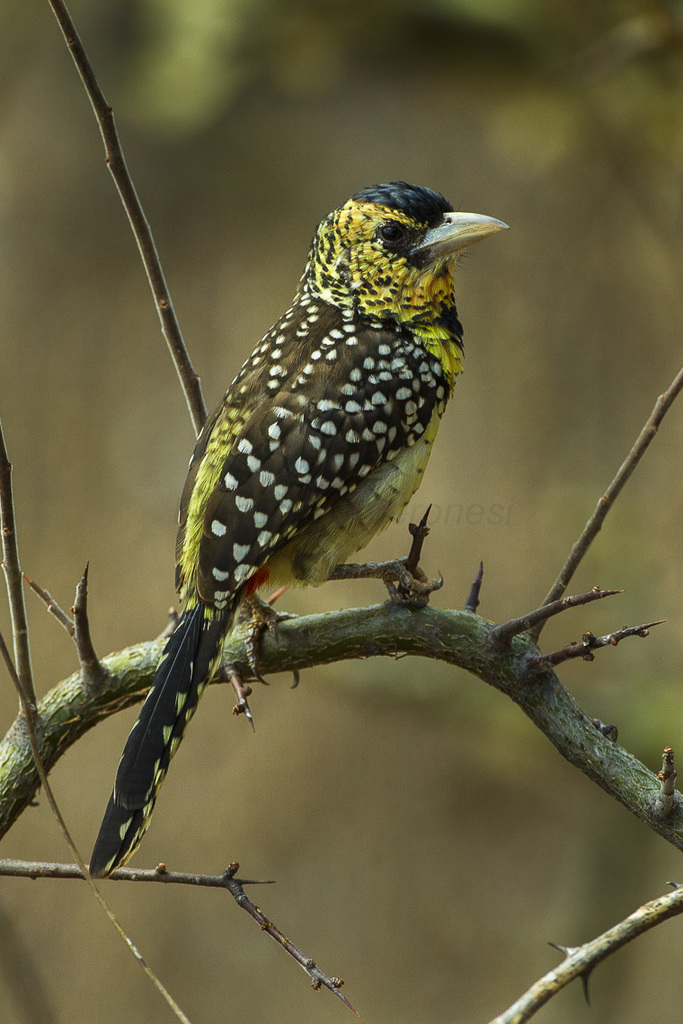
—observations
—countries
—peak records
Least ConcernConservation statusIUCN Red List categoriesLCNTVUENCREWEXLeast ConcernRed List categories, explained →
Diet & preyTermites, Grasshoppers, Ficus fruit
Predators
- Gabar Goshawk
- Boomslang
- Slender Mongoose
ThreatsHabitat degradation from overgrazing and agricultural clearance
HabitatsDry acacia thornbush, semi-arid savannah, and open scrublands
Life span8–12 years
Classification
- FamilyLybiidae
- SpeciesTrachyphonus darnaudii
Range data is not available yet.
Interaction riskLow
- Low
- Moderate
- High
- Very high
- Why interaction risk is low
- Safe to observe at a normal distance.
Responsible observation
- Listen for Duets: Watch low perches or termite mounds when you hear rhythmic antiphonal singing.
- Scan Open Ground: Look for small family groups hopping along bare soil beneath thorn bushes.
- Protect Burrows: Step carefully around vertical ground tunnels to avoid collapsing nesting chambers.
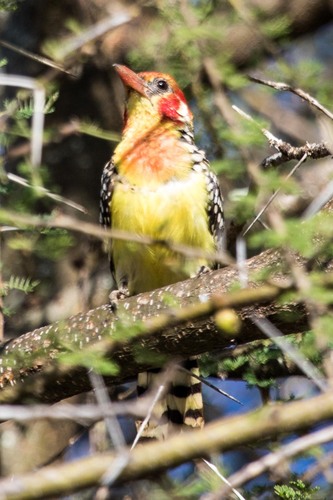
Same Genus (c) Dan Harville, some rights reserved (CC BY-SA) · cc-by-sa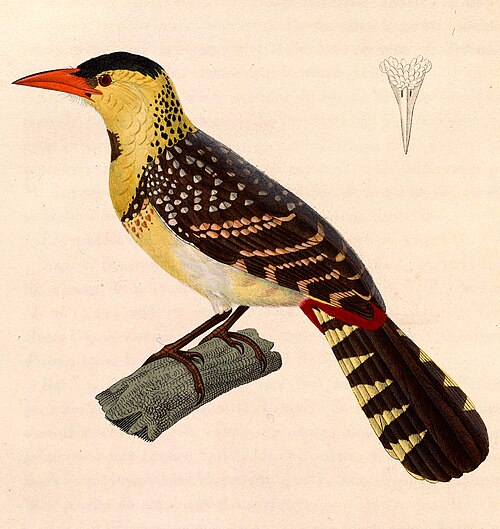
Same Genus Nicolas Huet / Jean Gabriel Prêtre / Public domain · cc0 Image unavailable
Close Relative Same Family
Help improve the field guideSomething wrong?
Checking your Fauna account…Report a name, category, or profile issue for review.